Saturday, May 21, 2011

What about using our heads (for a change)?

At the end of the day our transport sector, no matter where it is, is shaped by the perceptions of the main players, the opportunists, planners, decision makers and the public of what is there and what is it that people want and need. And if it is a mess in your country or city,well that's because these perceptions are simply not clear enough. Read what Nate Sliver of the New York Times has to say when there is a collision between the experts and common sense on one much discussed transportation topic. Interesting things happen when smart people from the outside poke their noses into the transportation box. As we say: "you never know where the next good idea is going to come from".

--> Read on:

Wednesday, May 18, 2011

Family Mouse moves ahead on fifty language worldwide Odyssey

Today we want to tell you about a bit more concerning progress on a collaborative international project on a children's book exactly on our subject. Back in mid March, we announced our intention to produce a 2011  edition of this successful  children's book, but this time in (our target) fifty language editions. Read on to see where things stand today. All the more  if any of you out there might be interested in lending a hand so that we can create handsome print and electronic versions for worldwide distribution and use. - Alvin reports from Paris

--> Read on:

Sunday, May 15, 2011

Pay-As-You-Drive Vehicle Insurance: Is it in the cards as a new mobility strategy?

This white paper  by Todd Litman of the Victoria Transport Policy Institute, just issued the Pacific Institute for Climate Solutions, looks at the potential  for Pay as you Drive (PAYD) insurance both in general and in the specific case of British Columbia. With Pay as you Drive – i.e., "context sensitive insurance"  -- what you pay for this big-ticket item is conditional on not only distance travelled but also time and place. The concept has been around for decades but has started to gain traction in the last half dozen years. Let's have a look.

--> Read on:

Monday, May 9, 2011

Peter Newman: No room left for the car

Peter Newman: No room left for the car Australian environmental activist and professor of sustainability at Curtin University in Perth, Peter Newman loves Indian streets. He shares his experience of Indian cities with Arushi Mittal. (Courtesy: Iclei World Congress) What are your observations about Indian cities?) I come from a school of thought that likes cities, and I find an Indian street fascinating. There are so many different users: bullock carts, food vendors, beggars, cyclists … Read More

--> Read on:

Sunday, May 8, 2011

International Advisory Council on Sustainable Transportation

Paris: 8 May 2011. We are, as of today, in the process of updating and completing this list of international colleagues, each of whom are working day after day on challenges, projects and programs, alone and with others, all in support of the principles of sustainable development and social justice, in cities and countries around the world. It is our intention to have the revised and expanded version on line in June.

--> Read on:

Saturday, May 7, 2011

World Streets spring cleaning. Your views?

Want to have a look at the new layout and type face for World Streets that we are experimenting with as part of our annual spring cleaning, and let us know us what you think?  Our goal is to make it an easier and more efficient read, with a tighter format, better use of screen space,  and with the key links and tools more visible and easily accessible. Do you have any views on this?  And if so, please let us know with a single click below. Thank you.

--> Read on:

Monday, May 2, 2011

(Time out while we regroup)

World Streets is a collaborative resource. And it is a challenge - a collaborative challenge. We are rethinking it from top to bottom, to improve its usefulness and ensure a solid financial base.  Have a look and tell us what you advise.

--> Read on:

World Streets This Week: Edition of 2 May 2011

- - - > Click here to download Weekly Edition of 2 May 2011 


Another busy week on World Streets, with contributions coming in from the StreetFilms media group in  New York on parking strategies, on city cycling and empowerment of women in Dhaka, and on to the pressing matter of rethinking the finances of our entire operation so that we can continue to act as the world's only fully independent, collaborative, worldwide sustainable transport daily/weekly publication and peer network.   But the buzz of the week was a series of exchanges resulting from an announcement of government support in India  for a really quite dubious proposal for a PRT Pod system for Delhi.

--> Read on:

About the Council

[In progress: The working draft that follows has been taken directly from the 2005 background note on the Council and is being revised and updates. Please come back next week for the final on this. And if in the meantime you have suggestions or criticisms, it would be great to have them. Thank you.]

--> Read on:

Friday, April 29, 2011

Op-Ed. On relative costs of PRT, auto and public transit

There are a number of important factors to consider when comparing PRT, public transit and automobile costs, and therefore when comparing the cost-efficiency of roadway versus transit investments.  (Commentary by Todd Litman of Victoria Transport Policy  Institute on some of the figures raised in the discussions of PRT vs. cars and public transport.)

--> Read on:

Editorial: Will the real PRT please stand up
Somebody wake me up on this please  on this discussion. (See references at end).

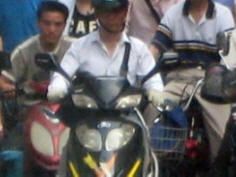
1. If we look on the streets of any city in the Global South, we see de facto PRT, personal rapid transport, all over the place.

--> Read on:

Wednesday, April 27, 2011

PRT proposal for Delhi convinces the Chief Minister (But does it convince you? See poll results)

It all started innocently enough with this newspaper article that appeared in the Press Trust of India on April 26. But when posted to the Sustran Global South peer forum for comment, the floodgates opened. For full background on this vigorously discussed, even polemic proposal, we invite you to check out the discussions at http://groups.yahoo.com/group/sustran-discuss/message/6637

--> Read on:

Tuesday, April 26, 2011

Dear Reader. May we rent your brain?

World Streets iwill on 1 May close down regular publication until we have managed to resolve our challenging financial situation. If you share our deeply felt goals concerning the up-hill push to sustainable transport, sustainable cities and sustainable lives, read on and consider how you could lend a hand. We need both near term and more solid longer term backing in order to be able to continue to make our contribution. And for this, your ideas and contacts can be of real help. If you like what we are doing with World Streets, let me ask you to read on.

--> Read on:

Moving Beyond the Automobile - Exit Parking

The tenth and final video in Streetfilms' Moving Beyond the Automobile series, looks into the necessary reasons and some of the techniques for parking reform. While the context is New York City, the  lessons are universal. From doing away with mandatory parking minimums, to charging the right price for curbside parking, to converting on-street parking spots into parklets and bike corrals, cities are latching onto exciting new ideas to make more room for people in our cities and repurpose the valuable public space that lines our streets.

--> Read on:

Who read World Streets this morning?

World Streets makes the claim that it is a truly international journal and world-wide collaborative effort.  That's an easy claim to make, but just to put some muscle on it here is a map showing the points of origin of the readers who have come in thus far this morning.  A day much like any other.

--> Read on:

Cycles of Change: Pedaling to Empowerment in Dhaka

Bangladeshi women face significant barriers from family, neighbors and society in getting on a bike a riding around town in bright daylight. Freedom of mobility is seriously curtailed in Dhaka if women don’t feel safe to travel independently in their own city. Over 35% of female commuters in Dhaka depend on a cycle rickshaw and as more major roads ban these rickshaws, daily mobility for women is threatened furthermore. Arohi’s tagline: “Pedaling the way to empowerment” summarizes the links that we plan to draw between cycles, mobility and empowerment.

--> Read on:

Monday, April 25, 2011

The Transportation Majority. Can't our politicians count?

Public transport? Cycling? Walking? Car pooling? Car sharing? People stuck at home? Elderly? Handicapped? Poor?  People unable to get to a job? Or who have to take hours to get there and don't have a choice? Spend my hard-earned money for them? Bah! Who needs it? Why bother if it's just for a few marginal people? Let's concentrate our attention and investments on the big problems, those of the majority of people. Us drivers and our cars. We are the transportation majority.

--> Read on:

Wednesday, April 20, 2011

Outreach for success: Local Actors & Implementation Partners

Too often when it comes to new transport initiatives, the practice is to concentrate on laying the base for the project in close working relationships with people and groups who a priori are favorably disposed to your idea, basically your choir. Leaving the potential "trouble makers" aside for another day. Experience shows that's a big mistake. We have to take a . . .

--> Read on:

Saturday, April 16, 2011

Honk! Cars, People and the Planet. It's a Wonderful World (Have a stupid weekend)

Have you ever given any thought to trying to imagine just how dumb some people think we are? My guess is that the good people of Hyundai have laid out serious money for this little film, without giving much thought to IQ's.  So we can only assume that they have done this for our weekend viewing pleasure. What can we say?  Well, thank you.

--> Read on:

Friday, April 15, 2011

Editorial: Best City Cycling Map known to us

To calm the passions of our spirited (but still unfinished) hate cycles/hate cars debate, here is a follow-up to our no less heady discussions on cities and cycling maps. You will see the background on all that and the interim results just below - but for now, let me introduce the map that I use each day here in Paris when I need some help for trip planning.   I am sure there must be better ones out there that we shall be hearing about, but this is not a bad way to get this discussion moving here.

--> Read on:

Thursday, April 14, 2011

Ten reasons why I really hate cars (and drivers) in cities

Well the calm of this sunny April day did not last long.  Bear hours after publication of what we thought was going to be perfectly harmless op-ed criticizing bicycles and bike readers in cities, comments, scathing and otherwise,  came cascading into the editorial offices of World Streets and our open Facebook Group page at http://www.facebook.com/worldstreets.  And within hours the following slipped in over the transom from cyclist Ezra Goldman over at “On our own two wheels”.  Let's hear what he has to say.

--> Read on:

Ten reasons why I really hate bicycles (and cyclists) in cities.
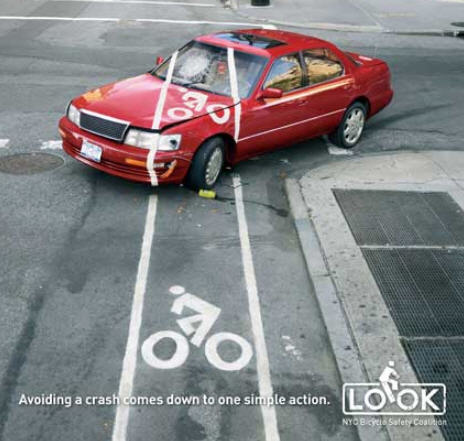
The following in this morning from an unidentified but  apparently pretty  disgruntled motorist who asked that we make his grievances widely known in the pages of World Streets.  So in the spirit of equal time and with no more ado, World Streets turns over the stage to him. Let's listen to what he has to say:

--> Read on:

Wednesday, April 13, 2011

Budget of 2011 in India: What could they be thinking?

While one face of the government sulks and spoils, the other dares to act. The budget making exercise this year in India is an evidence of this. There is progressive grassroots decision to discourage polluting diesel cars and encourage public transport and bicycles in India’s capital city of Delhi, which is in sharp contrast to the reactionary non-visionary action at the national level. Anumita Roychowdhury reports from Delhi.

--> Read on:

Tuesday, April 12, 2011

The economic case for on-street bike parking

BikenomicsIf your city is to go the bike route, and we can think of no good reason why it should not, you have to figure out the parking angle. Which, once you get into it, proves to be not nearly as easy as you might at first have thought.  Here is a thoughtful piece on the on-street parking piece of the city bike puzzle which appears in Grist this morning under the byline of the ever-inventive Elly Blue.  We propose you check it out with that second cup of coffee.

--> Read on:

Monday, April 11, 2011

World Streets Weekly: Edition of 11 April 2011

* * Click here for Weekly Edition of 11 April 2011  * *

- – - > To receive Weekly Editions freely in 2011: click here

This week's titles:

--> Read on:

Sunday, April 10, 2011

On wrong-minded modernization of transport: Message from Dhaka

World Streets is all about casting a broad net over transportation issues and approaches in cities around the world -- reporting on the good, the bad and the ugly -- so that we can learn from each other and do, hopefully, just a bit better in our own patch. Today's communication from Dhaka reports on a familiar Third World policy conflict about a popular and very important transport mode which is unloved by some but which is providing affordable, environmental, and efficient mobility for almost a third of all trips in the nation's capital. Seven days a week, on demand service when you need it, and with heavy use by women and children. If you have a look at what is going on there in this all-too familiar tussle of ideas and authority, we bet you will learn something for your own city from Dhaka.

--> Read on:

Saturday, April 9, 2011

Honk! Bus of the Future? (Have a stupid weekend)

Dutch astronaut unleashes 155 mph 'Superbus'.


From an article posted in the Science section of The Register, 8th April 2011. See the Superbus in action here. You can say that you were among the first to see it in action.

--> Read on:

Friday, April 8, 2011

Italians are moving less. But using public transport more

The economic crisis combined with the rising cost of fuel has caused significant changes in travel behavior of Italians -- is what emerges from the year-end economic report Audimob of 2010 of the Observatory on Mobility Behavior of the Italian National Institute for Training and Research for Transport (ISFORT)

--> Read on:

Bikes, Helmets and the Long Arm of the Law

We had a good look at this one back in 2008 in the context of advising local government concerning the issue of requiring cyclists to wear helmets on the then-being considered public bike project.

We asked for the counsel of a number of international experts with backgrounds and contrasting views in this area, and this short report summarizes their information and recommendations. Still looks pretty good in 2011.

* Click here for World Streets  report - Bikes, helmets and the law

--> Read on:

Thursday, April 7, 2011

Picking a few bones with our old World Bank friends

We try very hard on World Streets to stay firmly on topic. But given the swirling many-sided kaleidoscopic complexity of our concerns, we are obliged from time to time to step outside of the usual lines. For this reason, you will find here an article challenging the eventual stewardship role of the World Bank in a new global Green Climate Fund (GCF) initiative which is being discussed this week in Bangkok by climate change negotiators from 190 countries.


--> Read on:

City as a time capsule: Urban highway construction mania still booming in 2011

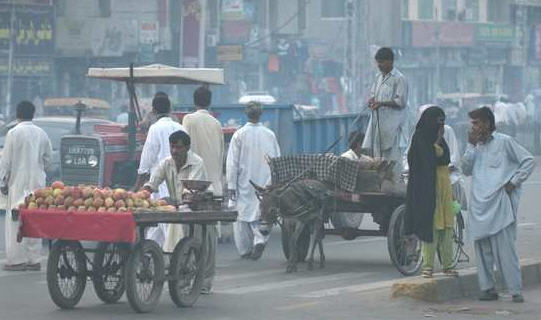
Transport planning and policy in Lahore Pakistan today, as reported by public policy consultant Hassaan Ghazali, looks like something that was dragged out of a moss-covered time capsule on a hot day: a tawdry reminder of the kind of old mobility thinking, interest-wrangling and mindless investments of hard-earned taxpayer money that challenged and in many cases helped destroy the urban fabric of cities across North America and in many other parts of the world half a century ago.

--> Read on:

Wednesday, April 6, 2011

Guangzhou, China: Winning The Future With BRT


Guangzhou is one of the fastest growing cities in the world. The economic hub of China's southern coast, it has undergone three decades of rapid modernization, and until recently the city’s streets were on a trajectory to get completely overrun by traffic congestion and pollution. But Guangzhou has started to change course. Last year the city made major strides to cut carbon emissions and reclaim space for people, opening new bus rapid transit and public bike sharing systems.

--> Read on:

Tuesday, April 5, 2011

Whence Social Media on World Streets

If anyone knows where this whole business of balancing what just might be highly useful linking with the constraints imposed by a seriously time-challenged 24 hour day, I hope they will let the editor of this journal know. True there is a great deal that is out there, and every bit of it is in constant kaleidoscopic evolution. My first temptation is to stick to what I know works, and give the rest a pass. But another part of my brain tells me that this could be a big mistake.

--> Read on:

Monday, April 4, 2011

North/South perspectives: When a cyclist is not a cyclist is not a cyclist

If you look at that Sempé time-phased cartoon of the other day in World Streets, "A Short History of Social Mobility", the lesson that leaps out at us is that what we are seeing in terms of cycling in the richer parts of the world is a phenomenon that in both economic and social terms is very specific to those places. And if by contrast we are looking for more universal lessons, especially for people in the poorest developing countries where there is a crying need for better, more affordable mobility, we may need to look elsewhere. Let's hear  what our friend Ezra Goldman has to say on this score after an enjoyable week with the cycling buffs in Seville for the annual Velo-City global bicycling bash. (Followed at the end with a few words on our a-borning Africa Streets collaborative project. )

--> Read on:

World Streets Weekly: Edition of 4 April 2011


* * * Click here for Weekly Edition of 4 April 2011 * * *


- – - > To receive Weekly Editions freely in 2011: click here


This week's titles:


--> Read on:

Friday, April 1, 2011

Stop press! Carsharing is apparently not dead after all.*

We always enjoy a good knock-up on World Streets. Keeps us thinking. After yesterday's piece in which Nicolas le Douarec undertook to stretch our minds and challenge us to consider carsharing from some other perspectives, including apparently in a coffin, we hear today from an old friend Michael Glotz-Richter from Bremen who has been orchestrating carsharing in his city and trans-European collaboration in the field for the last decade, running an EU program which currently goes by the somewhat mystifying acronym of momo (see below). Here is what Michael has to say about yesterday's reported corpse.

--> Read on:

Thursday, March 31, 2011

Carsharing is dead, long live . . . car rental?

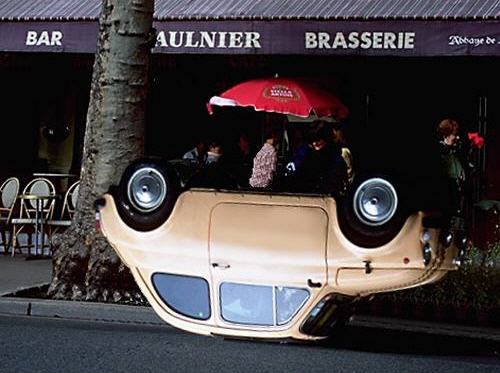
We have been reading and hearing quite a bit in the French media, and in particular in the context of the city of Paris's ambitious planned Autolib project, that "carsharing is dead in France". Which came as something of a surprise given that our own read of the evidence does not at all square with this position. So we asked Nicolas le Douarec, who has something of a record in bringing carsharing to Paris, what he thought about that death warrant. His heady response follows.
--> Read on:

Tuesday, March 29, 2011

Sempé: A Short History of Social Mobility

A Short History of Social Mobility in five small frames - from a collection of drawings and pastels that first appeared in the edition “Nothing is easy” (Rien n'est simple) by Jean-Jacques Sempé, published a century ago in 1962.  But even back then the message was howlingly clear. Amazing to think of how little it is understood two generations later, even though the indisputable proof is right before our eyes. If only we choose to look.

--> Read on:

Monday, March 28, 2011

Are the telework, telecommuting guys way behind the curve?

I have the feeling, but admittedly in some ignorance. . .  that the telework, telecommuting guys may be way behind the curve. That is, quite possibly not quite up to the challenge of the times.

--> Read on:

World Streets Weekly: Edition of 28 March 2011

* * * Click here for Weekly Edition of 28 March 2011 * * *


- – - > To receive Weekly Editions freely in 2011: click here


This week's titles:

--> Read on:

Saturday, March 26, 2011

Honk! OpenStreetMap: Visualizing spatial data

Going into our third year of publication, World Streets thus far offers to our readers close to one thousand easily retrievable original articles and twice as many illustrative graphics on a broad range of tools, measures and topics that relate in some useful way to the up-hill push to sustainable transport policy and practice in and around cities, worldwide. But until now we have not published a single article on OpenStreetMap. This is a significant oversight of an important tool which we would now like to remedy.

--> Read on:

Interview with British Transport Secretary / Attitudes towards the car

From: Simon Field [mailto:s.d.field@talk21.com] The Guardian interviewed UK Transport Minister Philip Hammond last week: you can read Andrew Sparrow's piece in full here: Throughout the interview you will see that Hammond refers to carbon as the problem, largely ignoring or dismissing other concerns about the car. Read More via Network Dispatches

--> Read on:

Friday, March 25, 2011

Managing Two and Three-Wheelers in Asia

Drivers of two-and three-wheelers are vulnerable to road accidents and deaths, and are exposed to high levels of air pollution. Two and three-wheelers remain important modes of transport in many Asian countries and cities now and in the future, and contribute to a large share of GHG emissions, air pollution and traffic congestion.

The project aims to encourage greater inclusion of two and three-wheelers in national plans and policies for urban planning, transport and environment, to address these issues.

Activities include:
• Preparation of a report to provide policy-makers and city authorities in Asian countries and cities updated information on issues relating to the increasing use of motorized two and three wheelers, including the various policies and regulations that have been and are being implemented by various Asian countries and cities.
• Preparation of a report for the Philippines focusing on alternative technologies for replacing 2-stroke three-wheelers

Donor: PCFV, CAI-Asia Center, PCA

Duration: November 2008 - December 2010

CAI-Asia contact: Bert Fabian, bert.fabian(at)cai-asia.org

download full report here.

--> Read on:

Thursday, March 24, 2011

Op-Ed. Time to put a stake in the ground

Our friend and occasional contributor from Lahore Pakistan, Hassaan Ghazali, is a very severe critic not only of transport policy and practice in his country, but also of the many cultural and political facts of life which form the fundamental bedrock of the decisions which shape (or misshape) the sector (and with it our day-to-day lives). Bad decisions, very bad decisions in our sector, are rarely just accidents or one-off occurrences. They are deeply embedded, almost invisible to most, and there are entrenched reasons behind them, whether in Pakistan, Paris or Peoria. Here he explores man/car/technology relationships which can be seen in many places around the world.  In short, most of us have a problem with the car. But it's not the car that is the problem. It's us. That's the first thing we need to come to grips with. All of us in fact. Read on.
--> Read on:

Tuesday, March 22, 2011

BMW enters the one-way carsharing market

Those premium German car companies must know something we don't! BMW announced it was getting into the one-way carsharing business in Munich, with a fleet of 300 BMW 1-series and Minis, starting in April; followed by 500 vehicles in Berlin.  They're calling it "Premium Carsharing".

--> Read on:

Monday, March 21, 2011

The Battle for the Streets of New York City

What was the song? "If you can do it here you can do it anywhere. New York New York"? Well there just may be something to that. Here is some of the latest on how the proponents of more and safer biking in New York City are using social media to gain support from the citizen base, while at the same time an irate lobby is doing its best to keep the streets as they were and, as they hope, ever shall be. Amen Sister. (BTW, this is by no means a unique conflict. It could be your city.)

--> Read on:

Thursday, March 17, 2011

Mobility, Democracy and Politics: Interview with Monsieur le Maire

What's happening on the new mobility scene in France in 2011? Here you have, in French but with good subtitles, an interview by one of the outstanding political innovators in the field of sustainable transport policy and practice in France. Roland Ries is serving his second term as mayor of Strasburg, and at the same time heads up the national transport political group GART. He also, by the way, as a member of the French Senate drafted the law defining carsharing in France, thus opening up a part of the way to more and better carsharing nation-wide. Spend three minutes with this short video to get a feel for what the leading edge in France is thinking and doing about transport in cities. You will quickly see that this is a world-level message. Play it for your mayor and talk to her about it.

--> Read on: