Showing posts with label Global South. Show all posts

Tuesday, May 14, 2013

Archives: The Limits of Cost-Benefit Analysis

During the early nineteen sixties the famed development economist, Albert Albert HirschmanHirschman negotiated with the International Bank of Reconstruction and Development, part of the World Bank group, the financial support that he needed for an extended visit to several WB development projects scattered throughout the poor areas of the world. The document where he reports his visit was the matter of much controversy between the IBRD staff and Hirschman. One of the major points of disagreement was the latter´s refusal to employ the technique of cost-benefit analysis, then very popular at the WB, as a measure of the success of a project.

--> Read on:

Monday, May 13, 2013

Change has to take root in people’s minds (before it can be legislated)

john adams risk coverProfessor John Adams has spent quite some years in researching, thinking, talking and writing about risk, and about risk when it comes to how people get around in their daily lives. This posting is taken from his blog “Risk in a hypermobile world”  His attraction to transport problems grew out of his involvement in the 1970s and 80s as an objector at public inquiries, on behalf of Friends of the Earth, to the British Government’s road building plans. See “Hypermobility: too much of a good thing” for a summary of his current take on transport problems.

--> Read on:

Sunday, May 12, 2013

Monday, May 6, 2013

Due to lose? Well maybe not quite yet.

An article of April 26, 2013," The Race of Our Lives"(GMO) by Jeremy World population densityGrantham, is a worthwhile read on your Tablet. Click here for article.)  .   In part because his basic thesis is that the white horse of hope for the future of our endangered species and planet just might turn out to be the triple whammy of (a) serious autopilot demographic downsizing, (b) deus ex machina help from our extended 21st century brains (think internet and/or Zetabytes) and (c) the bountiful near-term harvest of renewable energy. It's a pretty good read for your spare time.

--> Read on:

Sunday, May 5, 2013

Archives: The dangers of shared taxis (2005)
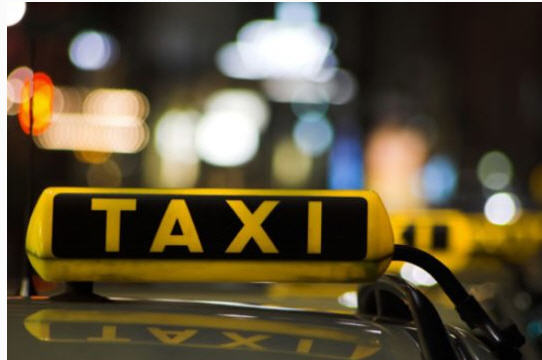
USA - taxiDiscussion from archives of the New Mobility Agenda as recorded on  Sustran Global South on 16 Nov. 2005. Simon Norton writes from Cambridge, UK:

When one introduces shared taxis one has to guard against the danger that they take people off buses and trains (or off their feet or bikes) rather than off cars. If so they will actually increase the number of motor vehicles, and furthermore unless the system is transparent and available to casual users (i.e. one doesn't have to live in the area, belong to a club, or book ages in advance) they may prevent the development of genuinely comprehensive mobility systems."

--> Read on:

Wednesday, November 21, 2012

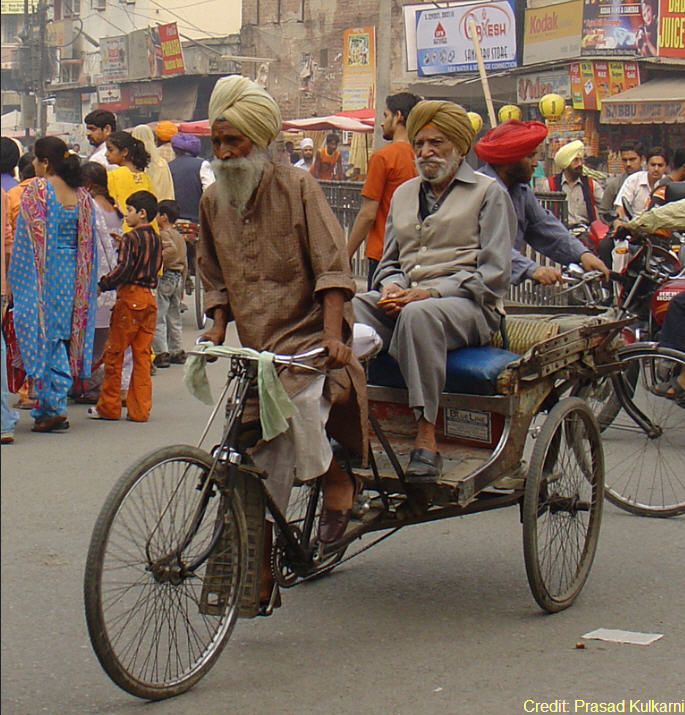
Why cycle rickshaws should be driven from the street. (And what it means for mobility, environment, equity and the wellbeing of hundreds of thousands of hard working people and their families)

Let me not poach the information and arguments presented in this fine analysis of the informal transport economy of Ashima Sood's recently published paper in the Economic and Political Weekly (Mumbai), other than to cite her opening summary:  "A February 2010 judgment of the Delhi High Court called into question several assumptions underlying policy thinking on the cycle rickshaw sector. Examining these assumptions in the light of new research and advocacy efforts, this article considers the prospect of policy and regulatory reform. With the cycle rickshaw sector as a case study, it argues that the punitive regulatory framework governing the sector embodies the dualist or even parasitic models that inform policy on informal services more broadly. Assessing the larger viability and contribution of informal sector activities requires more attention to local and sector-specific micro-processes."
--> Read on:

Monday, October 31, 2011

A Sustainable Transportation Clean Air Media Cornucopia

From the website of the Clean Air Institute, you have here for your convenient consultation more than 50 audio presentations made during their May 2011 Conference for Sustainable Transportation, Air Quality and Climate Change held in Rosario Argentia. They report that this collection is the largest online collection of audio presentations in Spanish on transportation issues, air quality and climate change. You can access it in Spanish here. And in English, a useable (to us) Google translate version here .

--> Read on:

Wednesday, June 1, 2011

Walkability Assessment in 13 Asian Cities

The poor state of pedestrian facilities in some Asian cities was highlighted in the report published by the Asian Development Bank and the Clean Air Initiative for Asian Cities. Ironically, the lowest walkability ratings are found to be along public transport terminals and schools where footpaths, pedestrian amenities and access for persons-with-disabilities are sorely lacking.

--> Read on:

Sunday, May 22, 2011

World Transport Policy & Practice – Vol. 17, No. 1

The Journal of World Transport Policy and Practice is the long-standing idea and print partner of World Streets and the New Mobility Agenda since 1995. The Spring edition appears today with articles by Ian Ker, Joshua Odeleye and Eric Britton. In the article that follows you will find the lead editorial by founding editor John Whitelegg. (For a more complete introduction to World Transport click here.)

- - - > To obtain your copy of WTPP 17/1 click here.


--> Read on:

Friday, April 29, 2011

Editorial: Will the real PRT please stand up
Somebody wake me up on this please  on this discussion. (See references at end).

1. If we look on the streets of any city in the Global South, we see de facto PRT, personal rapid transport, all over the place.

--> Read on:

Tuesday, April 26, 2011

Cycles of Change: Pedaling to Empowerment in Dhaka

Bangladeshi women face significant barriers from family, neighbors and society in getting on a bike a riding around town in bright daylight. Freedom of mobility is seriously curtailed in Dhaka if women don’t feel safe to travel independently in their own city. Over 35% of female commuters in Dhaka depend on a cycle rickshaw and as more major roads ban these rickshaws, daily mobility for women is threatened furthermore. Arohi’s tagline: “Pedaling the way to empowerment” summarizes the links that we plan to draw between cycles, mobility and empowerment.

--> Read on:

Sunday, April 10, 2011

On wrong-minded modernization of transport: Message from Dhaka

World Streets is all about casting a broad net over transportation issues and approaches in cities around the world -- reporting on the good, the bad and the ugly -- so that we can learn from each other and do, hopefully, just a bit better in our own patch. Today's communication from Dhaka reports on a familiar Third World policy conflict about a popular and very important transport mode which is unloved by some but which is providing affordable, environmental, and efficient mobility for almost a third of all trips in the nation's capital. Seven days a week, on demand service when you need it, and with heavy use by women and children. If you have a look at what is going on there in this all-too familiar tussle of ideas and authority, we bet you will learn something for your own city from Dhaka.

--> Read on:

Thursday, April 7, 2011

City as a time capsule: Urban highway construction mania still booming in 2011

Transport planning and policy in Lahore Pakistan today, as reported by public policy consultant Hassaan Ghazali, looks like something that was dragged out of a moss-covered time capsule on a hot day: a tawdry reminder of the kind of old mobility thinking, interest-wrangling and mindless investments of hard-earned taxpayer money that challenged and in many cases helped destroy the urban fabric of cities across North America and in many other parts of the world half a century ago.

--> Read on:

Monday, April 4, 2011

North/South perspectives: When a cyclist is not a cyclist is not a cyclist

If you look at that Sempé time-phased cartoon of the other day in World Streets, "A Short History of Social Mobility", the lesson that leaps out at us is that what we are seeing in terms of cycling in the richer parts of the world is a phenomenon that in both economic and social terms is very specific to those places. And if by contrast we are looking for more universal lessons, especially for people in the poorest developing countries where there is a crying need for better, more affordable mobility, we may need to look elsewhere. Let's hear  what our friend Ezra Goldman has to say on this score after an enjoyable week with the cycling buffs in Seville for the annual Velo-City global bicycling bash. (Followed at the end with a few words on our a-borning Africa Streets collaborative project. )

--> Read on:

Friday, March 25, 2011

Managing Two and Three-Wheelers in Asia

Drivers of two-and three-wheelers are vulnerable to road accidents and deaths, and are exposed to high levels of air pollution. Two and three-wheelers remain important modes of transport in many Asian countries and cities now and in the future, and contribute to a large share of GHG emissions, air pollution and traffic congestion.

The project aims to encourage greater inclusion of two and three-wheelers in national plans and policies for urban planning, transport and environment, to address these issues.

Activities include:
• Preparation of a report to provide policy-makers and city authorities in Asian countries and cities updated information on issues relating to the increasing use of motorized two and three wheelers, including the various policies and regulations that have been and are being implemented by various Asian countries and cities.
• Preparation of a report for the Philippines focusing on alternative technologies for replacing 2-stroke three-wheelers

Donor: PCFV, CAI-Asia Center, PCA

Duration: November 2008 - December 2010

CAI-Asia contact: Bert Fabian, bert.fabian(at)cai-asia.org

download full report here.

--> Read on:

Thursday, March 24, 2011

Op-Ed. Time to put a stake in the ground

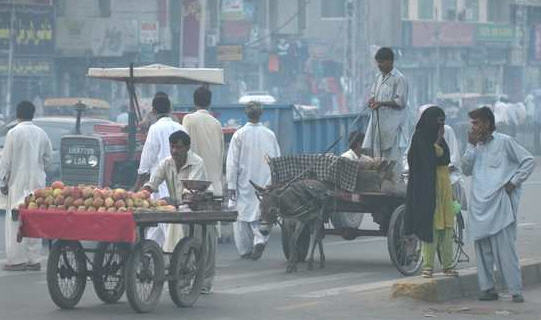
Our friend and occasional contributor from Lahore Pakistan, Hassaan Ghazali, is a very severe critic not only of transport policy and practice in his country, but also of the many cultural and political facts of life which form the fundamental bedrock of the decisions which shape (or misshape) the sector (and with it our day-to-day lives). Bad decisions, very bad decisions in our sector, are rarely just accidents or one-off occurrences. They are deeply embedded, almost invisible to most, and there are entrenched reasons behind them, whether in Pakistan, Paris or Peoria. Here he explores man/car/technology relationships which can be seen in many places around the world.  In short, most of us have a problem with the car. But it's not the car that is the problem. It's us. That's the first thing we need to come to grips with. All of us in fact. Read on.
--> Read on:

Friday, September 3, 2010

Kaohsiung 2010 Papers: Are streets meant for travel alone?

This essay contests the idea that streets are for travel alone by critically examining the logic and language employed by the elite to delegitimize two marginalized groups using streets for non-travel purposes: hawkers and pavement-dwellers. Further, court cases interpreting constitutional guarantees in the context of hawkers and pavement-dwellers are examined. Based on these discussions, an attempt is made to provide an alternative framework for the governance of streets, in which streets are seen essentially as shared commons whose use is subject to democratic decision-making based on shared goals of society.

--> Read on:

Tuesday, August 31, 2010

Kaohsiung 2010 Papers: Street sharing in Nepal

In most developing world cities, the vast majority of citizens walk as part of their daily social, recreational, and livelihood activities. Every trip begins and ends with a walking trip. Nearly all trips made by people entail some walking, either directly to a destination or to another mode of transport. In Kathmandu, large section of population prefers to walk. In fact, 18.1 percent of daily trips are made entirely on foot, and of the nearly 56.5 percent of the commuters who use different modes of public transport, a large percentage walk as part of their daily commute.

--> Read on: