Showing posts with label pedestrian. Show all posts

Saturday, December 28, 2013

Getting away with M U R D E R

In memoriam 2013.


Streetsblog: Doing its job year after year in New York City.


Each year our friends over at STREETSblog in New York City publish a heart-rending testimonial to the mayhem that automobiles have wrought over the year on their city's streets and the cost in terms of lives lost by innocent pedestrians usa ghost bike photoand cyclists. Putting names, faces and human tragedy to what otherwise takes the form of dry numbers, faceless hence quickly forgettable statistics is an important task. We can only encourage responsible citizens and activists in every city on the planet to do the same thing, holding those public officials (and let's not forget, "public servants") responsible for what goes on under their direct control.

Who is doing this job in your city?


--> Read on:

Monday, April 1, 2013

Our Right to Walk is Non-negotiable (India)

india- children in trafficAnumita Roychowdhury, associate director of the Centre for Science and Environment in New Delhi, in a wide-ranging conversation with Faizal Khan reporting for the excellent Walkability Asia ( Clean Air Initiative for Asian Cities),  spells out clearly the inevitability of a non-motorised transport code in India through shocking figures and revealing facts. "We need zero tolerance policy for accidents. This menu of action needs support. Our right to walk is not negotiable."  And on this Roychowdhury is entirely right. On this score we must be entirely intransigent and as part of this to keep pounding away on this important point of citizen activism on every available occasion, until we get the concept of zero tolerance written into the law and respected on the streets. All our streets!

--> Read on:

Monday, January 14, 2013

Streetsblog: Doing its job year after year in New York City. In memoriam 2012

Each year our friends over at Streetsblog in New York City publish a heart-rending testimonial to the mayhem that automobiles have wrought over the year on their city's streets and the cost in terms of lives lost by innocent pedestrians and cyclists. Putting names, faces and human tragedy to what otherwise takes the form of dry numbers, faceless hence quickly forgettable statistics is an important task. We can only encourage responsible citizens and activists in every city on the planet to do the same thing, holding those public officials (and let's not forget, we call them "public servants", and for excellent reason) responsible for what goes on under their direct control.

--> Read on:

Friday, October 12, 2012

Do It Like The Dutch & Danes: Guide To Becoming A Bike Friendly Mecca

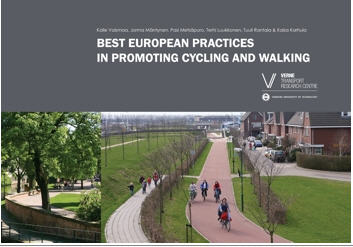
Why are some European cities cycling mad? And how can other cities copy their infrastructure? ECF spoke to Kalle Vaismaa, co-author of the book “Best European Practices in Promoting Cycling and Walking”. (Article source: European Cyclists’ Federation ECF)

--> Read on:

Thursday, July 12, 2012

No Parking, No Business 3: Walking and cycling perspectives

Continuing  our coverage of the open "No parking, No business" conversation, more on walkability impacts/local economic development impacts, this time  from Todd Litman: selected references  from the "Walkability" chapter of the Online TDM Encyclopedia of the Victoria Transport Policy Institute. 

--> Read on:

Wednesday, July 11, 2012

No parking, no business 2: What happens in the store.

On 23 June we asked the following open question to our readers "Has anyone out there ever run across a solid report or study showing that local businesses suffer financially when a zone is pedestrianized or made bike-accessible? Or that real estate prices take a nose dive when such improvements are made? Most of us here are familiar with the other side of this coin, but it occurred to me that this such critical references might be useful to us all, given that these local conflicts and claims come up time and time again in cities around the world."

--> Read on:

Tuesday, June 26, 2012

No Parking, No Business 1: What if the other guy actually has a point?

Last Saturday morning, the 23rd of June, I thought to ask an open question to several of our New Mobility Agenda fora as follows:

Has anyone out there ever run across a solid report or study showing that local businesses suffer financially when a zone is pedestrianized or made bike accessible? Or that real estate prices take a nose dive when such improvements are made? Most of us here are familiar with the other side of this coin, but it occurred to me that this such critical references might be useful to us all, given that these local conflicts and claims come up time and time again in cities around the world.

--> Read on:

Friday, November 11, 2011

The Battle for the Street: Who won? Who lost? What next?

[Have a look at this good historical piece by Christopher Gray which appeared in today's New York Times under their Streetscapes/Traffic Wars rubric.]
IN the future, perhaps our time will be known as the first decade of the Bicycle Wars, with righteous armies fighting over traffic lanes, bike paths and sidewalks, indeed over the very purpose of the streets themselves. Like many wars, it’s a question of territory, and the pedestrian has been losing for years.

--> Read on:

Tuesday, July 12, 2011

Toward a new paradigm for transport in cities: Let's see what Carlos Pardo has to say

The Stuttgart conference of Cities for Mobility this year represented an important step forward in the construction of a well-defined agenda for new mobility that up until the present time has been sadly lacking. But what we have managed to develop over the last two decades is a certain number of basic principles spanning many different areas and kinds of operational situations, but somehow until now we have failed to put them all together into a well-defined, convincing operational and policy package. We think of this as the move toward a new paradigm for transport in cities – and it all starts with . . . slowing down.

--> Read on:

Monday, June 20, 2011

World Transport Policy & Practice – Vol. 17, No. 2

The Journal of World Transport Policy and Practice is the long-standing idea and print partner of World Streets and the New Mobility Agenda since 1995. The Summer 2011 edition appears with articles by Bruce Appleyard, Joshua Hart and Graham Parkhurst, and Peter Newman and Jeff Kenworthy. In the article that follows you will find the lead editorial by founding editor John Whitelegg. (For a more complete introduction to World Transport click here.)

- - - > To obtain your copy of WTPP 17/2 click here.

--> Read on:

Wednesday, June 1, 2011

Walkability Assessment in 13 Asian Cities

The poor state of pedestrian facilities in some Asian cities was highlighted in the report published by the Asian Development Bank and the Clean Air Initiative for Asian Cities. Ironically, the lowest walkability ratings are found to be along public transport terminals and schools where footpaths, pedestrian amenities and access for persons-with-disabilities are sorely lacking.

--> Read on:

Monday, March 21, 2011

The Battle for the Streets of New York City

What was the song? "If you can do it here you can do it anywhere. New York New York"? Well there just may be something to that. Here is some of the latest on how the proponents of more and safer biking in New York City are using social media to gain support from the citizen base, while at the same time an irate lobby is doing its best to keep the streets as they were and, as they hope, ever shall be. Amen Sister. (BTW, this is by no means a unique conflict. It could be your city.)

--> Read on:

Tuesday, March 15, 2011

New York City Memorial Project: Remembering walkers and cyclists killed on the city's streets

On Sunday, the NYC Street Memorial Project held the 6th Annual Memorial Ride and Walk. According to the New York City Department of Transportation, 151 pedestrians and 18 bicyclists were killed on the streets of New York City in 2010. Participants called for stronger measures to reduce traffic fatalities. The ride culminated by installing a "Ghost Bike" in front of Brooklyn Borough Hall for the unnamed pedestrians and cyclists killed in 2010.

--> Read on:

Friday, March 4, 2011

What percent of your city's street space is allocated to non-car uses

The pie chart you will find just below  graphically illustrates the state of street space allocation today in New York City, after four years of hard work on a committed local effort by city government and many associations to free street space for pedestrians, bikes and buses. All that for less than one half of one percent of the public space given over to cars. So here is our question this morning: Do things look any better in your city in 2011? We invite your reports and comments.

--> Read on:

Monday, November 15, 2010

Fighting Traffic: The Dawn of the Motor Age in the American City

The author of this careful and quite extensive book review of the battle for America's streets is Karthik Rao-Cavale, a graduate student at Rutgers University and an associate editor of our sister publication, India Streets. He writes: "This review was originally written for a class I am taking with Prof. John Pucher here at Rutgers University. I am putting up this review here even though the book reviewed talks mainly about the United States, because I feel that the lessons learned are most immediately applicable to developing world. It is a lengthy read, but I hope you will enjoy it."

--> Read on:

Friday, September 3, 2010

Kaohsiung 2010 Papers: Share/Transport in India - Threats, Challenges, Opportunities

Sharing is an inherently natural process of establishing a joint use of resources It is a primarily self-initiated and regulated process. In this regard share transport can be seen as an informal, unregulated or loosely regulated, low-cost (even works on micro credit, when loose change is unavailable to complete the transaction), small or medium scale sharing of transport infrastructure (such as roads, streets and spaces) and/or vehicles in time and/or space. Sharing of Transport in this format, across the Indian Sub-continent and indeed many other developing countries in South-East Asia, has always been a part of the informal public transport network and is mostly as old as the city itself.

--> Read on:

Friday, May 14, 2010

No Accident!
Traffic and Pedestrians in the Modern City

As most of our regular readers are well aware, World Streets is no friend of speed in cities. To the contrary, it is our firm position that a considerable number of the basic objectives associated with sustainable mobility and sustainable cities can be achieved if we do no more than to reduce top speeds in and around our cities in a strategic and carefully thought-out way. The great technological virtuosity of traffic engineers and technical planners permit us to do this, while at the same time retaining a well working transportation system, a healthier city, and a viable local economy. Listen to what John Rennie Short and Luis Mauricio Pinet-Peralta have to tell us on the subject.

No Accident: Traffic and Pedestrians in the Modern City

Authors: John Rennie Short and Luis Mauricio Pinet-Peralta. Department of Public Policy, University of Maryland Baltimore County, Baltimore, MD, USA

Abstract
This paper considers the rise of traffic accidents in the creation of the modern city. The notion of accidents is deconstructed. There is a brief review of current literature on mobilities and then evidence is presented of the shifting configuration of vehicle-pedestrian accidents. The epidemic of traffic accidents of cities in developing world is noted and explained. The incidence of pedestrian traffic accidents is shown to reflect socio-economic characteristics such as age, class and status. A review of the literature provides evidence of the ways to ameliorate pedestrian injuries. Walksheds are suggested as a focus of concern. The creation of a more pedestrian-friendly city is proposed.

The Modern City

At the heart of modernity is the connection between speed, the machine and the city. In his 1909 manifesto of Futurism, Filippo Tommaso Marinetti (1876-1944) glorified the man at the wheel and the beauty of speed. He associated speed with courage in action and slowness with stagnant prudence. His glorification of the speeding automobile in the city prefigures its subsequent centrality to urban development.

Cities were reimagined and then reengineered to promote high speed. Virilo (1986; 1995; 2005) tells a story of the destruction of the sociability of the city by the logic of acceleration. In a more nuanced interpretation, Latham and McCormack (2008) explore the ways in which the speed and the 'countervailing eddies of slowness' define the experience of the city. However, in terms of urban traffic and the marginalization and displacement of the self-propelled human body, Virilio's image of the city as a site of acceleration seems closer to the mark. In this paper, we will explore one of the little discussed consequences of this transformation, the risk of bodily accidents in what are described as 'traffic accidents'.

The modern city is designed largely around the use of motor vehicles despite the inherent risks in machine-body coexistence, part of the brisk pace of city life. Indeed, in the immediate prehistory of automotive ascendancy, the Futurists downplayed any risks and celebrated machine-body meshing as a means to a high-speed, dynamic superhumanity.

Such eventual transformation was made possible, according to the Futurism's founding myth, when poet Filippo Marinetti emerged from a ditch after crashing his beloved Fiat, spewing mud and apparently, the Manifesto of Futurism, which begins 'We want to sing the love of danger, the habit of energy and rashness' and famously continues 'We declare that the splendor of the world has been enriched by a new beauty: the beauty of speed. A racing automobile with its bonnet adorned with great tubes like serpents with explosive breath … a roaring motor car which seems to run on machine-gun fire, is more beautiful than the Victory of Samothrace' (Flint, 1972, p. 41).

By the early 1930s, Le Corbusier further enshrined swift automobility, proposing his 'autostrades' as concrete ribbons threading skyscrapers' canopies, elevated above mere city streets and devoid of pedestrians for optimum vehicular velocity. Speed and the fantasy of infinite mobility were at the heart of modernism and its physical embodiment in urban modernity. Norton (2008), for example, tells the story of American cities; at the beginning of the twentieth century, city streets had a variety of users, people as well as cars, and multiple users, a place for children playing, people walking, neighbors chatting.


From the 1900s to the early 1930s, a battle was fought between, on the one hand, the multiple users and interests decrying the onslaught of cars on streets and the growing dominance of auto traffic, the term 'death cars' was frequently used, and on the other hand, automotive interests which continually invoked freedom as a rallying cry. The automotive interests won. From our perspective today it seems a foregone conclusion but the 25-year period in the early twentieth century reminds us of the battle for alternative conceptions of the primary purpose of city streets.

This urban restructuring of the city streets as pathways for automobiles with pedestrians shunted to the sidewalks has a high human cost. High-speed machines mangle bodies and kill pedestrians and yet these costs are largely absent from urban studies and discussions of urban safety.

A recent book with the title The Safe City (Berg et al., 2006) makes for interesting reading, as much for what it does not include as for what it does include. While issues of terrorism and crime abound in the book, one issue receives scant attention despite the book's title, which is the risk of bodily injury and fatality from traffic accidents. Such neglect is not uncommon in the recent urban literature where terrorist campaigns and crime waves dominate safety issues, yet there is a huge silence on the issue of traffic safety and especially pedestrian injuries and fatalities.

There have been a number of commentators who have drawn attention to the issue of traffic and pedestrian safety (Hass-Klau, 1990), numerous empirical studies (e.g., Chapman et al., 1982; Graham & Glaister, 2003) as well as the continuing concern of such commentators as Mayer Hillman (Hillman, 1993; Karpf, 2002). However, the issue has failed to gain traction in the wider and broader urban studies literature. And yet the issue is of some importance.

Across the world almost over 10 million people are crippled or injured each year, and approximately 1.2 million people are killed every year due to road accidents, approximately 3,250 people every day, (Peden et al. 2004). That is the equivalent of a World Trade Center disaster on the world's roads each and every day. One writer even refers to a global epidemic of road deaths (Dahl, 2004). The total economic cost is estimated at 1 percent of the GNP of low-income countries and 2 percent in high-income countries (Jacobs et al., 2000).

No Accident

Even the quickest review of recent and classic urban texts reveals little consideration of this issue. Why the silence? Two reasons stand out. First, there is the notion of the accidental, of random events that are to be endured rather than explained.

The term 'accident' is revealing; it initially meant an event, anything that happens. Now the word commonly refers to an unforeseen event, a mishap. But the predictable covariance of road deaths with social phenomena belies this connotation of 'accident'. The young and the vulnerable and the poor and the marginal are more likely to be hit by a car than the rich and the powerful. While road deaths have declined among rich countries, they have increased among poor countries.

These statistics suggest an ordered causation rather than random occurrences. Road traffic accidents are not mishaps but events that are both explainable and preventable. The relative silence shrouding this serious issue is itself a political act. The incidence of pedestrian fatalities and injuries is skewed toward the more marginal and vulnerable members of society. Yet this consistent finding has failed to capture the attention of most critical theorists.

Most pedestrian fatalities occur in poor countries and have greater impact on the poor, the young and the old. Pedestrian injuries are just one strand in webs of multiple deprivations that bind people in disadvantaged positions. To see traffic fatalities and injuries through the lens of marginalization theory is to offer a very different perspective on them as accidents (see Cutler & Malone, 2005).

Second, there is the silence accorded to all events that have a constant background quality. The fact that road traffic accidents happen all the time makes them blend into the fabric of the taken for granted.

Too regular to generate much notice, they become mere white noise rather than events to be analyzed. Their very consistency and regularity allows them to fade into an unexamined, rarely discussed space. The urban spectaculars such as the collapse of the World Trade Center, overwhelms and ultimately silences the murderous regularity of road traffic fatalities and injuries.

Road traffic 'accidents' are taken for granted cost of contemporary urban living, a seeming inevitability that allows attention to be drawn to the more unusual, rare events; they are just too mundane, too anonymous, too ordinary to generate much interest. However, the rising concern with the everyday ordinary nature of the lived urban experience should prompt a reconsideration of road safety and risk.

The 'ordinary' quality assigned to road traffic accidents is, if you excuse the unintended pun, no accident: there is also a vast array of interests concerned with making them ordinary. These interests include the motor vehicle manufacturers, road builders, construction companies as well as a society that does not want to question the fatal costs of a culture and cities dominated by fast moving vehicles. The current usage of the term 'accidents' to refer to fatal and damaging machine-body interactions in the city is incorrect, misleading and deceptive in shifting the phenomenon from social outcome to random event.

Perrow (1999) introduced the notion of 'normal accidents' that may be unforeseeable yet are inevitable. Perrow based his initial work on the near meltdown of Three Mile Island. Drawing a wider perspective on high-risk technologies, he argues that accidents occur when systems become more complex and interconnected. These conditions are increasingly met in cities where traffic patterns are more complex and a variety of users share busier roads. The ubiquitous nature of motorized transport in many cities, in comparison to the obvious singularity of nuclear power station renders it, in the minds of many, as safe or relatively innocuous.

Yet a heavy piece of metal - the average weight of a US car in 2006 was 4142 lbs. (1878 kg) - traveling at even 30 miles per hour, operated by someone, perhaps listening to the radio, drinking coffee or using his cell phone, times the thousands of other drivers on a road in the average city constitutes a complex technological system with lots of room for human error. The result is a relatively high risk of being involved in a car crash. Our need for urban vehicular traffic has in part blinded us to its inherent and inevitable risks to health and safety. Popular perceptions of risks, in general and in relation to traffic accident risk in particular, are based more on intuition and judgment, rather than objective assessments (Slovic, 2002).

In this paper, after reviewing some mobilities literature and presenting some general background data, we will concentrate on pedestrian injuries, because they are marginalized by recent urban safety scholarship: there is no rush to publish or comment on everyday traffic accidents involving pedestrians as there is to pontificate in the wake of 9/11. Then we will review a range of recent papers that explore the causal connections between urban design and traffic 'accidents'. We will introduce the notion of 'walkshed' as a unit of analysis and conclude with intimations of more progressive changes.

The paper is part review and part an attempt to right the balance in discussions of urban traffic. As the more affluent move around by car and limousine, the pedestrian becomes the minor player in transport discussions, and as cities are restructured to fit the needs of the car, the needs of the pedestrian are even less considered. But even the car driver has to step out of the car at times.

While not everyone drives a car, most of us are pedestrians at some time. However, as soon you step out of your car in many if not most cities, you become a second-class citizen: it is as if your full rights only exist when you drive a car.

Walk in the city, and you are pushed to the sides of the road, a telling phrase and metaphor. When a car hits a child it is often treated as an accident, when a child hits a car it is considered vandalism. When Short (1989) writes in The Humane City of cities designed as if only some people matter, he references specifically car drivers in contrast with pedestrians. Cities are biased toward the needs of the drivers rather than the rights of the pedestrians, despite the obvious inequality. A heavy metal object traveling at even relatively low speeds does more damage to a human body than the body does to the car. People get killed and maimed; cars merely get scratched and dented.
. . . (Body of paper follows here. We jump for now to the authors' conclusions. See below for links to full article.) . . .

Conclusion

Across the globe there is an epidemic of traffic injuries and fatalities that is particularly marked in low- and middle-income countries. Almost 90 percent of traffic fatalities occur in low- and middle-income countries. The most vulnerable are pedestrians, cyclists and public transport users. The poor, the young and the old are at especially high risk.

Injury control and prevention strategies as part of a broader and deeper reorientation of cities away from a car-dominated culture toward a vehicle-pedestrian sharing culture can have significant impacts on morbidity, mortality, risk of injury and population health. These strategies include:

* Limiting and controlling speed through active and passive measures that target drivers' decisions on how fast to drive and road conditions that indirectly force drivers to reduce their average speeds;

* Organizing traffic away from residential areas, limiting inner city and business area traffic flow, and encouraging alternative modes of transportation that focus more on health benefits and non-motorized road users;

* Continuing public information programs targeting high-risk groups and vulnerable urban populations;

* Integrating urban planning and development and public health to design built environments that promote healthier lifestyles rather than safer behaviors.

Pedestrian injuries are not accidents. They are preventable. If the vulnerability of the human body was the determining factor, then it is unlikely we would design our transport system the way we have.

'Accidents' reflect and reinforce social differences: they are less accidents and more manifestations of wider and deeper inequalities in society that reflect the relative power of a vehicle-dominated as opposed to a pedestrian-dominated culture.

We need an anti-Marinetti to write a program for the future in which the city reflects the needs of the pedestrians and the frailties of the human body rather than the needs of the drivers and the power of their vehicles. It is perhaps fitting then that the same country that produced Mainetti is also home to the CittaSlow movement.

# # #

For the full text
, referencess and graphics of this thought-provoking twenty page paper, please click here to : http://www.informaworld.com/smpp/section?content=a917906422&fulltext=713240928
Contents:
- The Modern City
- No Accident
- A Wider Context
- Urban Design and Road Safety
- The City as Urban Walkshed
- Conclusion
- References
- List of Tables
# # #

Source: The full text of this article was published in: the journal Mobilities, Volume 5, Issue 1 February 2010 , pages 41 - 59. It is reprinted here with the kind permision of the authors.

The authors:

John Rennie Short is an expert on urban issues, environmental concerns, globalization, political geography and the history of cartography. He has studied cities around the world, and lectured around the world to a variety of audiences. He is Professor of Public Policy at the University of Maryland (UMBC). He can be contacted via jrs@umbc.edu.

Luis Mauricio Pinet Peralta holds a Ph.D in Public Policy, Health Specialty, with a background in Emergency Health Services, Epidemiology & Preventive Medicine. He is a Research Associate of the Department of Public Policy, University of Maryland Baltimore County, Baltimore, MD. He can be contacted via lpinet1@umbc.edu.

--> Read on:

Wednesday, May 5, 2010

Promoting road safety and clean air in Kathmandu

This is the second article in a series coming in from Nepal, showing how the combination of traffic restraint and the push toward the creation of pedestrian- friendly areas is giving results in their capital city. The reader should bear in mind that the traffic situation on most of the city streets is extremely chaotic and dangerous, above all as a result of the explosion of fast-moving two wheelers. The city also suffers from major air quality problems due to a noxious combination of heavy traffic, dirty engines, thin air, natural meteorological factors and its location in the high Kathmandu Valley.

Pedestrianisation promotes road safety and clean air in Kathmandu

- Charina Cabrido, Clean Air Initiatives for Asian Cities. Kathmandu, Nepal.

The Kathmandu Metropolitan City (KMC) recently closed the Hanumandhoka Durbar Square from all kinds of vehicles as part of the government’s initiative to preserve the monument zones and reestablish the World Heritage Site as pedestrian friendly area. This aims to secure the safety of people walking in the city.

In Kathmandu, large portions of the population prefer to walk. In fact, 18.1 percent of daily trips are made entirely on foot, and of the nearly 56.5 percent of the commuters who use different modes of public transport, a large percentage walk as part of their daily commute.

However, inadequate planning has lead to many unnecessary fatalities and injuries. According to a study conducted by Kathmandu Valley Mapping Program (KVMP), pedestrians account for up to 40 percent of all fatalities in Kathmandu City in 2001.

The Clean Air Initiatives for Asian Cities and Clean Energy Nepal proposed for the implementation of exclusive zones for non – motorized transit within congested urban zones based from the results of its walkability survey.

What KMC has done is something that we must applaud. Urban cities with improved land use and transportation planning deliberately include pedestrianising streets to contribute to good health and quality of life. Based on a study made by the WorldWatch Institute, a short, four-mile round trip of walking helps reduce 15 pounds of pollutants in the air that we breathe.

Heritage Walk Project in Hanumandhoka Durbar Square

The heritage walk project in Hanumandhoka Durbar Square motivates people to take action to improve Kathmandu’s air quality. It reminds us that walking is the most socially inclusive mode of transport and is available to most people, regardless of age, gender, education or income. When you walk, you contribute to the creation of a healthy environment by reducing traffic congestion, air and noise pollution and creating a safer, more social and liveable community.


It also creates a good impression for many visiting tourists in this country that there are safer and quieter roads that is designed entirely for the people. Pedestrian facilities that create safe and attractive environments with a range of amenities will encourage walking and attract visitors to these areas.

Pedestrian-friendly urban design is one of the key enabling conditions for effective transit systems. It tends to lower crime rates and accidents. With the segregation of people from vehicles, the safety of pedestrian and transportation abilities are greatly improved.

The concept of pedestrianisation is relatively simple, its benefits almost immediately apparent, but its implementation is hardly easy. This is not only part of KMC’s turf, it is everybody’s responsibility that road security practices are being followed to ensure that safer and quieter roads bind us all.


# # #

Background article from the Kathmandu Post, 17 April 2010:
Source: http://www.ekantipur.com/the-kathmandu-post/2010/04/17/top-stories/Basantapur-an-amblers-paradise/207301/

To conserve Basantapur Durbar Square, a UNESCO world heritage site, the local administration on Saturday announced a ban on vehicular movement within the area. Ambulances and other emergency vehicles will, however, be allowed to ply there.

Programme chief of the Hanumandhoka Durbar Square Conservation Programme that falls under the Kathmandu Metropolitan City (KMC), Harikumar Shrestha, said on Saturday that the fresh restrictions will come into effect from Sunday. The authorities will also impose a ban on political meetings and other gatherings in the area. Cultural programmes, however, are permitted.

The Kathmandu Metropolitan City had earlier imposed a ban on vehicular movement there, but it was not implemented largely due to lack of cooperation from locals and other stakeholders.

According to Shrestha, a meeting between representatives of Nepal Police, Traffic Police, Kathmandu Metropolis and the District Administration decided to impose the restrictions. They felt that vehicular movement and encroachment in the area were posing a threat to monuments there.

“The move also comes at a time when tourists visiting the historic site are facing difficulties due to vehicular movement there,” Shrestha said. He requested residents, local clubs, organisations and political parties to help the authorities create a “hassle-free” environment for tourists.

The authorities have further come up with alternative routes for vehicles to ease the traffic congestion that will result after the move is implemented. While vehicles coming from New Road and Ason will pass through Indrachowk, Suraj Arcade and to Phyphal, those coming from the opposite direction will follow the same route to reach New Road.

In addition, the KMC plans to put an end to the evening market in the area. The market has been thriving for the past eight years despite strong opposition from locals.

# # #
About the author:
Charina Cabrido is an environmental researcher, a writer and a cycling advocate who is working for sustainable urban transport in Kathmandu, Nepal. She is currently associated with the Clean Air Initiatives for Asian Cities, an organization that is active in 8 country networks and over 170 organizational members to promote and demonstrate innovative ways to improve the air quality in Asian cities through partnerships and sharing experiences. Charina currently leads the Walkability Index Survey in Kathmandu to promote improvements in pedestrianisation infrastructures and services. She is also active in developing mass education, awarness and media campaign related to Air Quality Management issues in Nepal through the Clean Air Network Nepal.

--> Read on:

Monday, May 3, 2010

Paris' Plan to Kick Cars Off Its Riverbanks

In the pages of World Streets we lean heavily to giving attention to concepts and policies which promise near-term relief from the worst abuses of old mobility. But this does not mean turning our backs on longer-term thinking and strategies, as long as they do not contravene the basic sense of priorities which are needed for a consistent and effective sustainability policy. Here is a brief article that appeared in this week's Time magazine which reports on views, pro and con, about the possibility of converting some significant chunks of Paris's urban highway for uses by people, instead of cars.

Paris' Plan to Kick Cars Off Its Riverbanks
- by Jeffrey T. Iverson,Paris. Time Magazine, Wednesday, Apr. 28, 2010

On a recent Sunday in Paris, stroller-pushing parents, rollerbladers and cyclists eased their way up and down an unusually tranquil stretch of the Seine's left bank. Normally this road is filled with thousands of cars zipping along, but once a week it is transformed into an oasis of calm as part of an experiment by City Hall to see what happens when cars are banned from Paris' riverbanks. So far the experiment, which has been going on for the past few years, is proving popular. Delphine Damourette, 31, a Montmarte resident whose cobblestoned neighborhood is a rollerblader's hell, says the traffic-free Sundays give her a taste of her city as she most loves it — during summer vacation, when Paris slows down, cars disappear, and pedestrians reclaim the Seine. "It would be great if Paris were like this all year long," she says. Soon, she may get her wish.

If Mayor Bertrand Delanoë has his way, by 2012 the 1.2 miles of left bank expressway between the Musée d'Orsay and the Alma bridge will be permanently closed to automobiles, while traffic on the right bank will be slowed, all with the goal of turning the urban highway into a "pretty urban boulevard." The estimated $50 million project — dubbed "the reconquest of the banks of the Seine" — calls for the development of 35 acres of riverside, with cafés, sports facilities and floating islands. "It's about reducing pollution and automobile traffic, and giving Parisians more opportunities for happiness," Delanoë said at the April 14 project unveiling. "If we succeed in doing this, I believe it will profoundly change Paris."

But Parisians have already been through several years of policies — some drastic, some less so — aimed at ending the automobile's reign in the capital. Are they ready for another transformative transportation project? Deputy Mayor for the Environment Denis Baupin, who as transportation chief from 2001-2008 launched tramways, bus lanes, bike paths, the Vélib' public bikeshare and other schemes — all while weathering virulent criticism and monikers like Khmer Vert — thinks they are. "If we can talk about reconquering the banks of the Seine today, it's because we first had the Sunday [closures] ... which allowed people to acclimate to the idea that it was possible, pleasant and positive," he tells TIME. "Mentalities have changed, and desire has grown for a city that's going somewhere, that's transforming and becoming more ecological."

In seeking to take back the Seine, though, City Hall has started a new fight on one of the most historic battlegrounds in Paris for competing visions of the capital. The 1967 creation of the right bank expressway was part of a wider plan to crisscross the capital with high-speed roads, reflecting former President George Pompidou's belief that "Paris must adapt itself to the automobile." That philosophy hit a roadblock in 1975 when grassroots opposition successfully blocked plans for an elevated left bank expressway that would have passed in front of Notre Dame.

The victory was a benchmark for France's nascent green movement and constituted "the last gasp of the Los Angelesation of Paris," says Eric Britton, Paris-based economist and founder of the transport think tank New Mobility Agenda. "It was the beginning of another idea about how to handle mobility, transport infrastructure and the environment in general."

Yet 35 years later, more than 30,000 cars still zip down the Seine expressways every day, and for critics of Delanoë's idea, like French radio commentator Marion Ruggieri, they are "no less than the umbilical cord of the capital for everyone working and living in the suburbs." Worried about how closing the river's banks to traffic will affect those who depend on their cars to make a living, Ruggieri told France INFO radio, "Bertrand Delanoë wants a museum city, petrified in its clichés, reserved to tourists and the privileged, all this in the name of pollution."

Other detractors scoff at City Hall's claims that traffic diverted by the project will be absorbed into the upper quays and that drivers' commutes will only increase by 6 minutes. Environment deputy mayor Baupin, however, is confident that, when forced to, people will change their habits. It's already happened. Thanks to municipal policies such as lowering speed limits and replacing thousands of parking spaces with wider sidewalks and bike and bus lanes, daily car trips in Paris were reduced by 450,000 from 2001-2008. The hope is that by making the river banks automobile-free, more drivers will leave their cars at home and use the east-west-running bus lines, metro, and RER commuter trains along the Seine — all currently under expansion.

But in the end, they may have no choice. "This thing is inevitable, the reclaiming of waterways is happening worldwide," says Britton. "Major cities like Bordeaux and Lyon have banned automobiles from their river banks in recent years and invested millions to develop green promenades, tramways and other transportation alternatives — projects widely embraced by residents today after initial skepticism. Outside of France, transformations have taken place even in industrial cities like Bilbao in Spain — which since the 1990s has cleaned up the infamously polluted Nervión river and moved its port downstream to reclaim its banks — and Kaohsiung in Taiwan, the country's busiest port, where the city has transformed shipyards and military complexes into green space and leisure areas."

Baupin believes that all these examples point to a permanent shifting of the tides. "Not a city in Europe would build the Georges Pompidou expressway today," says Baupin. "The movement has finally reversed." Technically that won't be confirmed until Paris City Council votes on the project in July. But with the right bank to still be partially occupied by cars whatever happens, Baupin and the Greens won't be fully satisfied. "This is only a step," he says. It seems the banks of the Seine haven't seen their last battle yet.

Source: http://www.time.com/time/world/article/0,8599,1985219,00.html

# # #

About the author:
Jeffrey T. Iverson has been reporting from Paris as a TIME Magazine contributor since 2007. Born in Saint Paul, Minnesota, he graduated from New York University with a master's degree in French Studies and Journalism in 2005, and today writes on a variety of subjects including Paris city politics for TIME, Paris Magazine and other publications.

--> Read on:

Tuesday, April 27, 2010

Honey, you gotta slow down

A bare five miles per hour over the speed limit on a city street, and . . .


Editor's comment:
It is the consistent position of this journal that much of what is wrong with our current transportation arrangements in cites could be greatly alleviated if we can find ways just to slow down. And it's not that hard. Stay tuned.

(If you click here to http://newmobilityagenda.blogspot.com/search/label/slower you will have before you all of the postings thus far published in our "slow it down" series.)

On slowth: And here is an entry we made some time back in Wikipedia on the concept of slowth to get the ball rolling. Have a look and if you are up to it, please improve.

Slowth
From Wikipedia, the free encyclopedia

Slowth is a new mobility transport planning concept, usually deployed in congested urban environments, where transport is calibrated for lower top speeds, but the result is shorter overall travel times across the entire system.[1]

The concept of slowth is sometimes compared to the story of The Tortoise and the Hare; the paradoxical notion that slowing the top speeds of transport will when properly engineered allow more people to get to their destinations more quickly. An example is that where there is sufficient traffic congestion, a bicycle may get to its destination more quickly than say a Ferrari. When a city adopts a policy of slowth, the top speeds will be lower, but congestion decreases because the slower speeds result in steadier traffic flow.[1]

This is a powerful model which urban planners and traffic engineers, with a few notable exceptions, are only recently starting to take seriously. An important new mobility concept, it is also referred to as "slow transport."

In the report "Speed Control and Transport Policy" (Chapter 10, on speed limits in towns, Policy Studies Institute, 1996) Mayer Hillman and Stephen Plowden describe an experiment in Växjö, a Swedish town of 70,000, which showed very small time penalties arising from some fairly substantial speed reductions at 20 junctions. The Swedish researchers used the results to simulate what would happen if similar speed-reducing measures were introduced at 111 junctions throughout the town and concluded that there would probably be a small net time saving.[2]

In recent years it has gotten steadily increasing attention both in the literature but above all as part of the on-street sustainable transport strategies of a growing number of leading programs and projects around the world (See listing below).

See also (Hot links in Wikipedia article - http://en.wikipedia.org/wiki/Slowth

• Cittaslow (Slow cities movement, in English)
• Home zones
• Livable Streets
• New Mobility Agenda
• Pedestrian#edestrianisation
• Public space management
• Road traffic control
• Shared space
• Slow movement
• Street hierarchy
• Sustainable transportation
• Traffic calming
• Walkability
• Walking
• Woonerf
• World Streets
Again, please consider adding to and improving this article.

--> Read on: