Showing posts with label traffic. Show all posts

Tuesday, November 26, 2013

Dead End in Brazil: Interview with Bolivar Torres, O Globo Brazil.

This is a video transcript of a 20 November 2013 interview with Bolivar Torres, Brazil Sao Paulo Traffic congestionBrazilian journalist with O Globo, a leading Brazilian newspaper.  Topic: Notably unsustainable transportation and trends in Brazilian cities -- seen from an international perspective. What to do? How to move from today's failing and inconsistent ad hoc policies which are not getting at the roots of the problems? Perhaps toward a New Mobility Agenda?  And what in anything might be introduced in time to improve traffic and life quality conditions for all during the coming World Cup and Olympics? (Much of this is going to be very familiar to Penangites.)

--> Read on:

Monday, December 17, 2012

Op-Ed: Toward More Prosperous Cities

- Op-Ed Contributor: Wendell Cox, published 14 Dec. 2012. Comments invited


I appreciate Eric Britton's gracious invitation to contribute my views on cities and urban transport to World Streets. Obviously, many readers will disagree with all or part the article. Nonetheless, the state of knowledge is never complete and progress continues to depend on open minds and civil discussion of perspectives among people of good will. There is extensive use of "hyperlinks," which provide direction to greater detail for any interested. The article begins with the public policy context, then follows with urban policy, urban transport and sustainability.

--> Read on:

Wednesday, November 28, 2012

Congestion as policy. (I have seen worse.)
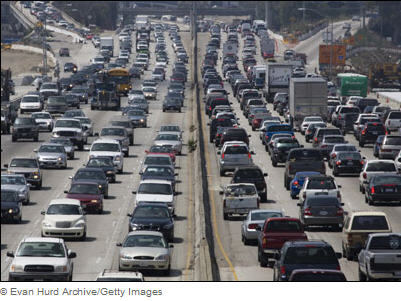
Whether or not congestion is "good" is one thing.  But what is for sure is that one way or another congestion is policy, or at the very least a policy option. And in some cases quite possibly a wise one. Now this has been said many  times  by any people in many places, yet despite its incontrovertible wisdom the message continues to get lost on policy makers.  So in cases like this, we have to take a page out of the book of good people who us sell soap and cars, and keep repeating our message. Today, let's hand over the podium to Kent Strumpell  from Los Angeles and see what he had to say on our subject in LA Streetsblog back in early 2008. To this reader it has lost none of relevance over almost half a decade.  Read on.

--> Read on:

Thursday, November 15, 2012

Brief: The long wait at the many unnecessary traffic lights in Germany may soon be over

The long wait at the many unnecessary traffic lights in Germany may soon be over. Communities nationwide are exploring the use of alternative traffic control systems, such as roundabouts and zebra stripes, to resolve the traffic light's growing issues of expense and safety. Among groups in favour of a large-scale switch, the German Cyclists’ Federation (ADFC) has a prominent voice. “We absolutely support the trend,” said ADFC traffic expert Wilhelm Hörmann. Hörmann added that traffic lights provide a false illusion of safety, pointing to the dangers of impatient drivers and children who cross the street despite there being a red light. Consultant Jürgen Berlitz of the ADAC German automobile club, argued that roundabouts are not only safer, but more efficient than traffic lights.  (Thanks to Ian Perry for the heads-up)

* Click here for article.

--> Read on:

Tuesday, December 27, 2011

Parks in, Cars not out? Is that going to be our future?

reports in today's New York Times about the new trend whereby "All around the world, highways are being torn down and waterfronts reclaimed; decades of thinking about cars and cities reversed; new public spaces created." That is certainly good news and true, but there is a bit more to it than that as you will see if you read on.

--> Read on:

Tuesday, December 20, 2011

Safe Streets defining principles: Remembering Donald Appleyard

Safe Streets is a collaborative worldwide project which will aggressively network over the whole of 2012 in our search for shaping ideas with some of the leading thinkers, groups and programs in the field , looking to the future but also not forgetting the past -- including drawing attention to the defining contributions of a certain number of leading thinkers. teachers, writers and sustainability activists, who are no longer with us but who through their work have laid down some of the most important principles which we now need to recall and take into account as we move to create a broad common framework for sustainable streets all over the world. For those of you who do not already know about the formidable vision and work of Donald Appleyard, we have pulled together a collection of reference points that should give you a good first introduction, and at the end of this piece some additional reference materials for those wishing to go further (as indeed you should).

--> Read on:

Tuesday, December 13, 2011

Man – > Technology – > Speed – > Distance – > Destruction of proximity

This out of control  bulimic spiral begins with man's uncontrollable tool-making itch, and from thence ,and unknown to us at the time, to tools which take on transforming lives of their own -- one of which in the domain of mobility being ever-increasing speed, which in turn leads to ever-increasing distances, and which finally and in largely unnoticed fatal tandem destroys the reality and oh-so important qualities of proximity and community.  That's the deal and facing all this is the challenge of this collaborative project for 2012. What we thought was merely more convenient transportation, has snuck up on us and turned into very inconvenient and altogether unanticipated transformation.
--> Read on:

Tuesday, October 25, 2011

European City Modal Split Database: An invitation

This open project from EPOMM -- the European Platform on Mobility Management -- is an absolutely brilliant idea. It does not require much explanation to get started; you can be off and going if you simply to click here and dig into their Google map. That said, a few words of introduction may not be altogether without their use to help you take full advantage of their good work.

--> Read on:

Tuesday, July 12, 2011

Toward a new paradigm for transport in cities: Let's see what Carlos Pardo has to say

The Stuttgart conference of Cities for Mobility this year represented an important step forward in the construction of a well-defined agenda for new mobility that up until the present time has been sadly lacking. But what we have managed to develop over the last two decades is a certain number of basic principles spanning many different areas and kinds of operational situations, but somehow until now we have failed to put them all together into a well-defined, convincing operational and policy package. We think of this as the move toward a new paradigm for transport in cities – and it all starts with . . . slowing down.

--> Read on:

Monday, June 20, 2011

World Transport Policy & Practice – Vol. 17, No. 2

The Journal of World Transport Policy and Practice is the long-standing idea and print partner of World Streets and the New Mobility Agenda since 1995. The Summer 2011 edition appears with articles by Bruce Appleyard, Joshua Hart and Graham Parkhurst, and Peter Newman and Jeff Kenworthy. In the article that follows you will find the lead editorial by founding editor John Whitelegg. (For a more complete introduction to World Transport click here.)

- - - > To obtain your copy of WTPP 17/2 click here.

--> Read on:

Wednesday, February 2, 2011

Review: Urban Mobility India 2010

The 3rd edition of the annual “flagship event” of the Ministry of Urban Development (MoUD) of India’s federal government, Urban Mobility India 2010 was held in New Delhi between December 3rd and 5th, 2010 with the aim of creating “Accessible and Inclusive Cities”. This article reviews the main themes and happenings of the event, and though it may appear to nit-pick, it does appreciate the effort of the organisers in organising the event, and holds that perhaps the biggest achievement of the event was to be able to have a serious debate on controversial topics (like the Delhi Metro or flyovers).

--> Read on:

Monday, November 15, 2010

Fighting Traffic: The Dawn of the Motor Age in the American City

The author of this careful and quite extensive book review of the battle for America's streets is Karthik Rao-Cavale, a graduate student at Rutgers University and an associate editor of our sister publication, India Streets. He writes: "This review was originally written for a class I am taking with Prof. John Pucher here at Rutgers University. I am putting up this review here even though the book reviewed talks mainly about the United States, because I feel that the lessons learned are most immediately applicable to developing world. It is a lengthy read, but I hope you will enjoy it."

--> Read on: