William Spenser Vickerey, winner of the Nobel Prize for Economics, is considered the father of Congestion Pricing. He first proposed it in 1952, for the New York City subway system, recommending that fares be increased in peak times and in high-traffic sections and be lowered in others. Elected officials considered it risky at the time, and the technology was not ready. Later, he made a similar proposal for road pricing.
This article was written in 1992 by Todd Litman, executive director of the Victoria Transport Policy Institute, to summarize some of the defining principles set out in Vickerey's extensive path-breaking early extensive pathbreaking contributions which in many ways defined the field. This essay can be found in its original form in the website of the Institute at http://www.vtpi.org/vickrey.htm.
Tuesday, December 31, 2013
William Vickerey: On Principles of Efficient Congestion Pricing
Wednesday, May 29, 2013
New Mobility Korea
If you have any interest in new mobility innovations in Korea, you might care to check out New Mobility Korea: our new group site at http://www.facebook.com/NewMobilityKorea. At this point it is a combination of an empty box and the first step in a thought experiment. We'll see what comes of it.
Monday, May 6, 2013
Good things happen on the street when . . .
Good things happen on the street when the leading edge of the research, academic and NGO community in a city -- who themselves are up to world standard -- line up with the politicos. And bad things -- very bad things -- happen when the planning, investment and infrastructure decisions are made without respect to the experience and all that has been learned, tested and proved in the last decades at leading edge. (Now how hard is THAT?)
Thursday, March 7, 2013
Editorial: John Whitelegg on Planetary Boundaries
Planetary Boundaries
To say this book is important is an understatement. It is hugely important because it shows that the current trajectory of the human species on this planet is on automatic pilot with the self-destruct option initiated. This may sound rather dramatic but the book is based on a very traditional scientific analysis and a strong evidence based logic rooted in the best scientific tradition and especially Swedish scientific traditions. It is a solid, objective, scientific analysis.
--> Read on:
Wednesday, November 21, 2012
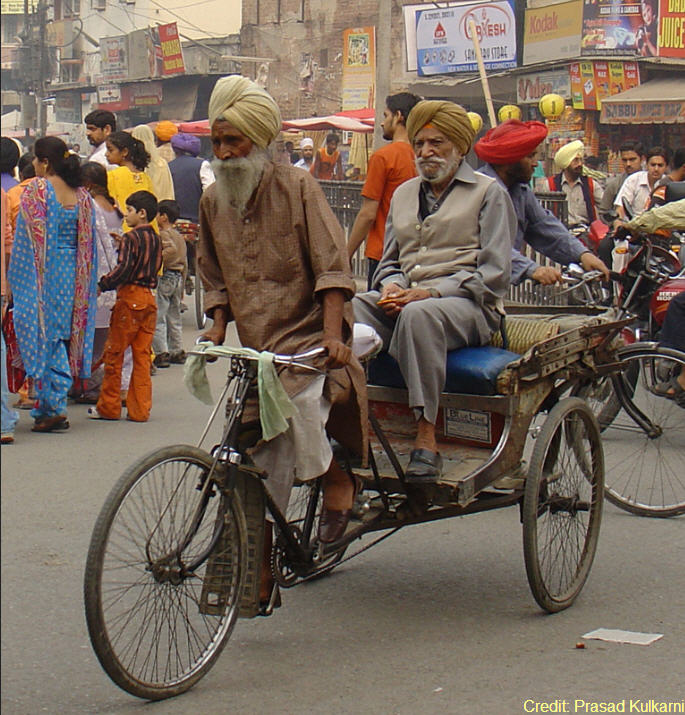
Why cycle rickshaws should be driven from the street. (And what it means for mobility, environment, equity and the wellbeing of hundreds of thousands of hard working people and their families)
Let me not poach the information and arguments presented in this fine analysis of the informal transport economy of Ashima Sood's recently published paper in the Economic and Political Weekly (Mumbai), other than to cite her opening summary: "A February 2010 judgment of the Delhi High Court called into question several assumptions underlying policy thinking on the cycle rickshaw sector. Examining these assumptions in the light of new research and advocacy efforts, this article considers the prospect of policy and regulatory reform. With the cycle rickshaw sector as a case study, it argues that the punitive regulatory framework governing the sector embodies the dualist or even parasitic models that inform policy on informal services more broadly. Assessing the larger viability and contribution of informal sector activities requires more attention to local and sector-specific micro-processes."
Thursday, September 6, 2012
Op-Ed: Priority for Public Transport in Tallinn
Priority for Public Transport in Tallinn (Probably the Best)
- Eric Britton, 06. september 2012 01:00
Op-Ed from today's Estonian Times: http://goo.gl/7gkFJ (in Estonian)
Thursday, August 2, 2012
A Mayor's-Eye View of Sustainable Transportation: Politics as the art of the possible
The letter that follows is, as you will quickly surmise, not an actual communication from one elected official in one case, but rather a composite, a distillation of experience that I have had over these last years of trying to push the sustainable transportation agenda in many parts of the world, almost always in conjunction and in dialogue with mayors and other city leaders. As you will see, it is not that they are uniformly adverse to or not interested in the concepts behind sustainable transportation and sustainable cities. It is just that they have a great many other things on their mind, including staying on top day after day of the considerable challenges of managing their city -- and, in not very long, running once again for reelection. This is the political reality of which those of us who would be agents of change must be aware, that politics is the art of the possible. Now let's turn the stage over to our mayor:
Saturday, March 17, 2012
Late Night Thoughts on Equity from Helsinki

Equity? Hmm. This, it turns out on inspection, is not quite so easy a concept to get across. In English, and after two days of discussions with a wide variety of groups and people here in Helsinki, it's already tough enough. And I have learned, it's even more challenging in Finnish. Here are some late night thoughts on this word that I share with you here in the hope that it may inspire comments and clarification. So here you have my notes, more or less in the order that they came to mind late in the night.
Friday, December 30, 2011
Krugman on Keynes: No time to duck
A collaborative network activity such as World Streets needs to find its own best combination of Sir Isaiah Berlin's variant on the Greek parable of the Hedgehog and the Fox ("the fox knows many things, but the hedgehog knows one big thing"). Given the huge information overload with which we live in this highly strung twenty-first century, it is absolutely critical that we play the hedgehog and stick rigorously to our topic. But... at the same time the many sided reality is that our topic by its very nature requires us also to be a fox. Thus are the contradictions and challenges of maturity.
Sunday, November 27, 2011
Missing in action: "Zone 30" in WP in English???
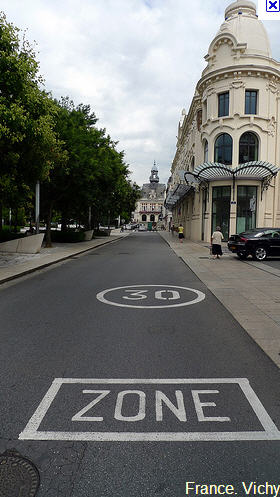
Oops. I have been asked to open the plenary on “Urban mobility: Achieving social efficiency” at next week's Smart Cities conference in Barcelona (full details on which available here , and one of the central themes of the talk is the high importance of taking a strategic approach to slowing down and smoothing traffic in cities. As part of my due diligence I decided to check out the Zone 30 and Twenty is Plenty entries in Wikipedia. Where I found to my disappointment: (a) that there was no entry on Zone 30 in English (and if in French, German, Italian and Dutch, not (yet) in Portuguese, Spanish, etc.) and (b) nothing at all on the important Twenty Is Plenty program out of the UK.
Monday, November 7, 2011
CarSharing: A 1% solution (And why it is a critical 1%)
The learning process has been long and painful. But it is almost 2012, the results are in, and we now know this one thing for sure: There are no one single, mega-dollar, build-it, big bang, fix-it solutions for transportation systems reform. No, the process is far more complex than that. Successful 21st century transport policy depends on the coordination and integration of large numbers of, for the most part, often quite small things. Small perhaps in themselves, one by one, but when you put all these small things together you start to get the new and far better transportation systems that we need and deserve. Large numbers of small things, each doing their part in concert. We call them "one percent solutions". And carsharing is part of that complex process.
Monday, October 24, 2011
World Share/Transport Forum II. Changzhi, China
Changzhi, China. 24 October: The Second World Share/Transport Forum opens in Changzhi today, with the mission of looking into the concept of Share/Transport for selective adaptation, application and extension in Chinese cities. The Forum is supported by a collaborative effort led by the China Urban Transport Development Strategy and Partnership Demonstration Project (CUTPP): National Development and Reform Commission, the World Bank and the Global Environment Facility (GEF). It builds on and extends the pioneering work on share/transport initiated by the international team who laid the base for the first World Forum that was convened in Kaohsiung Taiwan in September 2010.
Thursday, August 4, 2011
Mr. Meter on America’s "Cash for Clunkers"
(While Lee Schipper is recovering, here is another example of his always-on prescience in the poorly lit streets of this gasping planet.) If matters of climate, sustainable transportation and careful use of scarce resources are close to your heart, and you happen to be European, you may have some reserves about your country's ecologically billed, and energetically buttressed "Cash for Clunkers" (in more polite Euro language of course) program. Let a couple of Americans energy policy experts help you feel a bit less embarrassed. You are not alone.
Tuesday, July 12, 2011
Toward a new paradigm for transport in cities: Let's see what Carlos Pardo has to say
The Stuttgart conference of Cities for Mobility this year represented an important step forward in the construction of a well-defined agenda for new mobility that up until the present time has been sadly lacking. But what we have managed to develop over the last two decades is a certain number of basic principles spanning many different areas and kinds of operational situations, but somehow until now we have failed to put them all together into a well-defined, convincing operational and policy package. We think of this as the move toward a new paradigm for transport in cities – and it all starts with . . . slowing down.
Monday, June 27, 2011
The New Economics of Sustainable Development
To negotiate the move from old to new mobility, we have to understand as well the importance of moving from old to new economics. Back in 1997 James Robertson, respected British economist, monetary reformer and policy counsel to government, took a hard look at "The New Economics of Sustainable Development" in a report prepared for the Forward Studies Unit of the European Commission. Today, half a generation later, this exceptionally insightful piece still brings up points to which we should be giving attention. It is unfortunate that the clock has stood still for this important part of the sustainability dialogue. No wonder we are making so very little progress in the right direction. Let's have a close look at what James has to propose and mull it all over from a 2011 perspective.
Thursday, March 17, 2011
Mobility, Democracy and Politics: Interview with Monsieur le Maire
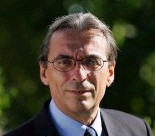
What's happening on the new mobility scene in France in 2011? Here you have, in French but with good subtitles, an interview by one of the outstanding political innovators in the field of sustainable transport policy and practice in France. Roland Ries is serving his second term as mayor of Strasburg, and at the same time heads up the national transport political group GART. He also, by the way, as a member of the French Senate drafted the law defining carsharing in France, thus opening up a part of the way to more and better carsharing nation-wide. Spend three minutes with this short video to get a feel for what the leading edge in France is thinking and doing about transport in cities. You will quickly see that this is a world-level message. Play it for your mayor and talk to her about it.
Friday, February 25, 2011
Editorial: The Seven Simple Truths of Sustainable Mobility (Come argue with me)
Sometimes in life things can be simple. Let's look at one case.Doubtless the most severe single problem holding us back in the hard up-hill struggle for "sustainable transport" in cities and countries around the world is that so far everyone seems to have a different definition and a different agenda. Google offered 947,000 entries under this phrase this morning and all it takes is a quick tour of the Google News rubric to get a quick education on the enormous range of interpretations of what the phrase means to different people, places and interests.
Monday, February 21, 2011
What's a life worth?
Gladwyn d'Souza comments from California an article that has just appeared in the New York Times on this subject. "The United States Environmental Protections Agency, EPA, should really be discussing the allocation of risk. A large curb radius for example transfers risk from the speeding driver to the pedestrian. The issue is that speed and convenience embody an energy bill whose consequences are not repatriated on the basis of least harm to public safety. While the consequences are local, an injury on your street corner, the impact under NAFTA, etc., of comparative or qualitative instead of preventive risk assessment is habitat destructive. . . . "
Wednesday, February 16, 2011
Interview with Roland Ries: Cyclist, Senator and Mayor of Strasburg
What's happening on the new mobility scene in France in 2011? Here you have, in French but with good subtitles, an interview by one of the outstanding political innovators in the field of sustainable transport policy and practice in France. Roland Ries is serving his second term as mayor of Strasburg, and at the same time heads up the national transport political group GART. He also, by the way, as a member of the French Senate drafted the law defining carsharing in France, thus opening up a part of the way to more and better carsharing nation-wide. Spend three minutes with this short video to get a feel for what the leading edge in France is thinking and doing about transport in cities. You will quickly see that this is a world-level message. Play it for your mayor and talk to her about it.
Tuesday, February 8, 2011
UK High Speed Rail: Going very fast in the wrong direction
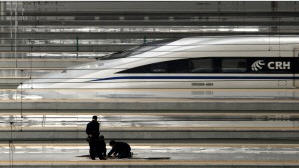
In the field of transport, no matter how straight-forward the issues may seem to be to the busy citizen, merchant, reporter or policy maker, when it comes to making wise policy it really does take a certain level of time and attention to detail to come to grips with the underlying issues and priorities that shape the outcomes. The awful conundrum encumbering the mobility issues of our new century from a policy perspective is that just about everything turns out upon study to be unobligingly complex, interdependent, complicated and time lagged – no matter how simple it may appear to be on the surface. In the article that follows, the authors have a go at a lot of the too-easy thinking that is the main currency of the High Speed Rail discussions in places like Britain and the US, where the only experience with these technologies and operations has been that of a far-away time-lagged dream machine. Let's embrace a bit of complexity here.