
Monday, April 1, 2013
Our Right to Walk is Non-negotiable (India)


Thursday, January 10, 2013
Op-Ed: Where Does SLoCaT Stand in Realizing Sustainable Transport?
Three years ago the Partnership on Sustainable, Low Carbon Transport 
Monday, December 17, 2012
Op-Ed: Toward More Prosperous Cities
- Op-Ed Contributor: Wendell Cox, published 14 Dec. 2012. Comments invited
I appreciate Eric Britton's gracious invitation to contribute my views on cities and urban transport to World Streets. Obviously, many readers will disagree with all or part the article. Nonetheless, the state of knowledge is never complete and progress continues to depend on open minds and civil discussion of perspectives among people of good will. There is extensive use of "hyperlinks," which provide direction to greater detail for any interested. The article begins with the public policy context, then follows with urban policy, urban transport and sustainability. --> Read on:
Thursday, December 13, 2012
Letter from Bangalore: The Derelict Mile
Sujaya Rathi reports from Bangalore:

Tuesday, December 11, 2012
Op-Ed: The Story of UK Roads/Streets.
Op-Ed: The Story of UK Roads/Streets
Poorly designed roundabouts - enabling even HGV's to travel around them at speed, the police thinking a cyclist could make a driver aware of "him" with a bell or a whistle...
- Police on bicycles without blue lights or sirens, chasing others through red lights... then stopping others for doing the same, who proceeded with caution,
- Advanced stop lines seem to provide little benefit, and may have been partly to blame for the death of Cynthia McVitty's daughter.
- Humans get territorial, and thus cycle lanes become hazards for cyclists when too narrow, and for pedestrians when they step onto them,
- Too many cyclists in the UK cycle at speeds inappropriate to the situation.

- Ian Perry. Cardiff, Wales, UK ianenvironmental@googlemail.com
--> Read on:Monday, December 10, 2012
Op-Ed: Awful Injustice in Parking
Op-Ed: Awful Injustice in Parking
Misguided parking policy is harmful and unjust.
No surprise there, you may say. There is no shortage of complaints about parking prices ("unfair!") and about how difficult it is to find parking. We hear the same thing all over the world, whether in Sydney, San Francisco, Singapore, Moscow, Delhi , Jakarta, Beijing, Sao Paolo, Lagos or Nairobi.
Sorry to be unsympathetic. But complaints like those are a problem. They are fuel for the never-ending push for more parking and cheaper parking.
So what? --> Read on:
Thursday, September 6, 2012
Op-Ed: Priority for Public Transport in Tallinn

Priority for Public Transport in Tallinn (Probably the Best)
- Eric Britton, 06. september 2012 01:00
Op-Ed from today's Estonian Times: http://goo.gl/7gkFJ (in Estonian)
Wednesday, December 14, 2011
Report on 2011 Urban Mobility India Conference

The fourth annual Urban Mobility India conference organised in Delhi from December 3 to 6 by the ministry of urban development was no doubt a useful exercise. It did well to give more focus on bicycles and public transport than the previous conference. But the venue itself was highly inaccessible, difficult to reach even by a private car, leave alone public transport. --> Read on:
Wednesday, November 2, 2011
Op-Ed: A divine solution for Car Free Days?
One of the sayings we use most often at World Streets is one that goes "you can never tell where the next good idea is going to come from". Here is an example.
Monday, September 26, 2011
Op-Ed, Cornie Huizenga: The transport sector as leader in the sustainability debate?
There are a lot of reasons which need to be investigated if we are to have a snowball's chance in hell of winning the sustainable transportation wars. The 
Tuesday, June 21, 2011
Help Wanted Department: Donald Appleyard is (almost) not on Wikipedia

Dear John, Your editorial and latest edition of World Transport got me to thinking once again about the great work of Donald Appleyard -- to the extent in which I have decided to make his 1981 publication of Livable Streets into a significant milestone in the process of sustainable development accomplishment and awareness in the context of the course which I am currently developing at – http://sustain.ecoplan.org
Sunday, May 22, 2011
World Transport Policy & Practice – Vol. 17, No. 1

- - - > To obtain your copy of WTPP 17/1 click here.
--> Read on:
Thursday, April 14, 2011
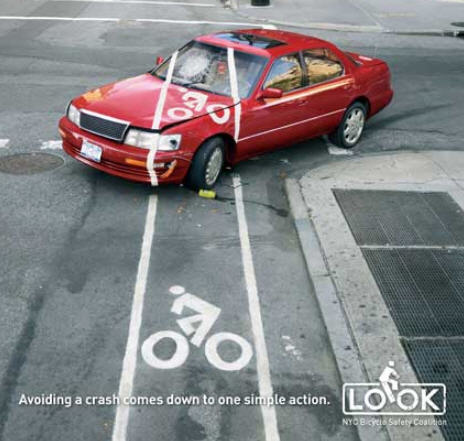
Ten reasons why I really hate cars (and drivers) in cities

Ten reasons why I really hate bicycles (and cyclists) in cities.
Wednesday, April 13, 2011
Budget of 2011 in India: What could they be thinking?

Thursday, April 7, 2011
Picking a few bones with our old World Bank friends

--> Read on:
City as a time capsule: Urban highway construction mania still booming in 2011

Friday, April 1, 2011
Stop press! Carsharing is apparently not dead after all.*
We always enjoy a good knock-up on World Streets. Keeps us thinking. After yesterday's piece in which Nicolas le Douarec undertook to stretch our minds and challenge us to consider carsharing from some other perspectives, including apparently in a coff
Thursday, March 31, 2011
Carsharing is dead, long live . . . car rental?
We have been reading and hearing quite a bit in the French media, and in particular in the context of the city of Paris's ambitious planned Autolib project
Thursday, August 12, 2010
"Time to count the spoons": Alan Atkinson on sustainabilty back-peddling
Dr. Samuel Johnson reminded us some time back that "When a man proclaims his honor  loudly at the table, it's time to count the spoons". Which is what our guest editorials Alan Atkisson is going for us today as he comments on loudly proclaimed sustainability initiatives from Europe and America. Oops. Something appears to be missing here.
Reading the news has not been easy for champions of sustainability in recent weeks, at least in the Western World. That means the news has not been kind to the interests of future generations, to new economic thinking, to accelerated innovation, to long-term prosperity, or to life on Earth, for that matter. It almost feels as though sustainability itself is under assault, at least from some national governments -- just when its value in economic terms has been solidly established, and the need for it in environmental and social terms has risen dramatically.
Let's review the situation.
First, the new UK government axed the Sustainable Development Commission (www.sd-comission.org.uk). This Commission, led by Jonathan Porritt, has been an extraordinary source of innovative thinking and clear-sighted critique for the past decade. Its impact on the UK has been very important ... but its impact has also been global. And as a "cost-cutting" measure, it's wrong-headed.
The Commission was costing the UK government roughly 3 million pounds per year, but by following (some of) its advice on energy conservation and the like, the UK government was already saving many times that amount -- and could have saved a lot more.
Outside the UK, the Commission's reports helped to advance and even to reframe the debate on sustainability -- especially Commissioner Tim Jackson's landmark report, "Prosperity without Growth" (now a book, published by Earthscan. Hint: Download the original report free while the Commission's website is still working. Click here >> )
Across the pond in the United States of America, energy and climate change legislation died in the Senate -- despite the fact that a supposedly pro-climate-action majority of 60 Democrats sits there. Barring a political miracle, the Senate may have wasted the best historical opportunity to get something serious into US law, and it has at least wasted precious time.
Crossing the Atlantic again, France has earned positive headlines for its recent legislative commitment to sustainability, both its new "Grenelle" package of laws, and its recently released national strategy on "développement durable" (interestingly, many languages use a word meaning "durable" or "enduring" in place of "sustainable").
But at the same time, my colleagues in France tell me that actual money for sustainability programs has been drastically cut; and according to the French papers, the new national strategy lacks "any detail ... on how the necessary investments for the realization of its objectives are to be financed." (Les Echos, 27 July 2010)
Meanwhile, the news on the state of the planet has not been heart-warming, either. A recent global report on biodiversity carries the scary title "Dead Planet, Living Planet" -- a glass-half-empty message if ever there was one. Ironically, we are losing to fight to retain biodiversity, even as we get better at figuring out how much life on Earth is actually worth to us in cold, hard cash -- somewhere between 21 and 72 trillion dollars per year, according to the United Nations Environment Program's new report on The Economics of Ecosystems and Biodiversity. That's roughly equivalent to the entire annual Gross World Product ($58 trillion in 2008).
Meanwhile (again), a new NOAA report is out on climate change, and US and UK scientists are using words like "undeniable" and "glaringly obvious." Even Russia's President Medvedev is talking like a climate activist these days, as his country swelters in record-breaking heatwaves.
So ... what's a sustainability optimist to do, in the face of such pessimistic news?
Veteran planet-watcher Lester Brown, lecturing in Stockholm, was asked how he maintained optimism in the face of the gathering gloominess. "I get that question a lot, and I have a one-word answer," he joked. "Bourbon."
Lester's real answer, of course (both at that lecture, and as evidenced by his own years of extraordinary work), is not alcohol -- it's action.
And not just any action: strategic action, designed to create the most powerful impacts possible, in the shortest amount of time.
Because that's what we're all working for, and that's what the world needs.
Now more than ever.
# # #
About the author:
Alan AtKisson began professional work on sustainability in 1988, serving as executive editor of the pioneering journal In Context: A Quarterly of Humane  Sustainable Culture. In 1990, he and other colleagues co-founded the Sustainable Seattle initiative, later recognized by the United Nations as a model project in urban sustainability and indicator development. Also in 1990, Alan began to introduce the concept of "sustainability change agents" through workhops and lectures, and to develop the tools and methods that are now called the ISIS Accelerator and used world wide. In 1992, Alan began consulting on sustainability and founded the small business that has grown into the AtKisson Group. - www.atkisson.com
A few closing words from Alan on their current work in this area: At the moment, my publisher Earthscan and I are planning the re-launch of two of my books in new versions. Both of them are about what it takes to be optimistic and to continue making positive, strategic, accelerated change for sustainability -- no matter what the odds.
So be on the lookout this November for the new Believing Cassandra: How to be an Optimist in a Pessimist's World(you can already pre-order the fully updated new edition). Also, my second book, The ISIS Agreement, will appear in paperback then with a new introduction, cover ... and even a new title. I'll keep the (very optimistic) new title for the ISIS book secret for now ... but the new subtitle should give you a taste of it: "How to Make Positive Change in Difficult Times."


 Posts
Posts


