Showing posts with label Environment. Show all posts

Friday, May 31, 2013

Thursday, May 30, 2013

Wednesday, May 15, 2013

Economic Growth Enigma: Money or Energy

robert ayres - 2Professor Robert Ayres will be joining The Sustainable Development, Economy and Society Master Class at the ISG in Paris this year as a guest speaker on Thursday at 14:00.  You will find a short bio note summarizing some of the high points of his career and prolific  output just below. In his presentation  and in  the following question period Ayres will be looking at some important aspects of the future of the planet, which holds out some interesting clues for the future career and expertise choices of young people looking at a future business career.  As he rakes through the smoldering coals of a world soon to be  saddled with post-peak oil prices that will never again come back to “normal”, he may have a few clues for your future.

--> Read on:

Saturday, March 30, 2013

Op-Ed. Horrendous costs of motorized transport in (Indian) cities

Henrik ValeurEvery once in a while an article pops in over the transom, as happened this morning,  that provides us with a good, independent  checklist of the woes and, if not the solutions, at least the directions in which solutions might usefully be sought to our transportation related tribulations.  And this carefully crafted piece by Danish architect Henrik Valeur is a good case in point. His independent out of the box perspective leads him to making comments links and pointing out relationships which take him well beyond the usual transportation purview.  And if his immediate source of comment in this article is the awful, the quite unnecesssary situation on the streets of India's cities, the points he makes have universal application. Healthy stuff for planners and policy makers. Let's have a look.


--> Read on:

Thursday, January 10, 2013

Op-Ed: Where Does SLoCaT Stand in Realizing Sustainable Transport?

Three years ago the Partnership on Sustainable, Low Carbon Transport slocat logo(SLoCaT) was established to address the relative absence of sustainable transport in the global discussions on sustainable development and climate change. Rapid motorization in the developing world and its negative impacts motivated the organizations that came together in SLoCaT. There was agreement that SLoCaT should initially have a mandate for three years only and that by the end of 2012 a decision would be made whether to call it a day or to go on, possibly, with a revised mission. Those three years have gone by. So where is SLoCaT now and what is next; declare victory and move on, admit defeat and move on, or stay in the fight?

--> Read on:

Friday, November 9, 2012

Brief: Paris - Ambitious mobility plans for economy, efficiency and equity.

Paris: Ambitious mobility plans for economy, efficiency and equity.
This ambitious effort on the part of Paris's mayor and his team is well worth following, even if for some it is may be a bit inconvenient for those not able to easily read in French. The original article appears here. And here in the event is the Google translation. (You may note that this article appears in a journal loved and run by the French Right, the mayor's fierce opponents, so caveat lector.)

--> Read on:

Friday, January 20, 2012

Charina Cabrido reports on SAFA Tempos (Electric three-wheelers) in Nepal

SAFA tempos or Nepal’s version of electric three wheelers are typically seen in Kathmandu’s busy streets. Running at an average speed of 60 kilometer per hour, safa tempos serve at least 127 thousand people everyday transporting individuals to their destinations.  This is quite a challenge for a country that has been constantly confronted with power cuts that reach sixteen hours a day especially during winter season.

--> Read on:

Friday, July 15, 2011

Move over climate change: air pollution is the new issue in town

The UK's air quality and pollution has climbed back up the environmental agenda after years of inactivity. Here are some possible reasons why. (From today's Guardian )

--> Read on:

Saturday, April 16, 2011

Honk! Cars, People and the Planet. It's a Wonderful World (Have a stupid weekend)

Have you ever given any thought to trying to imagine just how dumb some people think we are? My guess is that the good people of Hyundai have laid out serious money for this little film, without giving much thought to IQ's.  So we can only assume that they have done this for our weekend viewing pleasure. What can we say?  Well, thank you.

--> Read on:

Monday, February 14, 2011

Swedish government looks to virtual meetings as an environmental (and efficiency) strategy

The Swedish government's annual instructions to the National Transport Administration now include a mission to support and improve conditions for virtual meetings across the country. The goal is to find practical ways to harness "Green IT" as an efficient travel substitute as well as to provide both more efficient management and reduced environmental impacts. The core proposal is based on a “ten step method” which the Administration released last year to champion and support virtual meetings within an organization. The project behind this strategy is introduced here.  And you are warmly invited to comment and share the fruit of your own experiences.

--> Read on:

Wednesday, February 9, 2011

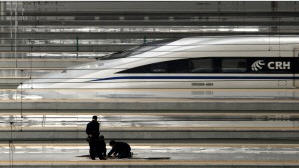
Support for High Speed Rail in Britain

Strange as it may seem when you do the basic arithmetic, there is strong support from the three main political parties in the UK for the HSR proposal, and if our first article in this series argues that the reasoning behind it is heavily flawed, it is important in these matters to present the arguments of those who may not agree. Here you have some extensive extracts from a group, Greengauge 21, that have aggressively argued for the HSR proposal. We leave it to your attention. Beyond what you see here they have a more detailed leaflet outlining their arguments which you can have here - "HS2 — why the critics are wrong". And once again, we welcome your comments.

--> Read on:

Tuesday, February 8, 2011

UK High Speed Rail: Going very fast in the wrong direction

In the field of transport, no matter how straight-forward the issues may seem to be to the busy citizen, merchant, reporter or policy maker, when it comes to making wise policy it really does take a certain level of time and attention to detail to come to grips with the underlying issues and priorities that shape the outcomes. The awful conundrum encumbering the mobility issues of our new century from a policy perspective is that just about everything turns out upon study to be unobligingly complex, interdependent, complicated and time lagged – no matter how simple it may appear to be on the surface. In the article that follows, the authors  have a go at a lot of the too-easy thinking that is the main currency of the High Speed Rail discussions in places like Britain and the US, where the only experience with these technologies and operations has been that of a far-away time-lagged dream machine. Let's embrace a bit of complexity here.

--> Read on:

Sunday, February 6, 2011

World Streets 2010: Aspirations, accomplishments, building blocks, and work still needed to move ahead

The most significant accomplishment over this last year has been that World Streets has somehow managed to continue publication on a weekly basis, and step by step to improve the journal and steadily build up our international readership and contributions. And all this really quite against the odds and with less than modicum of the necessary financial support. But good cause, high commitment and fair performance carry the day, with the result that each week anywhere from 700 to 2000 readers from more than fifty countries from all corners of the world come in to access the journal.

--> Read on:

Friday, January 28, 2011

Testimony: Science and Technology Select Committee, UK House of Lords

In the last weeks I was asked to provide written testimony and evidence in answer to a "Call for Evidence" for the UK House of Lords Science and Technology Select Committee on the subject of "Behaviour Change —Travel-Mode Choice Interventions to Reduce Car Use in Towns and Cities". As can happen in these things, in my remarks I moved away from the chosen topic (instruments for behaviour change),  on the grounds that there are other more fundamental issues that need to be tackled first. In the following you will find my submittal of last Monday to the committee, whom I thank for giving me this opportunity to share my views.

--> Read on:

Wednesday, January 19, 2011

Sustainable transport in Delhi and Stockholm

This article addresses from an Indo-Swedish perspective issues of the development of transport systems, taking its examples from Delhi and Stockholm. The introduction of the first BRT or bus rapid transport corridor in Delhi and the institution of a congestion tax in Stockholm are presented and discussed in terms of modernisation and sustainable transport. The authors explore the perceptions of politicians and examine the two projects in the search for the driving forces for transport policies. Despite all the differences, some similarities in the development of their urban transport projects have been found.

--> Read on:

Monday, December 20, 2010

Autolib' – Paris bets big on new carshare technology

A sustainable transport system is a system of choices – quite the opposite in many ways of the old all-car no-choice model that all too often spends most of its time in taking up scarce space but not moving. With this very much in view, the City of Paris has just stepped up to the plate and is now in the process of bringing into service what they propose will be a new link in the chain of sustainable transport options: a carsharing system not quite like any other. No less than three thousand cars to come on line in shared service in just nine months – and electric cars at that – working out of 1000 to 1200 stations spotted over not only the central city but a number of surrounding communities as well. The biggest and most daring carshare bet of all time.

--> Read on:

Friday, December 10, 2010

Transport, environment and public policy in hard times

We have no money gentlemen, so we shall have to think.
- Ernest Rutherford, on taking over the Caversham Laboratory in 1919


On 2 December the managing editor of World Streets, Eric Britton, was invited by the organizers of the National Autumn Conference of ACT TravelWise to present the keynote address, following an opening presentation by Norman Baker, MP and Parliamentary Undersecretary of State for Transport of the just-elected UK coalition government. The theme of the conference was "The Right to Travel - Getting more for less" -- and Britton was asked to bring in some international perspectives and possibly some less familiar ideas for the largely British audience after the Minister's presentation.

--> Read on:

Monday, December 6, 2010

The World - the Climate – the Strategy. Come argue with me.

Part I: Ten steps to get the job done:
Let me sketch out an easy to understand (or reject) climate/transport foundation strategy that presents some stark contrasts with the ideas and approaches that are getting the bulk of attention when it comes to targeting, policy and investment in the sector -- and which in a first instance is quite likely to earn me more enemies than friends (that goes with the territory). At least until such time that these basic underlying ideas are expressed in a manner which is sufficiently clear and convincing that we can with confidence put them to work to turn the tide. So here you have my first brief statement of the issues, the basic strategic frame and the key pressure points to which I invite your critical reactions and comments. In a second piece in this series, to follow shortly, I intend to have a look at the package(s) of measures, policies, tools, modes, etc. which can be sorted out, combined and refined to do something about it. Or maybe not.

- Eric Britton, Editor

--> Read on:

Wednesday, November 24, 2010

Thanksgiving 2010 and Morning in America

On the eve of Thanksgiving 2010 sitting here in Paris, my thoughts not unnaturally turn to my native America. And since our view here is from the street I have to think a bit unhappily about why is it that we in this great country do not seem to be able to let go of "old mobility" – i.e., whenever you spot a problem you build something to solve it (also known as the Edifice Complex) – as the highest-possible cost, least civil, one size fits all solution to our problems of efficient transport and fair access in and around cities. Of course we Americans invented old mobility a long time ago -- and at the time it seemed like such a logical and dynamic solution to the connection challenges of a vast growing nation. As indeed it was. But suddenly it's 2010, the twentieth century is long behind us, and if we look carefully at the low quality of what we are seeing on our city streets across the nation it would strike one that perhaps it is time to rethink OM from bottom to top and come up with something a lot better. For example New Mobility, which without our having to define it here is the basic strategy and value set that is behind the far more successful city transport arrangements we can see in hundreds of leading cities around the world – and none of them sadly are American.

Why and how have we arrived at this sad state of affairs? Well, let me ask a foreigner working in this field who has long lived in and long admired America to tell us about what he thinks is going on. Sometimes when you are lost it helps to stop the car, roll down the window, and ask for some directions. Let's try.

--> Read on: