

From the World Carshare Consortium: I would like to offer a "thought experiment" with anyone here who may wish to jump in with their ideas. criticism and/or proposals -- or perhaps only to pull up a chair and see what happens in a case like this. 

To my thinking, the concept of mixed use in a society that puts a premium on job creation and local entrepreneurship as well as sheer mobility per se, has not until now gotten a fair run, either in the literature or in practice. And yet it is vital to the future well-being of our cities and all those who live and work there.
This is not the first time anyone addressed these themes. In the City in History, 
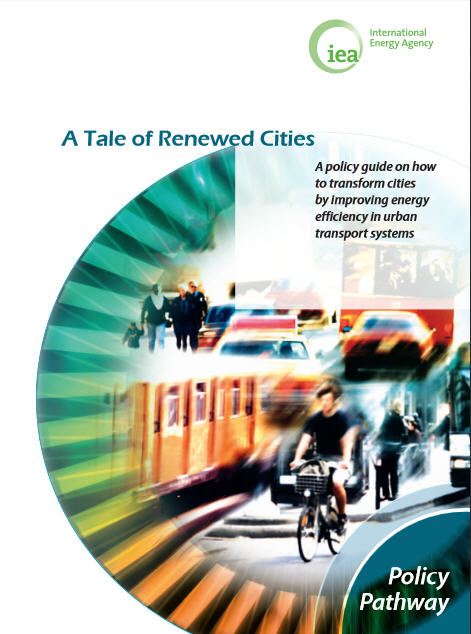
Michael Alba reports from Boston on this new guide for transport planners:


Hopefully we have learned at least one hard lesson of life, and that is that a crisis is a terrible thing to waste. And here right before our eyes we have a case in point with the 
The Journal of World Transport Policy and Practice is the long-standing idea and print partner of World Streets and the New Mobility Agenda since 1995. 
- - - > To obtain your copy of WTPP 17/3 click here.
--> Read on:
We think quite a lot about space here at World Streets, from at least two perspectives. First and naturally enough given that the goal of 
During one of our eternal research and reading probes which had us looking at and weighing the advantages, etc., of the many diverse approaches to creating "Livable Streets" (my favorite that being the term of the great and much missed Donald Appleyard), "Complete Streets", "Quiet Streets", "Fused Grids" . . . (just to cite a few of their many names"), we tumbled onto a phrase "Filtered Permeability" which was altogether new to us. After a bit we identified the person who had coined it, Steve Melia of the University of the West of England, and asked him to fill us in:
--> Read on:
This article addresses from an Indo-Swedish perspective issues of the development of transport systems, taking its examples from Delhi and Stockholm. The introduction of the first BRT or bus rapid transport corridor in Delhi and the institution of a congestion tax in Stockholm are presented and discussed in terms of modernisation and sustainable transport. The authors explore the perceptions of politicians and examine the two projects in the search for the driving forces for transport policies. Despite all the differences, some similarities in the development of their urban transport projects have been found.
[caption id="attachment_4628" align="alignright" width="250"]
It will drive you crazy, at least it does this cyclist. The quiet Dutch voice of reason while they so patiently try to help us understand that a cycling nation or city is not built overnight. But put aside your prejudices (and your prides), and spend five minutes with the Dutch cycling guru Mark Wagenbuur while he rides us through the history of cycle infrastructure in the Netherlands. (There had to be a reason for it.)
On the eve of Thanksgiving 2010 sitting here in Paris, my thoughts not unnaturally turn to my native America. And since our view here is from the street I have to think a bit unhappily about why is it that we in this great country 
Why and how have we arrived at this sad state of affairs? Well, let me ask a foreigner working in this field who has long lived in and long admired America to tell us about what he thinks is going on. Sometimes when you are lost it helps to stop the car, roll down the window, and ask for some directions. Let's try.
Urban sprawl is at its best a very mixed bag, as we all know. But worse yet behind its tempting glamorous face it surreptitiously locks in unsustainability in many 
Density. Sprawl. Car-dependence as a result of car use's gradual reshaping of our  cities. The unintended consequences of a no-policy transport and land use policy can be catastrophic for many, in many ways. And once the damage has been done(see the map of last week's piece contrasting two cities of the same population size: Atlanta and Barcelona)it is not easy task to get the toothpaste back into the tube. But let's get to that another day. Today let's listen to Christopher Tan on Singapore's no tears transport policy.
- By Christopher Tan, The Singapore Straits Times
More vehicles, more trips, more people -- but gridlock remain a rarity. What gives?
Singapore is a city on the move. Literally. Furiously. In cars. In buses. On rail lines. At rates of expansion that would make most transport executives blanch.
Workers celebrate the final tunnel breakthrough for Singapore's Circle Line, a 33km orbital MRT line slated for completion in 2011
More and more people are moving - all the time. Three decades ago, they made 2.7 million daily trips. Now it's more than 11 million - in cars, buses and trains. Yet Singapore has little of the congestion that almost paralyzes so many cities around the world.
What's the secret? It's simple. Early planning. Timely action. Massive investment across many modes of transport.
Density without gridlock
Not that Singapore's situation is simple. This sovereign state is just 710 square kilometers -- a bit bigger than New York City. It has 5 million people -- more than double its population 30 years ago. Now, close to 1 million vehicles (of which 40,000 are from across the Malaysian border) zip around in a network of well-paved roads spanning 3,400 kilometers.
And in contrast to neighboring cities such as Jakarta, Bangkok, and Kuala Lumpur - and indeed, farther flung examples such as London, Paris and Los Angeles -- gridlock is a rarity in Singapore.
This is despite growing car ownership. Back in 1981, there were 163,355 passenger cars here. Today, there are 570,000. Yet Singapore's average car speed on arterial (main) roads during peak hours is 27 kmh (17 miles per hour), compared to as low as 16 kmh in London, 11 kmh in Tokyo and 5 kmh in Jakarta.
Clues to the formula
So, how has Singapore managed this seemingly text book success story on urban mobility?
Mr. Lew Yii Der, group director for policy and planning of the country's Land Transport Authority (LTA), says the the recipe "boils down to two important ingredients: a convenient and well-connected public transport network, and an effective set of demand management measures to regulate traffic flow and keep road congestion in check."
As a relatively young nation (gaining independence in 1965), Singapore's bureaucracy of scholars and technocrats had the advantage of learning from older, more established cities. Urban planning soon became the government's forte, and transport infrastructure a cornerstone of development.
Expanding on a blueprint drawn by the country's British colonial masters, policy makers began to build new roads -- lots of them. Starting in the early 1970s, Singapore opened the first of what today is a network of nine expressways crisscrossing the island, including such technological marvels as a 12-km long, largely underground expressway opened two years ago, and an upcoming (in 2013) link that not only goes underground but undersea.
But like all other modern cities, roads are rarely sufficient to move the masses. Singapore opened its first rail transit line -- 6 kilometers, five stations - in 1987. Today, the rail network spans over 150 km (94 miles), with 106 stations serving four mass rapid transit lines (one partially opened) and three light rail transit lines.
Major added investment -- $40 billion in Singapore dollars (U.S. $28.4 billion) -- is committed to expanding rail lines to 280 km by 2020.
With this ambitious expansion, the current balance in Singapore's average daily trips of 11 million (6 million by private transport, 3 million by bus and 2 million by rail) is likely to shift significantly toward public transit (even with some additional roads).
LTA Rail Group Director Mr. Chua Chong Kheng recalls: "Since the first steps were taken... on Oct 22, 1983, the government has invested heavily to ensure that the rail network form the backbone of an efficient public transport system."
Key ingredient: congestion pricing Policymakers recognized early, in fact, that that a country as small and dense as Singapore cannot rely solely on road expansion. Demand for road space must be held in check. And the best way to do that, they discovered, are user charges.
Literally decades ahead of European cities, Singapore in 1975 instituted an "Area Licensing System" featuring stiff fees for any car entering downtown Singapore during business hours. In 1998, this congestion pricing system went high-tech with an electronic road-pricing system that requires any vehicle in Singapore (as well as those coming in from Malaysia) be fitted with a stored-value card reader.
As a car passes any of the city's 69 gantries (electronic checkpoints), the card reader charges a fee, which varies significantly depending on time of day. For someone driving into the city during the morning rush hour, tolls across multiple gantries often add up to S$10 a day.
Following Singapore's lead, congestion pricing for traffic-clogged cities has since been adopted by London, Oslo, Stockholm, and Milan. Mayor Michael Bloomberg also proposed the idea in New York City, but was overruled by the New York State Legislature.
Also key: paying for the right to use a vehicle
Singapore in 1990 inaugurated a second method for keeping auto use in check. Anyone who wants to buy a vehicle must first secure a "Certificate of Entitlement," valid for 10 years. Certificates are auctioned off twice a month.
The price today hovers around S$20,000 in Singapore dollars, but it has been as high as S$110,000. On top of that, Singapore motorists pay 44 cents in duty for every liter of fuel they use (roughly $1.75 a gallon in the U.S.).
Pulling it off
But how has Singapore managed to implement controversial policies such as congestion pricing and the expensive auto "certificates of entitlement" when several other cities have tried launching similar systems but failed?
A unified local government with strong leadership has surely been a major factor.
But there have also been persuasive politics. The LTA, for example, softened the blow of the auto certificates of entitlement by lowering car registration taxes which had previously been a stunning 200 percent of the value of new vehicle. And trains and buses have relieved the crush on the roads -- "an effective public transport system that is a viable alternative" to driving, in the words of LTA Director of Road Operations Dr. Chin Kian Keong (who was also one of the authors of the road pricing system).
Observers do not disagree that the public transport system is on the whole effective. But they point out that commuter complaints about packed trains and long bus arrivals have grown louder in recent years, largely because of Singapore's population growth.
Not only that, road traffic has grown noticeably heavier in the past five years.
The city has initiated a slew of responses, including higher driving charges, more frequent train service, more bus lanes -- plus the S$50 billion worth of rail and road projects scheduled for completion by 2020.
Transport Minister Raymond Lim has an ambitious goal: to increase the percentage of public transit trips during morning rush hours from 59 percent in 2008 to 70 percent in the next 10 years. To do this, he acknowledges that public transport has to be as convenient and nearly as speedy as driving.
Analysts applaud the efforts, but some say more needs to be done immediately. Transport researcher Dr. Lee Der Horng, an associate at the National University of Singapore, says: "I am concerned by the peak-hour capacity on our public transport system, and the increased congestion levels on our roads."
Member of Parliament Lim Wee Kiak, who also heads a policy-monitoring committee, believes Singapore may face a serious transport crunch if not more is done between now and 2020. "We have an acute problem now that needs fast solutions in the short and medium term," he notes.
Despite the complaints, a Gallup world poll of 20 cities in 2008 found that Singaporeans were the most satisfied with their public transport system. Whether they will still be so in the next few years remains to be seen.
# # #
Expert Viewpoints
Thomas Downs
Chairman, North American Board of Veolia Transportation. Former president/CEO of the Eno Transportation Foundation, CEO of Amtrak, and New Jersey Commissioner of Transportation.
Thomas Downs There is a strong story here. Singapore shows the advantages of long term comprehensive planning. Transportation infrastructure demands such a long term horizon, something that much of the developed world ignores, and much of the developing world feels it cannot afford.
Singapore also has shown the value of using road pricing and access management to fund capitol investments. It pays off by linking the real price of mobility to the future needs of the entire system. While the author does not mention the obvious gains in environmental outcomes for Singapore, by meeting significant population growth with a balanced transportation system, it is meeting its carbon reduction targets and promoting its own energy independence.
The limits of the Singapore story is the relative simplicity of the political processes in Singapore. It is it's own city, state, and nation all rolled into one. Most of the failures in the cities mentioned are not planning or vision failures. They are political failures. Complex governmental structures -- competing local jurisdictions -- are the primary cause of the gridlock that transportation faces globally. Local and state issues of who is taxed and who gets the money are the real challenge in making the Singapore model a workable one.
We can learn a lot from Singapore about how long range planning benefits a region. Perhaps we can use their experience to spur us on to overcome the political stagnation that has kept us from solving these problems, because Singapore has shown us that they can be solved.
Peter Newman
Professor of Sustainability at Curtin University in Perth, Australia; author of Cities as Sustainable Ecosystems: Principles and Practices
Peter Newman
In the 1980's I was involved in an intense debate about whether Toronto was the next urban paradigm for developed cities because it had decided not to build freeways but to put its money into urban rail. I was challenged by a freeway supporter in an article Toronto: Paradigm Lost. I replied in an article Toronto: Paradigm Regained that history will show by how many other cities will follow this paradigm. Today it is obviously working as the gloss of urban freeways has worn off and urban rail is resurgent everywhere.
Nowhere is this more obvious than in Singapore which has in particular become a paradigm for how to build a sustainable city in the high density Asian tradition -- which is over half the world. As Christopher Tan says it demonstrates the obvious value in early planning and timely action, especially in urban rail investment.
Having just spent a month in Singapore I share Christopher's concern about the growing problem of traffic however.
And I would like to correct a few statistics as this is our game and the new data from Jeff Kenworthy is just completed on Singapore.
Singapore has an average speed of its traffic of 31 kph in 2005 (down from 35 in 1995) which is better (just) than London at 30 kph, and quite a bit better than Tokyo 24 kph and Jakarta 24 kph. Its public transport is significantly better than any American or Australian city but is only around the average European city.
Singapore's boardings per capita dropped between 1995 and 2005 from 408 to 353 whilst European cities on average went up from 380 to 447.
Why did public transport drop in Singapore? Train boardings went up 16% but bus boardings went down 25% as service levels were reduced by 11%. This appears to have happened because the bus services are not subsidised, nor is the MRT but it is much faster than the traffic (42 kph) so is being extended to many new lines as demand outstrips supply. Because the road congestion system is so effective at keeping traffic moving (especially at peak times when it costs so much more) then many people have moved to cars rather than wait for buses (which average just 19 kph). In the evenings we were taking an MRT train which came every 6 minutes but the linking bus was often an 18 minute wait so we would take a taxi.
Perhaps it is time for Singapore to join the rest of the world and subsidise its buses to enable a better service level otherwise it may struggle to retain its status as the paradigm of the Asian sustainable city.
Julie Wagner
Julie Wagner, based in Switzerland, is the Trans Atlantic Fellow for the Brookings Institution's Metropolitan Policy Program. She previously serviced as deputy planning director for long-range planning in Washington, D.C.
Julie Wagner When American and European urban policy makers turn to Asia for insightful learning, the intent is not to learn anything "sustainable." For Americans, Europe is often cited for its innovative approaches in both transport (such as congestion pricing and high speed rail) and land use (such as restoring urban cores and preserving its historic fabric). For Europeans, the U.S. is commonly referenced for its public/private partnerships in transport, local financing tools, and the role of philanthropic-minded city builders.
The conventional wisdom about "Asia" is that it's a region with hyper-growth at hyper-speed. What we see are cities such as Shanghai growing from 300 skyscrapers in 1996 to over 3000 in 2006 and embracing our addiction to cars. Yet as this article shares, Singapore offers sustainable, Asian-based policy and planning lessons for Europe and the U.S. to weigh.
In studying the transportation strategies in cities such as London and Milano, Singapore clearly takes us a step further to advance sustainable transport goals. In fact, it could be argued that Singapore demonstrates how a society functions when social policy objectives take a back seat to environmental ones. The name "Certificate of Entitlement" couldn't be more fitting as it clearly delineates drivers on the road by income. On the other hand, even with the adoption of congestion pricing, some European cities are still choked in traffic. While an entitlement approach would almost impossible to enact politically anywhere else, the Singapore approach is a stark reminder that additional hard-hitting policies are necessary if cities are to have a more even spread across their transportation modes.
Rich Varos
Varos is Director of Intelligent Transportation Solutions for IBM.
For the first time in history, digital and physical infrastructures are converging. Tiny sensors can be deployed in everything from roadways and livestock to even natural systems such as rivers and bays. Advanced analytics can turn the mountains of data supplied by those sensors into actionable intelligence.
As such, we need to stop focusing on pieces of the problem by simply adding a new bridge, widening a road, establishing commuter lanes or encouraging car-pooling.
While all of these traditional methods are still critical, we need to look at relationships across the entire system. By infusing intelligence into the entire system -- our streets, bridges, intersections, signals and tolls -- we can improve our commutes, give better information to city planners, increase our productivity and raise our quality of life.
You're wondering, how does this work? Data collected from cameras and sensors can be linked to databases that track information on speed, traffic volume, incidents, weather or emissions. This information can be analyzed and leveraged to produce new capabilities impossible only a few years ago such as predictive traffic modeling, congestion charging and real-time monitoring.
In Stockholm, a dynamic toll system based on the flow of vehicles into and out of the city has reduced traffic by 20 percent, decreased wait time by 25 percent and cut emissions by more than 10 percent.
City planners in Kyoto, Japan, simulate large-scale traffic situations involving millions of vehicles to analyze urban impact. The system can optimize traffic lights to reduce jams and predict the effect that a new shopping mall or traffic regulation will have on a community's roads.
In Singapore, real-time data from sensors embedded in the roadway, combined with existing probes like GPS systems in taxis and public transportation, are helping to predict traffic flows 15, 30 and 45 minutes ahead of time with greater than 90 percent accuracy.
If we move beyond the old way of doing things and prepare our transportation network for the 21st century, we will improve our quality of life and lay the groundwork for a new era of economic growth.
# # #
About the author: Christopher Tan is a senior correspondent with The Straits Times newspaper in Singapore, and prepared this article for our colleagues at CitiStates. Thanks to Christopher and CitiStates for permission. (Photographs courtesy of Land Transport Authority.)
When it comes to both old and new mobility, Australia offers an interesting case. Along with a group of countries that may seem surprisingly mixed at first glance, and which would include of course the perennial United States with the spacious Canada right in its footsteps, but which also a number of the Nordic countries and in particular Norway, Sweden, Finland and Iceland who have followed the toxic  combination of personal wealth and ubiquitous cars to the extent in which it has in many ways locked them into an all-car no-choice system, the Australian mobility pattern is right up there with the "best" of them. But life moves on and in every one of these countries you will now find a growing number of individuals and groups who are questioning the old ways. Have a look at this sample of leading edge new mobility thinking in Australia. We find it both refreshing and instructive.
Moving People: Solutions for a growing Australia
* Note: the full 81 page report is available at http://www.ara.net.au/UserFiles/file/Publications/Moving_People_report.pdf
National land transport policy issues and directions
Australia’s current land transport systems are not sustainable in economic, environmental or social terms. To substantially improve the sustainability of Australia’s land transport systems, national land transport policy for at least the next decade needs to be framed around outcomes: a. Congestion management: to manage congestion costs, improving economic competitiveness and quality of life in our cities;
b. Environmental improvement: to achieve substantial cuts in transport greenhouse gas emissions;
c. Social inclusion: to ensure adequate accessibility options are available for all Australians (and international visitors);
d. Health & safety: to make the transport system safe and encourage healthier transport choices; and,
e. Energy security: to increase our energy security by reducing our reliance on imported fossil fuels.
This report focuses primarily on the people elements of the land transport task.
The key Policy Objectives that are required to improve the sustainability of our transport systems are: • Changing the modal balance for transport away from such a high dependence on motor vehicles;
• Improving the environmental performance of all transport modes but particularly of cars and trucks; and
• Ensuring that travel opportunities are available to all, irrespective of personal circumstances.
These three policy objectives can be translated into six major Program Directions: i. Reducing the demand for travel
b. Maximising opportunities for walking and cycling
ii. Achieving a shift to lower carbon transport modes
b. Trucks to rail
iii. Improving vehicle utilisation
b. More efficient freight movements
iv. Reducing vehicle emissions intensity
b. Smaller passenger vehicles
c. Alternative fuels
d. Intelligent transport systems
e. Better driving practices
v. Increasing mobility opportunities
b. Using existing public transport opportunities (e.g. school and community buses) more effectively
vi. Creating a more sustainable freight network
A seven point national plan
These initiatives would be encouraged by the following National Land Transport Seven Point Plan. 1. Increased investment in public transport. (see Sections 2.7 and 4)
2. Freight capacity investment and efficiency improvements (see sections 3.2.3 and 3.2.7)
3. Road pricing reform, and reallocation of road space to prioritise low emission modes (see Section 3.2.3, 3.2.7 and 5.4)
4. Improved accessibility for all with the establishment of Regional Accessibility Planning Councils, behavioural change programs. (see Sections 3.2.1 and 3.2.5)
5. More compact, walking and cycling friendly urban settlements. (see Section 3.3)
6. Improved fuel efficiency. (see Section 3.2.4)
7. Improvements in transport research and information—implementation of a National Transport Research Program (see Section 5.2)
The public transport role
Australian public transport systems and services must play a larger role in future national land transport solutions, as a key means of improving the sustainability of these systems. Service improvements must be delivered in an efficient manner, to assure value for money to governments and the community.
Public transport system and service development should encompass: • delivering improved customer service;
• investing in network extension and service
• enhancements; making better use of existing infrastructure;
• driving improved land use and transport planning; and,
• maximising value for money for Government.
The report outlines a range of ways in which Australian public transport services can be improved to enable the sector to enhance the sustainability of Australia’s land transport systems. It also identifies ways in which public transport service efficiency can be improved.
Following the lead now being provided by COAG, Federal and State funding support for the implementation of substantially improved public transport systems and services should be dependent upon both the existence of State integrated strategic planning systems, including land use and transport systems, and also upon the existence of programs that help to assure efficient service delivery is achieved. Benchmarking can help to provide this assurance and should be part of the assessment criteria for any funding request to the Federal Government to assist upgrade public transport systems/services.
The case for federal funding
The sustainability issues confronting Australia’s land transport systems are very significant and growing in magnitude. They affect all Australians. While the cities are the areas of greatest concern, regional and rural areas also confront many of the issues (e.g. the road toll, greenhouse gas emissions, social exclusion, economic competitiveness related to infrastructure provision and energy security). Because of the scale and geographical spread of these issues, national policy and program responses are required for effective solutions. This must, involve the Federal Government showing leadership and working in partnership with others. Some issues require a specific Federal policy and program response. The sheer scale of the financial requirement means that state-based budgets wil not be sufficient to equip Australia’s cities with adequate transport services.
The recently announced Federal provision of over $4 billion towards a number of transformational urban public transport initiatives under the Building Australia Fund, on recommendation from Infrastructure Australia, demonstrates that the Federal Government recognises the importance of transformational change. The December 2009 COAG Communique supports this acceptance.
Programming for outcomes
Federal government involvement in land transport must contribute to the resolution of a number of national issues that are severely impacted by land transport services/ system performance. The following national land transport program structure is proposed. 
The chart indicates the alignment between the critical national land transport issues and the proposed outcome-based response programs. A program structured along these lines encourages an integrated, “modally-agnostic” approach to the pursuit of solutions to land transport problems, which is important for achieving transformational change—as distinct from an approach that is simply more of the same. Program elements in each area would need to include a wide range of measures for maximum effectiveness. This would include measures associated with (for example) infrastructure improvement, system regulation, and operations management, etc. A clear set of national key performance indicators should be developed and monitored, to measure progress against these critical policy goals.
Because of the long time period that will be required to implement many of the changes (especially those related to developing more compact urban land use patterns), long term funding commitments will be fundamental to the achievement of effective outcomes. Rolling five year Federal funding commitments, with provisions to guarantee minimum flows, will be vital to driving transformational change. These should support State/ Territory (and local government in some cases) five year plans.
The national interest issues discussed in this report require transformational change, not simply “more of the same”. The focus for Federal funding support should be on capital assistance to projects that lead transformational change and improve the national interest outcomes identified in this report. In some cases this assistance will be the majority of the funding required for a particular initiative. In others it will simply be top-up funding, to support private sector funding. The top-up could be in recognition of identified external benefits from the initiatives in question that the private sector is unable to capture as in some port projects.
The Federal Government should not involve itself in the operation of land transport systems that are currently State/Territory or local government responsibilities but should influence the development direction of those systems in ways that contribute to better outcomes when assessed against the national interest issues raised in this report. In providing funding support along such lines, the Federal Government needs to assure itself that outcomes represent social value for money and that funding recipients do not simply substitute Federal money for State/Territory/local government money. The use of performance benchmarking, a comprehensive planning approach and subsequent performance monitoring can protect against these risks.
An important consideration in structuring Federal financial support for land transport infrastructure is whether to adopt a formula-based approach to distribution of funding allocations (primarily to States and Territories) or to rely on a bid process, where bids are submitted in accordance with pre-specified criteria and allocations are made to those proposals which best meet the criteria, irrespective of geography. The latter approach characterises the Infrastructure Australia approach. The former is closer to the basis for current Federal allocations of land transport financial assistance (basically road funding). An argument for including at least an element of formula funding within a Federal financial assistance program for land transport is that to do otherwise would unfairly penalise a jurisdiction that has put in additional past effort at its own expense and currently has a smaller backlog than others, simply because of greater effort. It is proposed that a part of Federal land transport financial assistance should continue to be formula-based and part be based on transport-plan based project submissions.
Sustainable funding—road pricing reform
A reformed transport pricing regime should become the basis of a sustainable approach to national land transport policy.
A reformed road pricing system should cover all vehicle classes and all costs attributable to road use.
Possible options to structure such a charging system include: 1. a use-based charge to cover carbon costs (the current Carbon Pollution Reduction Scheme curiously proposes offsetting the carbon price for cars by excise offsets for three years, a system that is at odds with the purpose of emissions trading);
2. a usage-based charge to cover the costs of road construction and maintenance attributable to lighter vehicles;
3. tonne kilometre charges for the additional road damage attributable to heavy vehicles;
4. a use-based charge to cover the external cost component of accident costs;
5. use-based charges to levy vehicles for air pollution costs; and,
6. a congestion pricing scheme to make users accountable for the congestion costs attributable to their road use, by time and location. Existing fuel excise and registration charges would be abolished and replaced by the above charges. There would need to be an Intergovernmental Agreement to implement such a system, because the incidence and scale of revenue flows would differ substantially from the current arrangements.
Overview
The national land transport policy framework outlined above, which focuses mainly on people movement, is based on: • identification of the critical national land transport
• issues that require a national response for their resolution;
• formulation of a comprehensive, outcome-driven approach to national policy/program structure; implementation of a set of planning processes that feed the policy/program structure in an integrated manner;
• concentration of Federal land transport assistance funding in seven categories to promote outcome achievement.
The proposals should place Australia in a strong position to provide a world class 21st century land transport system.
# # #
This report is a collaborative publication produced by the three leading groups representing the public transport industry in Australia (the Australasian Railway Association, the Bus Industry Confederation and the International Association of Public Transport–UITP).
It has been jointly authored by John Stanley (Adjunct Professor, Institute of Transport and Logistics Studies, University of Sydney) and Simon Barrett (Managing Director of L.E.K. Consulting, Australia).
The report is targeted at key policy makers in Commonwealth and State Territory Governments, with an interest in, or responsibility for, transport policy and related areas.
* For further information: Prof. John Stanley at j.stan@bigpond.net.au
* Again: the full 81 page report is available at http://www.ara.net.au/UserFiles/file/Publications/Moving_People_report.pdf

 Posts
All Comments


