The European Economic and Social Committee is organizing a conference on 
Showing posts with label democracy. Show all posts
Showing posts with label democracy. Show all posts
Wednesday, November 7, 2012
Achieving the goals of the EC White Paper on Transport: How civil society can help with delivery


Tuesday, November 6, 2012
Congratulations!
That's great. But just because we voted today does not mean that we are done with our duty as a citizen in a true democracy.

Thursday, March 1, 2012
Helsinki Equity/Transport project kicks-off today


Tuesday, December 6, 2011
The Safe Streets Challenge: 2012 - 2015
After considerable and at times quite contentious discussions over the last 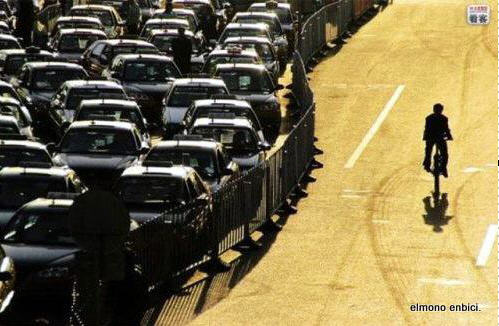
Thursday, November 17, 2011
More on public, private and social space. Andrew Curry reports from occupied London - Part II
Hopefully we have learned at least one hard lesson of life, and that is that a crisis is a terrible thing to waste. And here right before our eyes we have a case in point with the 
Tuesday, March 15, 2011
New York City Memorial Project: Remembering walkers and cyclists killed on the city's streets

Monday, August 16, 2010
What/who keeps holding back New Mobility reform?

After some years of talking with cities, and working and observing in many different circumstances, here are some of the barriers are most frequently encountered in trying to get innovative transportation reform programs off the ground, including even in cities that really do need a major mobility overhaul.
Friday, July 9, 2010
Gender, Economic Integration and Cross-Border Infrastructure Development
We do not often provide coverage of conferences and their output,  however World Streets is strongly committed to the concept of taking women's needs as the prime target, the defining metric of transport policy and practice in cities and in rural areas. (If you click to http://worldstreets.wordpress.com/category/women/ you will be taken to other articles in this W/S series and campaign.)
The International Workshop on Gender, Economic Integration and Cross-border Infrastructure Development aimed to discuss how regional economic integration strengthened by cross-border road networks has a differentiated effect based on gender, ethnicity and class. The workshop was organised in June in Bangkok by the Asian Institute of Technology (AIT) Thailand and the Asia-Pacific Regional Secretariat of the International Forum for Rural Transport and Development (IFRTD). It was supported by the Japan-ASEAN Solidarity Fund, ASEAN Foundation, Asian Development Bank and global Transport Knowledge Partnership (gTKP).
Opening speeches were made by:
The workshop was conducted in two parallel Panels, in which all the presentations were categorised in the three themes below.
The final plenary of the workshop was a Panel discussion moderated by Ranjith de Silva, IFRTD Asia-Pacific Regional Coordinator.
Members of the Panel:
The following issues and facts were taken up at the Panel discussion by the panelists and participants.
Moving forward:
The full papers presented at the workshop can be accessed here:
www.ifrtd.org/en/full.php?id=527
The Power Point presentations and full proceedings will soon be available at the IFRTD and AIT websites respectively at http://ifrtd.org and http://203.159.12.5:8082/AIT/.
Tuesday, May 11, 2010
Lessons in Leadership / Profiles in Courage
"Bogotá Change"
The Colombian presidential elections will be held in less than three weeks on May 30. The campaign is all about ideas, leadership, and courage. And what could be more critical for a country or a city event to have these lined up together with a  proven capacity to innovate, administrate, and to ensure that good policies and measures are continuously being scrutinized for performance and adapted to ensure that they are making the fullest possible contribution, year after year after year? Grab a cup of coffee and check out "Bogotá Change". You are going to learn something.
Not all that long ago Bogotá, the Colombian capital, was considered one of the world's most dangerous cities. At an altitude of over 2,600 meters up in the Andes mountains, seven million people were fighting a losing battle against drug crime, corruption, poverty and, not least, against each other.
But in 1995 the colorful and independent Antanas Mockus surprised many by being elected to become the city's Mayor, after having been fired as the vice-chancellor  of the university where he had mooned his ungovernable students in a fit of rage. Mockus's anarchistic and untraditional methods set about a social revolution that meant that Bogotá today is a role model for cities such as New York and Mexico City. 'Bogotá Change' tells the story about how this happened, and shows that politics in fact can be both funny and deeply inspiring.
If you are interested in how a city in a developing country was transformed through leadership, vision, and much work, this video done by a professional movie producer from Denmark is a good investment of 60 minutes of your time.
The story in brief:
By the way, it is about the administration of three mayors in that city, in "one of the world's most dangerous cities": two one-time political rivals, Antanas Mockus  and Enrique Peñalosa, both of whom are now united with another Mayor of Bogota, Lucho Garzon, and Sergio Fajardo, former mayor of Medellin. Coming together to bridge the political gaps they have recently created the Green Party (Partido Verde) and they have come from 5% of the anticipate vote in just 6 months ago to lead the Presidential polls for the election taking place in two weeks.
Quite an interesting process, which included a primary between Mockus, Penalosa and Garzon, where all three travelled to every corner of the country on a bus, always together, shared financing, never spoke a negative word of the others, and following the selection of Mockus as Presidential Candidate all three, in addition to Fajardo are fully engage and committed in the campaign as a TEAM.
Viewing the film:
Let's have a look at the backdrop to this inspiring story, thanks to a film that has been put together by a Danish film team in their Cities on Speed series (more on that below). You can do this in at least three ways.
All four films in this series are available for purchase from The Danish Filminstitute - details at http://www.citiesonspeed.com/.
Alternatively, you can check out the seven part series which has been posted to YouTube (IP??) and which you can access here at http://www.youtube.com/watch?v=5OdhD5D5its&feature=PlayList&p=0AD7F4A77E828E07&playnext_from=PL&index=0&playnext=1 If you are not sure, let me invite you to start here and please view at least the first two episodes, barely ten minutes in all. Then you can either continue with YouTube presentation (full screen recommended) -- or, if you will, click to http://www.megavideo.com/?v=0MKNIESG for the full 59 minute film. (If you are like me, a bit overworked and under brained, you may not think you are going to sit through the whole thing. Okay. Let's see what you do.)
# # #
About the filmmakers –
Producer: Henrik Veileborg, Upfront Films, hv@upfrontfilms.dk
Director: Andreas Møl Dalsgaard, andreasmol@hotmail.com
Cities on Speed
For the first time in history, over 50% of the world’s population is now living in urban areas. By 2050, this figure is expected to increase to 80%. At this very moment, giant urban organisms are growing at unprecedented rates. For some time now, growth in cities like Shanghai, Mumbai, Cairo and Bogotá has far outpaced planning. These cities are expanding so rapidly that urban administration and the keeping of official statistics have become largely impossible, and population figures are increasingly nothing more than rough estimates. They are truly ‘Cities on Speed.’
The Cities on Speed series consists of four documentaries, each of which pinpoints key problems in Bogotá, Mumbai, Shanghai and Cairo. Based on the perspectives of a series of noteworthy characters, the four films present drastically different views on the global megacity and the challenges brought about by their explosive growth. Cities on Speed portrays radical urban problems, and people with radical ideas on how to solve them: from underground parks in Shanghai and mime traffic police in Bogotá, to the so-called ‘garbage people’ in Cairo and 100,000 new Nano cars in Mumbai.
More at: http://www.citiesonspeed.com/. For the Bogata film, http://www.citiesonspeed.com/citiesonspeed/Bogota_ENgelsk.html
Copies can be ordered direct from http://eshop.dfi.dk/Shop/ItemList.php?CategoriSelect=14. Price: € 40.00.
# # #
What are the lessons that I take from this engaging, challenging film?
1. Leadership is not a committee matter. It is rare. It needs to be uncommon, courageous, original and inspiring. And viral!
2. Transportation is not something in itself. If we try to separate it from the greater whole of which it is but one part, we will never achieve either the mobility system or the city that should be our goal.
3. Continuity is both difficult and critical. It is one of the first victims of political football.
4. There are new ways of thinking which combine deep democracy and everyday practicality. We would be very weak, very foolish, and very amenable to manipulation by entrenched interests if we were not to recognize this and act on it.
What are the lessons you take from this film? Click comment below in order to share them with us all.
Eric Britton,
Editor, World Streets
Thursday, April 15, 2010
Why Women Bike . . . and Why They Don't
In Amsterdam, they say, cycling is like breathing - everyone does it and nobody really thinks too much about it. Kids learn to cycle before they are of school age - push cycles abound - and ride (without helmets) to school with or without parent supervision. But we're not in Amsterdam, and women especially have myriad reasons why they don't ride a bike. Health benefits are definitely important - it's just amazing that it is the top respondent reason for cycling. And what's even more amazing is that (at least in these NYC numbers), it doesn't take all that much cycling or walking to have a positive effect. The second most important reason women purported to cycle is to be in the outdoors (88% of respondents). This is also great reason, and while not knocking it, I found it a bit ironic, because among many non-riding women that I have spoken with, the outdoors (i.e. the weather) is a huge reason women say they don't ride. I'm not a competitive cyclist and instead consider myself a transport cyclist, and I don't like rotten weather or being miserable. But over time I've also realized I'd rather be out in weather on my bike (properly attired) than using any other means of transportation, including walking. The last two most popular reasons women cycle, according to the APBP survey were; "It saves me money" (72%), and, "It's very green and I'm doing my bit" (70%). Having taken the survey myself, I realize that these are choices that I likely put an "X" next to when thinking about the question of why I bike. Yet looking at them now, they seem quite abstract, and secondary to the joy of cycling (which in its own way may seem abstract to non-cyclists) and the fact that for me it's the most fun to be had while achieving transport. "Fun transport" was not one of the choices on the survey, however. I felt that it is a pity that the survey (a final report will issued in May) also didn't include a category choice for "I can show off my sense of style" as one reason for cycling. To men, this choice might seem absurd - perhaps to competitive and sports cycling women, too. To me, however, what was once a big hassle - choosing what to wear that is bike appropriate - has now become an interesting challenge and also a form of community with other urban women cyclists in other cities. When I see a great and practical outfit on a great and practical bike on a stylish woman, I really like it. The future of urban biking is important to the quality of life of cities. APBP's survey is an important document to overcoming the hurdles of getting and keeping women cycling, so it will be very interesting next month to see the data and analysis of why women don't ride. Safety, we know, is a big hurdle. Here, for example, are urban issues' blogger Mary Newsom's top necessary conditions for her to cycle to work in Charlotte, N.C.: "1. First, safe bike lanes wide enough so I didn't feel I'd put my life in danger. What are your pre-conditions? To follow up on yesterday's piece by Janice Turner on "dull cycling" in the UK, the ever-stylish biker April Streeter reports from Portland on a survey of why women in the US cycle, and why they do not. (And if you are a female cyclist and have views on why women cycle, or perhaps do not, in your country, let us hear from you too.)
Sporty cyclists few in Amsterdam but individualized and stylish cycle gear abounds. Photo A. Streeter.
To get to the heart of the reasons women do and don't cycle, The Association of Pedestrian and Bicycle Professionals has created a web-based survey around attitudes toward cycling. By word of social networking, 7,300 women have already responded to the survey, which will run through May 15. Some insights have already emerged, and what is startling is that the top reason (90% of respondents) women do cycle is because of the health benefits.
Wide separated bike paths in Amsterdam make biking a pleasure for women of all ages. Photo A. Streeter. "If more women and girls bicycled more places more often, they could achieve better health while having a very positive impact on their community and the environment." - Kit Keller, APBP executive director of the APBP.
If the outfit, the bike, the gear, and the route are all good, then cycling is too. Photo of a woman cycling in Taiwan by Richard Masoner via flickr.
And that's probably due to the fact that I (along with 73% of respondents) feel that cycling is a real tension and stress reliever. I have far more mental freedom on a bike than driving a car, and it is exactly the right type of freedom, for while my body and the part of my brain controlling my reflexes are active, there's still a bit of the unconscious mindspace left over to generate new ideas and solve old problems.
It's a job - this young Amsterdamer rides all day, every day, taking tourists on "yellow bike" tours. Photo A. Streeter.
2. Second, a chain guard to keep the grease from getting onto my office clothes.
3. Third, a good place to shower at the office."
# # #
About the author: In this slot at the end of contributed articles, we generally try to place a few sober words that will permit our readers to know a bit about the author. But this time the temptation is too great, so now you have a short bio note in April's own words. "April is a former bilingual cocktail waitress who left the warm beaches of Hawaii to pursue an upstanding career as reporter on the new and exciting digital world for MacWEEK magazine in San Francisco. When she finally couldn't stand the thought of writing about one more wireless local area network router, she recast herself as an environmental and sustainability journalist for Tomorrow magazine in Stockholm, Sweden. A few years later, she escaped the Scandinavian chill to become editor of Sustainable Industries magazine in Portland, Oregon, where she today is a freelance writer forever on the lookout for a good/local/organic/sustainable/fair trade Swedish burrito."
Source: April wrote this piece for Treehugger yesterday and sent this to us at the same time with permission. You can find her original at http://www.treehugger.com/files/2010/04/why-women-bike-and-why-they-dont.php?campaign=daily_nl. Thanks for sharing April.


Wednesday, April 14, 2010
Cycling should be dull
" (Government) policy is not to make cycling safer but to encourage more people to be  brave." The author, Janice Turner writing for the Times, puts her finger on one of the greater truths of public policy and cycling, which every city and every New Mobility activist will do well to bear in mind. In her words: "Cycling. . . should be banal. Because it is safe"
Cycling should be dull, not an extreme sport
- Janice Turner, The Times, London, UK
"We must overthrow the cult of the car and the Lycra-clad vanguard of aggressive men, if more of us are to take to our bikes"
Source: Cycling should be dull, not an extreme sport
I cycled to the Treasury on Tuesday to interview the Chancellor. All along Horse Guards the railings were plastered in police notices: bicycles chained to them would be removed, detonated possibly, since the fear is bike bombs, which crop up in conflicts from Vietnam through to Ireland and Iraq. In the end, my foldable was carried inside by a kind civil servant, trying not to get oil on his suit.
Cyclists are not welcome visitors to any public offices: Parliament, Portcullis House, Downing Street. You’d think someone would set up a token rack beyond where ministers might be vaporised by bombs. But whatever the political posturing inside, outside it’s still two wheels bad. And one wonders if things will change if/when George Osborne, who every morning can be spied freewheeling through Hyde Park, finally dismounts at the Treasury.
The pedalling Tories — George, Dave and Boris — are often mocked by Labour as poseurs, snapping on green credentials like cycle clips. But they merely reflect their class and generation. In the past two years, with Tube strikes and terror threats, the number of London cyclists has doubled: clustered at every intersection is a mob of professional, affluent, under-40, Georgie-boys.
Indeed, to cycle in Britain today you must embody Tory philosophy: be a rugged fearless individual, wholly responsible for your destiny, battling against the collectivism of bendy buses and the red tape of illogical one-way systems. Norman Tebbit, after all, instructed the jobless to get on their bikes, not the train
The trouble is, to judge by that microcosm of our blue future, the London mayoralty, Tory policy is not to make cycling safer but to encourage more people to be brave. Transport for London bangs on about Boris’s 12 new “cycle superhighways”, which will sweep into the centre from disparate suburbs. Will these routes have barriers so the two-wheeled are finally safe from being squished beneath Land Cruisers? Er, no. For the main part, we will still be playing dodgems with buses and now motorcycles — yes, cheers Boris, for adding veering Vespas to our worries. The mayor’s cycle superhighways, it turns out, are just lines on a map.
And yet last Sunday, from St Paul’s to Buck House, cars were banned from London streets for the mayor’s Skyride. Around 65,000 people gloried in our city, rode beside our pink-cheeked children without, for once, picturing the wobble that would land them under a truck. Oh, if only it were like this every day, we all cried, as if ordinary citizens — oldsters on uprights, little girls on pink Barbie trikes, hipsters in unfeasibly high heels, tweed suits on rusty butcher’s bikes — just getting around safely on two wheels was a fantasy.
Because elsewhere cyclists are just that: a random cross-section of humanity. Not a Lycra-clad male vanguard pumped with aggression and self-righteousness. In Europe’s top three cycling nations — Denmark, Germany and the Netherlands — timorous old people cycle, women as often as men, children bike off unaccompanied to school. Cycling is not a moral manifesto or a carbon offset. It does not require DayGlo or £500 alloy wheels or attitude. Cycling is, as it should be, banal. Because it is safe
Yes, you might say, those countries have always cycled, just like their women have never shaved their armpits: it’s their way, not ours. Actually, a fascinating report, Making Cycling Irresistible, by the American academics John Puchera and Ralph Buehler, reveals that in the early 1950s cycling in Britain and Denmark started tailing off as car ownership increased. Indeed, for some years, we were keener bikers than were the Danes. The difference was, in the mid-1970s, the governments of Germany, Denmark and the Netherlands resolved to stop the car’s dominance of the streets and championed the bike and pedestrian while the British allowed our townscapes to be ground beneath the wheels of the car. And yet these three continental countries own just as many cars per head as we do — the Germans more — it’s just that, unlike us, they aren’t glued into their driving seats.
Now only 1 per cent of our journeys are on bikes, in the Netherlands it is 27 per cent. And the reason is simple: a British cyclist is three times more likely than a Dutch one to die per miles travelled — even though only 3 per cent of Dutch cyclists wear a helmet. In Britain safety is seen as a matter for the individual, not government policy: yet it is highways, not helmets, that save lives.
And with quite extraordinary far-sightedness, these three countries built endless miles of barriered lanes along major roads but, more importantly, in many residential streets cars were slowed to a crawl and compelled to give way to bikes. And to enforce this, the law assumed, unless otherwise proved, that in an accident between a vehicle and a cyclist, the driver was at fault. Last week when that very principle was suggested here by Cycling England, there was a predictable furore about a (snore) Lycra louts’ charter.
But maybe it would make the idiot motorists who pelt down my 20mph street obey the law. Maybe it would have encouraged the left-turning HGV lorries who in London this year killed six female cyclists (women being vulnerable because we tend to ride defensively, hugging the kerb) to check their mirrors. Two fitness instructors, a film producer, a Goldsmiths’ graduate, a City director and an architect: those women were not loutish at all.
The answer to so many intractable modern problems — obesity, urban congestion, global warming — is cycling. What now feels like an extreme sport should be the default mode of transport. But it has dawned on me only recently that the big fat flaw at the heart of democracy is that politicians will never invest in the long term if voters’ initial inconvenience and expense are not rewarded with results before an election. And it will take years and billions to chip away at the cult of the car, to erect multistorey bicycle parks in every mainline station, to build genuinely super highways for bikes through our towns and reverse years of destructive urban planning.
Only when the fear is gone will big jessies stop riding on pavements, maniacs stop charging red lights, the streets be reclaimed from cars, and cycling from angry men with tiny bums. Do the Tories have the cojones to do it? Or is that just padding I see in their cycle shorts?
####
Janice Turner joined The Times in 2003 from The Guardian, and writes mainly, but not exclusively, on family matters and women's issues. Her column appears on Saturdays.


Wednesday, March 17, 2010
Heritage and transport: And leadership by example?
- Simon Bishop, Delhi, India  "We’ll keep our cars thank you very much. And we shall park them where we want. And for as long as we choose to. If heritage is a barrier, let’s move it out of the way. And, by the way, what moral authority do you have to tell me otherwise?"
“The problems of excessive traffic are crowding in upon us with desperate urgency. Unless steps are taken, the motor vehicle will defeat its own utility and bring about a disastrous degradation of the surroundings for living... Either the utility of vehicles in town will decline rapidly, or the pleasantness and safety of surroundings will deteriorate catastrophically – in all probability both will happen."
The prophetic words of Colin Buchanan in the UK 1963 “Traffic in Towns” Report are now ringing in the ears of Indian towns and cities. Drivers include; a high and fast growing urban population, rising levels of prosperity, inadequate public transit, sprawling cityscapes, and easy lines of credit. All are factors behind a growing appetite to raise status through motorcycles and cars and buy into the suburban dream waiting just round the corner. More on that at the end of the article!
The impact of growing traffic is being felt specifically on built heritage in a number of important ways. The historic centres of Indian towns and cities were not designed for motorized traffic. Streets were meant to be narrow to offer shade for all manner of pedestrian and animal traffic to go about their business without struggling too much against the extreme heat of summer. Pick up any Lonely Planet to India and you’ll find testimony that such a heritage fabric lends itself for the tourist to enjoy on foot or by bicycle. Sadly exhortations to ‘explore the old city by cycle rickshaw’ or ‘hire a bicycle to enjoy the outskirts of the town’ are fading away as pollution, noise and danger render the option unpalatable.
A perfect case in point is the system of nallahs or streams running through the city of Delhi. Built by the Tughluqs to supply the city with water nearly 1,000 years ago these nallahs or streams could be cleaned up to act as ‘greenway’ walking and cycling corridors. Just one nallah in South Delhi, for instance would link five of the seven ancient cities of Delhi, providing unrivalled access for tourists, school children, families to get in touch with the proud history of this city. Led by hungry contractors, the picture below shows what is happening in practice.
 Defence Colony Nallah ‘Before and After’, South Delhi
Not only is tourist revenue under threat, but local people are increasingly hooted at and bullied in their own backyard by motorized transport. Parks and gardens are difficult for children and the elderly to get to. Street play is hazardous between parked vehicles and erratically moving traffic. What visual and aural intrusion is doing to deter tourists from ‘Incredible India’ is one thing, but the associated levels of pollution are also damaging building fabric. In larger towns with roads over 30 metres in width, high levels of traffic are also decreasing the economic viability of heritage buildings as they become dangerous and difficult to access – witness Sabz Burj on a traffic island in Delhi.
 Traffic renders Sabz Burj inaccessible in Delhi
On a wider level whole communities living in historic enclaves are severed by wide arterial roads cutting through their heart or surrounding them from outside.
At a policy level there is a yawning gap between land use and transport planning. Delhi, the capital city of India still has no Transport Plan.
A series of exhortations in the Master Plan to build cycle tracks on all arterial roads are rarely observed and, without any network plan, those that are remain ineffective. In the absence of any multimodal plan to reduce journey distance through the application of compact, mixed land use strategies, large numbers of people are moving to greenfield apartments that can only be reached by motorbike or car. The newly opened Gurgaon Expressway from Delhi, saturated with traffic years ahead of schedule, is the result.
There are isolated examples of towns that have challenged the ‘inevitable’ threat to their heritage caused by unbridled suburbanization and motorization but only one has done this in a systematic way; linking environmental, social and economic objectives. Located near the India-Pakistan border, the Punjabi town of Fazilka removes cars from the city centre during daylight hours.
The market area was the first part of town to be made car-free. Four-wheeled vehicles are not allowed to drive in this zone during 12 daytime hours, although even then it has not yet been possible to prohibit motorcycles successfully. The Municipal Council President Anil Sethi places an emphasis on improving local transport options rather than in encouraging long distance travel. Sethi eschews overpasses and flyovers in favor of initiatives like the ‘Eco-cab’ scheme where residents can use their mobile phones to dial a cycle rickshaw to take them door-to-door. The local tea seller or shopkeeper keeps part of the telephone fee for acting as the cab controller, directing rickshaws to their customers.
 Car-Free Fazilka ©Down to Earth Magazine
Other examples of towns applying the ‘car free’ concept, although not in a holistic way like Fazilka include Nainital, Shimla and Darjeeling where cars are banned during retail hours on the main shopping streets. The concept is an in emergency response to the huge influx of tourist traffic during the summer months. This, combined with steep hillside topography constrains the movement and storage of vehicles. In Nainital a system of Eco-Cabs operates where users obtain a ticket from a booth at either end of the main street and then travel from one side of the town to the other. Challenging gradients preclude cycles or cycle rickshaws in Shimla and Darjeeling but allow for pedestrians to enjoy unfettered access to the main shopping streets.
In a sign of things to come, the Carter Road in the Bandra area of Mumbai organized its first car-free day on 21st February 2010. Forty thousand local residents and Bollywood celebrities including Priya Dutt pledged to take part whilst the area was closed off to traffic. The aim of the event was to focus people’s attention on the impact of vehicles on pollution and in inhibiting healthy living and exposure to the great outdoors.
 Car-free Carter Road, Mumbai, 21st February 2010
Perhaps the key point to make, however, is that cars are aspirational. The policy wonks who rail against the Tata Nano would be the first to scream and cry if they were asked to make sacrifices by walking or cycling to the office or using public transit. Most have chauffer driven, A/C vehicles clogging up the roads on the way to their next conference.
Go to the Habitat Centre in Delhi by cycle, home to a host of environmental and UN organizations and you will be politely waved through the service entrance and forced to face oncoming car traffic. Go to a conference by cycle and you will be waved away. When these leaders asked if they walk or cycle the inevitable answer is ‘No, it’s too dangerous.’, ‘When the roads are planned for cycles I will use one’, ‘ It’s too hot for 9 months of the year in India to cycle’. The answer is always why I can’t do something, not why I can. In fact it’s perfectly possible to cycle in the Indian Plains early in the morning or late in the day when most people commute even during the hotter months with a folded shirt in your bag, a hat on your head and a T-Shirt on your back.
# # #
About the author:
- Simon Bishop is working as a transport and environment consultant in Delhi, where  he lives with his family. In India he has worked on bus and cycling projects like the Delhi BRTand helped set up the Global Transport Knowledge Partnership. Before coming to India two years ago Simon worked in London as a planner on demand management and travel marketing schemes, receiving an award from the Mayor for "London's Most Innovative Transport Project". He authored 'The Sky's the Limit' - Policies for Sustainable Aviation' while working as a policy adviser in the Institute for Public Policy Research.
Wednesday, February 24, 2010
"Should car advertising be more heavily regulated, etc., etc."
More on, this time from Canada
Yesterday's feature article under this title generated a number of immediate comments and responses from readers in Australia, Canada and Germany, including the  following announced "Canadian Code of Advertising Standards re Motor Vehicle Advertising", a "stakeholder approach" to dealing with these thorny issues. We produce it here in its essentials together with URLs for further information. But does it actually do the job?
Richard Campbell from Vancouver Canada wrote in this morning as follows: "There are similar standards in Canada that just came into effect. http://www.adstandards.com/en/MediaAndEvents/newInterpretationGuideline.aspx. The Guideline was developed to help ensure that motor vehicle advertisements are created to comply with the spirit of Canadian road safety laws.
It includes eight broad principles, in the form of questions, which will provide guidance to motor vehicle manufacturers and their advertising agencies in the production of advertising that is creative and effective, while respecting road safety concerns and conforming to the Code. The Guideline encompasses such issues as speeding, aggressive and unsafe behaviour, and depictions of races or competitions. Here is the complaint procedure: http://www.adstandards.com/en/ConsumerComplaints/theConsumerComplaintsProcess.aspx"
Canadian Code of Advertising Standards re Motor Vehicle Advertising
Advertising Standards Canada (ASC) maintains the Canadian Code of Advertising Standards (Code), the principal instrument of advertising self-regulation in Canada. The Code sets the standards for acceptable advertising and forms the basis for receipt and review of consumers’ complaints about Canadian advertising. The Code is augmented by Interpretation Guidelines that are designed to enhance industry and public understanding of the interpretation and application of the clauses of the Code.
On September 24, 2009, ASC published and implemented Interpretation Guideline #4 – Alleged Infractions of Clauses #10 or #14: Motor Vehicle Advertising. The Guideline was developed to help ensure that motor vehicle advertisements are created to comply with the spirit of Canadian road safety laws. It includes eight broad principles, in the form of questions, which will provide guidance to motor vehicle manufacturers and their advertising agencies in the production of advertising that is creative and effective, while respecting road safety concerns and conforming to the Code. The Guideline encompasses such issues as speeding, aggressive and unsafe behaviour, and depictions of races or competitions.
Developed by a working group, the motor vehicle advertising guideline initiative was led by the Société de l’assurance automobile du Québec (SAAQ), in conjunction with ASC, the Canadian Council of Motor Transport Administrators, the Canadian Vehicle Manufacturers’ Association, the Association of International Automobile Manufacturers of Canada, the Association of Canadian Advertisers and the Association des agences de publicité du Québec.
The working group was convened following the adoption of legislative provisions obligating the SAAQ to “in collaboration with automobile manufacturers, advertising agencies and highway safety stakeholders …establish guidelines aimed at prohibiting any advertisement that portrays a road vehicle and conveys a careless attitude with respect to road safety by presenting situations that encourage reckless, dangerous or prohibited practices or behaviour.” The auto advertising issue was of interest to other Canadian jurisdictions, several of whom joined the working group (Ontario, Manitoba, Saskatchewan, Alberta, British Columbia, Yukon and Transport Canada.) The working group’s adoption of the Guideline was supported by all Canadian jurisdictions.
The positive cooperation from the other stakeholders meant that the guidelines could be built on the existing self-regulatory structure, thereby avoiding the need to adopt more binding measures. (Our emphasis.)
* Click here for the new Guideline: http://www.adstandards.com/en/MediaAndEvents/newInterpretationGuideline.aspx
Interpretation Guideline #4 – Alleged Infractions of Clauses 10 or 14: Motor Vehicle Advertising1
(Editor's note: These are the "eight questions" referred to above.)
4.1 When evaluating complaints about advertising involving depictions of motorized vehicles that allegedly contravene Clause 10 (Safety), Council will take into account the following questions: a. Does the depiction of the performance, power or acceleration of the vehicle convey the impression that it is acceptable to exceed speed limits?
b. Does the depiction of a vehicle’s handling ability involve potentially unsafe actions such as cutting in and out of traffic, excessively aggressive driving, or car chases in a residential setting?
c. Does the depiction appear realistic or does it appear to be unreal, as in a fantasy-like scenario that is unlikely to be copied or emulated in real life?
d. Would it be reasonable to interpret the depicted situation as condoning or encouraging unsafe driving practices?
4.2 When evaluating complaints involving depictions in automobile advertising that allegedly contravene Clause 10 (Safety) or Clause 14 (Unacceptable Depictions and Portrayals), Council also will take into account the following questions developed and endorsed by the Association of International Automobile Manufacturers of Canada and the Canadian Vehicle Manufacturers Association: a. Is the vehicle operated in violation of applicable laws or beyond reasonable speed under the circumstances taking into account the portrayed road, weather, traffic and surrounding conditions (e.g. children in the area,) or over usual speed limits in Canada?
b. Does the depiction of the performance, power or acceleration and braking of the vehicle, taking into consideration the advertisement as a whole including visual (both images and text) and audio messages convey the impression that it is acceptable to exceed speed limits or to otherwise operate a vehicle unsafely or illegally?
c. Does the depiction of racing and rallies, and of other competition environments, taking into consideration the advertisement as a whole including visual (both images and text) and audio messages, convey the impression that production vehicles could be driven like racing or competition vehicles on a public roadway?
d. Is the advertisement encouraging or endorsing vehicle use that is aggressive, violent or injurious toward other road users, or that denigrates or disparages cautious behaviour when using a vehicle?
# # #
Editor's commentary:
This proposal strikes these eyes as a possible step in the right direction; however we fear that calls for "reasonable behavior" will be about as well accepted by the main actors involved in this sector as it would be in the more aggressive edge of the financial community.
Let's not kid ourselves. Self-regulation? Getting agreement from the "main stakeholders"? Whoa. You or I can  say anything but the only thing that counts is what we do.
We do not see that anything of worth can be achieved in this domain unless there are real teeth to it. Where are the teeth? Where is the responsibility? Where is the good governance needed as a framework for working democracy, healthy entrepreneurship and society?
I don't think that we can responsibly run away from this one.
Eric Britton,
Editor, World Streets
Tuesday, February 23, 2010
Question: Should car advertizing be more heavily regulated? Or taxed? Or mandate compensatory advertizing? Or or . . . ?
Our sustainable colleagues over at Nuova Mobilità, our Italian-language sister  publication, have shown more consistent aggressiveness concerning debating the issues of car advertising then we (which points out the advantages of diversity) -- but from time to time we too consider that it is useful to give this some thought and dialogue. N/M picked up the following quite contentious article on the subject today from the Guardian, which we are also pleased to share with you for your information and comment. (Ours appear at the end of this article).
Want to promote cycling? Cut back car adverts now
- Tom Bogdanowicz, guardian.co.uk. London. Wednesday, 17 February 2010.
The UK spends £500m a year on car ads and fetishises auto-ownership – no wonder cycling is stuck in the slow lane
Step out of your home and what do you see? There is a subliminal and overt message on the streets and in the media to buy cars and use them. You'll find it on TV, on your computer, in the newspapers you read. It makes the promotion of any other form or transport, such as cycling, an uphill struggle regardless of how convenient, healthy and sustainable it may be.
The advertising spend on the promotion of motor vehicles in the UK exceeds £500m a year. And, by and large, it works: car ownership has grown steadily since the 1940s and, after the current economic crisis abates, it will likely continue to do so.
In sharp contrast, the promotion of cycling and walking is almost non-existent. When Transport for London ran a TV ad promoting cycling it was a unique occasion. The number of cyclists on UK roads has dropped sharply since the 1940s, and London stands out as a rare example of a city where cycling has doubled in six years.
While the government encourages us to walk, ride bikes and use public transport, it knows that car advertising is persuading us to do the exact opposite. Instead of sharing one car, households buy two or three so that everyone can express their own personality through their vehicle. If you believe the advertising, your car will make you more attractive, more popular and more successful. How many car ads show the reality of being stuck in traffic or the frustration of searching for a parking space?
Cycling gets the occasional media boost when team GB sweeps the Olympic medals or cycling in London soars, as more people realise it's faster around town than driving. But very few companies pay big money for bike ads, so newspapers don't have cycling sections – with notable exceptions, such as this blog - and there is no cycling equivalent of Top Gear.
The outcome of all that PR for cars is more sales as well as more congestion, more pollution and a greater demand for scarce parking spaces. There would have been no need for the congestion charge in London if not for the success of the auto industry's publicity machine and the popularity of motoring programmes.
Reversing the trend of ever-increasing car ownership and use is not as difficult as it seems. If governments were to limit car advertising, as they did with alcohol and tobacco when the health impacts were recognised, people would take decisions about their mode of transport based on common sense rather than the promise of open highways, high speeds and glamorous locations. Common sense might well encourage cycling or walking for more journeys.
The survival of cycling as a transport mode and its growth in London is a tribute to its convenience and simplicity. Surveys show that one-in-five of us would like to cycle. If the barriers to cycling were removed – such as perceived danger and a lack of cycling infrastructure – cycle journeys in the UK might increase tenfold to the levels seen in Holland or Denmark. The benefits are obvious: more cycling and walking would help prevent health problems as well as climate change.
Holland is lucky to have invested in cycling before car-oriented planning created a road system that discourages cycle use. The UK, unfortunately, has seen several decades of car-centred planning. But, as London shows, the UK can still join the virtuous circle. Local traffic management schemes can be redesigned to allow cyclists through them and urban gyratories can be removed.
If reduced auto promotion stemmed the growth in car ownership as well, we could see more people cycling and drivers might discover that the roads were less busy and parking spaces easier to come by. In fact, there is little choice; Britain's urban population continues to grow – unless we enable people to cycle and walk more, and stop persuading them to use cars, we face gridlock.
# # # About the author:
• Tom Bogdanowicz is campaigns and development officer for the London Cycle Campaign
* Source: guardian.co.uk. http://tinyurl.com/yb7ssh9
* Reader comments here: http://tinyurl.com/yznghcu
From the editor: A Personal Reflection:
It is not exactly that recourse to the law is the last refuge of a scoundrel, but it - that is the crude hammer of the law - is certainly the last refuge of citizens and political leaders who are not able to come up with a better and softer path to get the job done. Which is to say that we approach matters like this with a heavy heart, but then are ready to hear the arguments from both sides, all while not forgetting what sustainability and social justice are all about.
The bottom line: As an essentially naïve person, I always tend to confound or confuse (or wish hopefully about) advertising as having primarily an information function. Of course when any of us has a point we wish to make, there is also a human tendency to try to make that point in a way which renders it agreeable for the public you are trying to get on your side. At one point of course this can become a matter of more even than simple cajoling , namely attempting behavior modification, and this brings us in front of an ethical choice, or maybe better a dilemma.
I, and I am almost certain you also, have reached the conclusion that advertising in public places and the media can be extremely useful in matters in which society is having a problem or two: smoking too much, speeding too fast, drug dependency, various forms of unfair discrimination, the long list goes on. No reasonable person can deplore the intelligent and in a surprising number of cases pretty effective advertising/information campaigns that have been run over the last several decades in order to modify behavior of large numbers of people and create really a better and safer society for all. Moreover I, and once again I bet you too, want to see more of this done wisely and effectively.
Now back to our topic, namely the at least highly dubious habits of the automobile industry advertising practices. And here I have to put my cards on the table and state that I am not an anti-car guy. I have had quite a range of cars over the years which by and large I greatly appreciated and I think have used wisely. On the other hand, we are all increasingly aware that as things stand today there are many situations in which "own-cars" are not always necessarily the best way to get around every day (particularly in cities of course). Anyway, we shall soon enough have a billion of them raring to go all over the planet, so it is our job as citizen-guardians of the concept of sustainable transportation to provide perspective and, if we can manage it, wise counsel as to what exactly is going to be their proper place in society. After all, that is what governance is all about.
For starters, anyone would have to be blind or soft in the head not to see the pernicious qualities of much of the car advertising that we presently have in our various print and electronic media. Much of this goes well beyond giving us simple information about their products, and with the help of very sophisticated media specialists and experts in behavioral psychology often combine to create pattern and attitudes which are far from being in the public interest.
The fixation with speed, the subtle ways of manipulating and implying speed as a personal (to some) if not a social value -- and hey! everybody knows that speed kills -- gives us a great place to start. Some of the rest is more puzzling and is going to be more difficult, so until we can sort this out, speed gives us a good training ground to get going and figure out how to handle the rest.
My position on this today then is that I feel there is every reason for the vigorous public debate in as many fora and places as can be reached. Tom Bogdanowicz's points are worthy of reflection, and it is good to see him looking at all of this from the perspective of cyclists. And if you click here - http://tinyurl.com/yznghcu - you will be taken to the extremely lively commentary that his article has excited, and which also might find it useful to spend the time with.
I wish I could tell you that I have a way to wrap this up so that you can put it all behind you and move on to other things. But I cannot and so as resourceful citizens we have to keep thinking about it, talking about it, and pretty soon doing something about it.
Eric Britton
Editor, World Streets
Monday, February 22, 2010
Profile: Robin Carlisle in South Africa. "A helluva lot of people don’t have cars. I have to look after them"
To move from the unfair and hopelessly inefficient deadlock that is old mobility toward sustainable transport and sustainable cities, we need concepts, dialogues,  demonstrations, projects and programs. But none of this is going to happen if we don't have the people: the warm, surely fallible but somehow thoughtful, daring and courageous human beings who are needed to bring all this about.We need more heroes, wouldn't you agree? Our Profiles here on World Streets are intended to remind the world that whenever something good happens, it is because there are real live people behind it. Let's take Robin Carlisle who is working for change in Capetown South Africa for example.
In The Headlights: Street-fighting man
- Profile by Gail Jennings, Editor, Mobility Magazine, Cape Town
In-between drags of his cigarette and stories about bicycle-commuting, Robin Carlisle, MEC for Transport and Public Works in the Western Cape Provincial Government, talks to Gail Jennings about his plans to get the province moving.
MEC Robin Carlisle states his position upfront: he doesn’t intend to change the world. That, he says, belongs in the realms of consultants’ fantasies; he merely intends to change direction, reverse our local trends in transport and re-align them with international trends. This, of course, will change for the better the personal worlds of multitudes of people in the Western Cape.
Current trends in South Africa are more roads, more cars, more congestion; decreasing air quality and increasing road fatalities (particularly pedestrians and passengers); and ‘magic fairy’ solutions appearing in provinces to the north. International trends are moving toward a re-definition of the problem: for as long as we regard long commutes, gridlock and spatial segregation and isolation as transport-problems, we’ll look for transport-related solutions…
The Western Cape, with MEC Carlisle in the driver’s seat, will be somewhere in-between, a damn-sight better place to be than where we are right now. Which is stuck in the traffic, losing time, losing money, and losing opportunities for economic growth and wealth.
Carlisle knows, and supports, the arguments for better spatial planning and densification of Cape Town in particular, which would bring people and work closer together. He admires the work of Jeremy Cronin, Deputy Minister of Transport and outspoken advocate of better land-use planning.
But his mission, his mandate, is to bring people to their places of work, no matter how far away these might be – easily, cheaply, quickly, in greater comfort and with greater dignity. And there’s something ‘Penalosa’ – another transport philosopher he admires – about the way in which he’ll do it, without excessive concern for ensuring his re-election.
‘We’ve set modest targets for modal shifts, but most importantly these signal a change in direction,’ he says. ‘Public transport will become more widespread, more accessible, and there will be a detailed, step-by-step scheme, within the next six months.’ This scheme, he says, ‘will be irreversible by 2014, around the time in which I retire!’
What will we see on the roads?
The nitty-gritty of the Western Cape’s transport plan, and its implementation strategy, has not yet been designed. But the overall philosophy is there: ‘What have I got? What can I add to it? And what can I take away later?’
‘Public transport is like a drowning person,’ says Carlisle. ‘You can’t just pull out a leg or an arm – you have to pull out the whole person. It’s a package, and is best developed sectorally.’
The key to Carlisle and his team’s system is connectivity, and it involves a combination of trunk routes, feeder services – reported in the local press as Bus Rapid Transit – and increased rail services. Funding will arise from the redirection of spend from road-building to public transport.
‘BRTs do have an important role – that of overcoming road-based congestion – but they’re not the magic solution. We don’t need to go and build new BRT roads; we simply need to take road space from private cars. This will come within about four years, you won’t be able to bludgeon your way into the rapid lanes unless you own a tank.’ Carlise leans back, takes out another cigarette and considers his retirement once more…
The formula is this: rail, trunk operators (‘probably buses’) and feeders (‘I see no reason why these can’t be modestly converted Quantums, running to a schedule and enjoying some sort of subsidy.’) ‘Licensed taxi operators don’t have to come into the system if they don’t want to,’ he points out. ‘There’s been no transport master plan so far because no-one wants to bite the bullet that is the taxi industry…’
And this is a bullet that Carlisle has already bitten: ‘These front teeth – I got these replaced after my first collision, on my bicycle on Wynberg Hill. My left shoulder, that was another close encounter …’ (Carlisle commuted by bicycle for more than 17 years, undeterred.) ‘I’m not afraid of the taxi industry, and I’m not going to prescribe to anyone. I need about 50% of the current licensed taxi industry to get the system going, and the smart guys will see the value in it – congestion has already cut some taxi mileage by up to 30%.’
How is it going to happen?
‘Funding and good managers: that’s what makes any project sustainable, and that’s what we’re going to get. It all starts with National Treasury, the sole conduit for 98% of revenue. This is where you have to contest for funding, and this is where I need to win the funding fight over the R300, for example. That will give us enough money, and if I give 50% to PRASA, this will fix our rail problems…’ The planned extensions to the R300, from Melkbosstrand in the north and to Ladies' Mile Road on the M3 in the south, will cost an estimated R14-billion, which would be better spent on developing public transport infrastructure, says Carlisle.
‘We need to open up the conversation nationally, about how we spend our mobility funds. SANRAL builds good roads, and gives good value for money, but what is the aim? What are we building roads for? Roads, especially periphery roads, are not my priority. A helluva lot of people don’t have cars. I have to look after them.’
In the Western Cape 35% of commuters use rail, suggests Carlisle’s research. ‘Rail knows how to move many people, which is what we need to do. And we do it well: the Fish Hoek to Cape Town line is one of the few in the world that is close to break-even. With a good feeder service, better park-and-ride facilities, and increased hours, this would be a quick way to ease congestion in one area alone.
‘It bothers me that you can’t put a bicycle on a train, even off-peak,’ he says. ‘And yes, we’ll get this done …’ But he cautions the bicycle-activist in me: ‘I’m prepared to look into a package of measures for bicycle commuters [his years of riding were made more pleasant by showers and safe parking at his office], but it’s not a raging priority. In the Central Karoo, with rural roads, bicycles make more sense, but in the city, bicycles are not yet aspirational.’
Carlisle’s focus on Cape Town is because 90% of the actual commuter population of the Western Cape is based here, he explains. Already in Cape Town and surrounds – Stellenbosch, Paarl, Wellington/Drakenstein – ‘all the key elements for better public transport are there; we simply we need the investment.’
George’s mobility strategy, on the other hand, is a ‘test to see if, in one of the few areas outside Cape Town where we have a mass mobility problem, we can find a solution.’ [See Mobility issue 6]. ‘We’re almost ready to kick off – it’s been a slow process of gaining trust,’ he says. ‘Our job is to work with the towns, not put in transport schemes: it’s about community ownership.’The Western Cape’s ‘modest’ targets
• Increase public transport use to 40% over the next four years
• Improve rail transport
• Provide rapid trunk routes for existing public transport  • Formalise the taxi industry
• Shift 10% of road freight to the rail network by 2014
• Reduce maintenance backlogs by 16% by 2014
• Reduce road accident fatalities by 50% over the next three years
• Continue to support bicycle transport (Shova Kalula) in rural areas
# # #
About the author: Gail Jennings, Mobility Magazine, Cape Town, South Africa. Gail writes about issues such as social and environmental justice, energy and climate change, community-based projects, non-motorised transport, and edit Mobility Magazine (a quarterly transport publication for the southern African public sector).
Sunday, November 15, 2009
Archives: Sonnet for the Neighborhood Democratic Caucus.
In Honor of Kenneth Ewart Boulding
 Paris. Nov. 1994: Kenneth Boulding, 1909-1993, was one of the magisterial figures in the field of social science of the second half of the twentieth century. In the last two years of his life, he took to writing sonnets, 216 in all between 1981 and 1993. We have taken one of these to sound the theme for our collaborative knowledge-building enterprise here on World Streets: "how to turn a heterogeneous caucus into a choir, singing the same good song, So, to democracy all should be turning When it is not just voting, but group learning."
Sonnet for the Neighborhood Democratic Caucus
They come -- a somewhat miscellaneous group
Of people gathered from the neighborhood.
Some may be naive -- some are fairly good
At jumping through the somewhat twisted hoop
Of politics -- not getting in the soup
Of disagreement, finding where they stood
On touchy issues that might mean they could
Lose the election; learning when to stoop,
And when to stand against a blatant wrong,
When to be quiet, when a little raucous,
And how to turn a heterogeneous caucus
Into a choir, singing the same good song,
So, to democracy all should be turning
When it is not just voting, but group learning.
- Kenneth Boulding, Boulder, Colorado, 14 April 1992
Who was Kenneth Boulding?
Professor Boulding was internationally known for his innovative and sensitive work in the field of economics, Along with the presidency of five other major scholarly societies, including the American Association for the Advancement of Science ,he was elected as president of the American Economics Association. He taught at universities on three continents, wrote more than thirty significant books and hundreds of articles, pamphlets and papers, and was awarded numerous honors for his work not only as an economist pushing the forefront of his profession, but also as a humanist, futures thinker and major activist in the field of peace and conflict resolution.
Ken Boulding was a profoundly democratic man, a Quaker (the Society of Friends), a loving and diligent work partner with his wife, the eminent Norwegian-born sociologist Dr. Elise Boulding, and both a worrier (about our ability to survive the challenges of the modern world) and an optimist (he decided to dedicate his life to doing something about it anyway).
Books in Print by Kenneth Boulding
The following lists the available titles of books by Ken Boulding from Books in Print. They can be ordered through your local book dealer which is what I am sure he would have preferred) or of course any of the booksellers that ply the net.
• The Future: Images & Processes
• The Future: Images & Prophecies
• National Images & International Systems
• Structure Of A Modern Economy
• There Is A Spirit: The Nayless Sonnets $4.50
• Toward A New Economics
• Three Faces Of Power
• Conflict And Defense
• Economics As A Science
• Meaning Of The 20th Century
• Beyond The Bomb
• Mending The World: Quaker insights on the social order
• Economics Of Human Betterment
• The World As A Total System
• The Organizational Revolution: A Study In The Ethics Of Economic Organization
• Preface To Grants Economics
• Evolutionary Economics
• Disarmament And The Economy
• Ecodynamics: A New Theory Of Societal Evolution
• Redistribution Through The Financial System
• Stable Peace
• Economics Of Peace
• Peace And The War Industry
• Mayer Boulding Dialogue On Peace Research
• The Evolutionary Potential Of Quakerism
• The Image: Knowledge In Life And Society
• New Nations For Old
• Collected Papers Of Kenneth E. Boulding
- - - - -
# # #
Editor - Late night thoughts:

Late last night as I was tossing, turning and thinking about how we are going to be able to find a way to continue World Streets, my thoughts turned to Ken Boulding, who in his latter years also had his active mind at times keeping him up in the middle of the night. What he did often on those occasions was to click on the bedside lamp, pick up a pen and quietly write notes -- but also from time to time one more of his several hundred sonnets, including the one you can see here. (His dear wife, Elise Boulding, told me about this when I called to ask her permission concerning the following.)
It was back in late 1994, one year after Professor Boulding's death, when we were just cranking up the first iteration of our collaborative web presence (see http://www.xability.com/commons/comdedic.htm), that I decided to seek permission to dedicate the first year of our new worldwide group learning enterprise and "somewhat miscellaneous group" in honor of Professor Boulding, whose work had marked me deeply back in the days when I was something of an economist stretching for new ideas and clues about why people do the things they do. I contacted his wife, Mrs. Elise Boulding, who kindly gave me permission to do just that.
Today, fifteen full years later and at a time when competence in matters of world peace and conflict resolution have rarely been so important, his poem, his work and his example come to mind. "To democracy all should be turning. When it is not just voting, but group learning."
That sounds to me much like what you, dear reader, and we are trying to do here. And you will I am sre agree: we have to try a lot harder. This is a challenge we should not fail.
Eric Britton, Paris
Subscribe to:
Posts (Atom)


 Posts


