
Showing posts with label energy. Show all posts
Showing posts with label energy. Show all posts
Wednesday, July 10, 2013
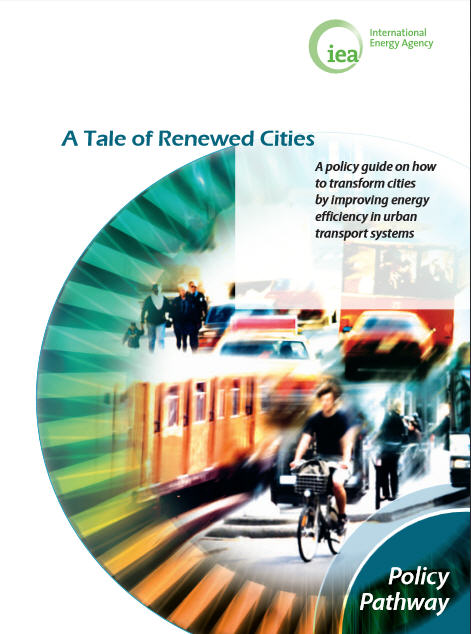
Report. Policy Pathways: A Tale of Renewed Cities


Wednesday, May 15, 2013
Economic Growth Enigma: Money or Energy


Monday, May 6, 2013
Due to lose? Well maybe not quite yet.
An article of April 26, 2013," The Race of Our Lives"(GMO) by Jeremy 
Monday, September 26, 2011
Op-Ed, Cornie Huizenga: The transport sector as leader in the sustainability debate?
There are a lot of reasons which need to be investigated if we are to have a snowball's chance in hell of winning the sustainable transportation wars. The 
Friday, October 15, 2010
More on Illich, energy and equity

Wednesday, October 6, 2010
India vs. China: Which Low-Carbon Development Model Will Win?

Wednesday, September 29, 2010
Energy and Equity, Ivan Illich.
Earlier this week I proposed the idea of a group read and commentary on Illich's incisive and important 1974 book "Energy and Equity", but as I thrashed through my 
So here you have it. The whole thing. Print it out. Mark it up. Share your thoughts. Let me take a single phrase from the book to get the ball rolling: "Participatory democracy postulates low-energy technology. Only participatory democracy creates the conditions for rational technology." (And this almost two decades before the phrase "sustainable development" first appeared on the radar screen. So off we go with Illich as our guide!)
Tuesday, August 3, 2010
Transport, Mobility and/or Access – Technologies, Management and/or Behavior?
Part I: Getting it wrong from the start.
One of the great, long-proven truths of policy and practice in the transport field is the we all to often start out by jumping right into the middle of the 
Thursday, April 29, 2010
Don't count on "alternative fuels" to save the world?
(Dark bet on a pessimistic, high tech future)
Here we have an unusually perceptive piece from a specialist in chaos theory who helps us make sense of the "alternative fuels" proposals and claims. It is good to have his hardheaded expert view on the potential of alternative fuels in our future transportation arrangements. But it is important too that we  reflect on his dark bet on a pessimistic, high-technology future: in which he sees us as stumbling from crisis to crisis, in response to which we manage each time to come up with last-minute ad hoc "solutions" which leave us as still basically operational, but not all that much more. That I am afraid is the bleak face of the future, unless we are able to find the vision and leadership to do otherwise. The Methadone Economy - Tom Konrad, 27 April 2010.
Peak Oil Investments I'm Putting My Money On:
If the measure of success for alternative fuels is the ability to continue to live in suburbs and commute in multi-ton boxes of metal on congested freeways for hours each day, then alternative fuels will fail. No alternative fuel has the existing infrastructure, supply potential, energy density, and low environmental impact that we would need to replace oil without changing our unsustainable lifestyle.
Peak oil may mean the end of bigger and bigger cars driven farther and farther on more and more congested roads. Peak oil may mean the end of suburban life as we know it. Yet life as we don't know it does need not be a vision out of Mad Max. Peak oil will mean changes, some for the better, some for the worse.
The surest change peak oil will bring is less driving, in fewer vehicles that are filled closer to capacity. Those vehicles will use less oil (or alternative fuels) per person-mile. We'll also find ways to satisfy the desires and needs that we currently satisfy with travel without traveling.
Alternative Fuels
The first eight parts of this series looked into alternative fuels. I concluded that no alternative fuel listed could replace oil as we use it today fast enough to replace dwindling oil supplies. Conventional biofuels cannot be produced in enough quantity, and making hydrogen is an inefficient use of electricity or natural gas. Electric vehicles are too expensive or have too little range. There is not enough natural gas and there is too little fueling infrastructure to make natural gas vehicles practical on a large scale. Gas-to-liquids makes sense for stranded natural gas, but there are too many other high value uses for natural gas to make a large dent in declining oil supplies. Coal to liquids does too much environmental harm, and algae needs too much more technological development to achieve its promise in time.
The biggest problem with alternative fueled vehicles, however, is not the alternative fuels, the problem is the vehicles and how we use them.
Oil was a one-time bonanza of a readily available, easily transportable, durable, energy-dense liquid. With oil, humanity won a natural resources lottery ticket. Like a lottery winner who blows cash that could have lasted a lifetime in a few months, we now need to realize that we've spent most of our winnings. It's unreasonable to expect that we're going to win another such jackpot before we have to start watching our fuel budget again. The main question is how soon and how deliberately we will make the necessary adjustment. Will we act like the lottery winner who uses his last hundred thousand to tide him over while he looks for a job? Will we keep partying to the bitter end, until one day we wake up, hung over in the gutter? Will it be something in between?
The Methadone Economy
Switching to a drug analogy, most alternative fuels are the methadone to treat our petroleum / heroin addiction. Methadone is given to heroin addicts in treatment because it mitigates withdrawal symptoms and can block the euphoric effects of heroin, morphine, and similar drugs, reducing the urge to use.
Alternative fuels can be sufficient to allow our society to function, but we're not going to feel the highs we felt when the oil was flowing freely. Alternative fuels cannot take us back to a "normal" pre-peak oil state because our use of petroleum over the last few decades as been far from "normal:" it has been one long, fossil-fueled high. We will eventually kick the petroleum habit with the help of alternative fuels not because alternative fuels are better than petroleum and can bring us something that petroleum cannot, but because our supplier will be getting smaller shipments over time, while the number of fellow junkies knocking on his door will keep going up with big increases in petroleum demand from emerging economies.
There are several competing visions of a future powered by alternative fuels, ranging from wildly optimistic to gloom-and-doom, with variations depending on how effectively the prognosticator thinks we can replace fossil fuels with alternatives.
A high-technology optimistic vision includes smoothly running efficient pods in mass transit systems powered by renewable energy. High speed bullet trains network the land, making overland air travel unnecessary. The low-technology optimistic vision involves a peaceful return to local economies where food is grown locally, and increasing local interdependence fosters strong local community ties, and people grow happier as they become more connected to the land and each other. The low-technology pessimistic vision is a free-for-all scramble for dwindling resources like the vision out of Mad Max referenced above.
I'm long on optimism about technology, but short on optimism about our will to make the necessary sacrifices to implement that technology quickly or efficiently. I'm betting on a pessimistic, high-technology future. In this future, we manage to cobble together a hodge-podge of last-minute, jerry-rigged solutions to keep the economy functioning at a basic level, but not at all smoothly or evenly. In it, we lurch from a crisis caused by financial melt-down, to a crisis caused by peak-oil to one caused by climate change. We'll tackle each crisis with incredible ingenuity, staving off total chaos, but at the cost of mis-allocated resources and a deteriorating standard of living. We hold out in the belief that after just this one more fix, the world will be back to normal and we can stop worrying. But that day will never come.
Forward thinking planners in some municipalities and communities will work on implementing true, long-term solutions. But they will not have enough money or resources to do more than ameliorate the next crisis. The large-scale, system wide solutions of better mass transit, algae biofuels, and continent-wide electricity transmission of the high-technology optimistic vision will be implemented too slowly, on too small a scale to achieve the economic stability the techno-optimists hope for. But these half-built systems will still bring considerable benefit, and keep the succession of crises from being the complete disaster that would come with a complete lack of planning.
This is the Methadone Economy. Alternative-fuel oil replacement therapy is necessary because oil supply will not keep pace with demand; we must replace oil or do without. But alternative fuels are not oil, and will require more effort devoted to energy production to produce the same effect. The Methadone economy will function, but it won't give us the highs we got from the cheap, concentrated, easily accessible energy of oil.
A future characterized by thoughtful, long-range planning seems unlikely to arise from the same political class and voting public that has not meaningfully prepared for anything but good times in decades. The first IPCC report was released in 1990, and it made clear that human activities were substantially increasing levels of greenhouse gasses which would warm the planet. Two decades later, greenhouse gas emissions are still rising. We had the first warnings about peak oil in the 1970s oil crises, but only now are we starting to put serious political and economic capital into searching for solutions. When the pre-2008 global debt bubble was on, NINJA (No Income No Job no Assets) loans were welcomed by politicians praising financial innovation and its ability to bring home ownership to people who could not previously afford it.
The Methadone Economy may sound gloomy, but I see it as the most optimistic vision possible given the political reality we see around us. More pessimistic visions abound, but if you expect them, you're probably better off investing in guns and physical gold than you are investing in the stock market.
Conclusion
I see three major investment themes in the Methadone Economy.
First, there is the knowledge that long-term solutions will be implemented, although not completely and at insufficient scale. Investors in contractors who specialize in mass transit and high-speed rail should do well, as should the longer-term alternative fuel solutions discussed in earlier articles of this series. Vehicle efficiency improvements will find rapidly growing markets as fuel becomes more expensive.
Second, band-aid solutions will thrive. Bike lanes, electric scooters, buses, and any other transportation solution which can be implemented with only small changes to existing infrastructure. Road pricing schemes and the software technology to help people coordinate ride sharing. The clever use of a few resources will always win over grand schemes when there are few resources to spare.
Finally, the Methadone Economy is an economy where we cannot expect long term growth. More likely, we will see periods of anemic (and occasionally robust) growth punctuated by periodic crisis-driven declines. This will be mirrored in the stock market, and so investors in the above two solutions should do well to hedge their overall exposure to the market.
# # #
About the author:
Tom Konrad, PhD., CFA is a regulatory consultant and financial analyst specializing in renewable energy and energy efficiency. In his consulting role, he testifies on behalf of clients before public utilities commissions and state legislatures to promote clean energy. In addition to AltEnergyStocks.com, he writes about clean energy and economics as a freelancer. He has a Ph.D. in mathematics from Purdue University, where he wrote his thesis on Complex Dynamics, a branch of chaos theory. His study of chaos theory led to his conviction that knowing the limits of our ability to predict is much more important than predictions themselves.
This article originally appeared http://seekingalpha.com/ on 27 April 2010 and can be seen here. Kind thanks for the author for permission to reprint in these pages.
Friday, March 12, 2010
Honk? Green power for electric cars
Let's think about it before hitting the road this time.
Here we go again. Green power? A nice little electric car is a great way to get around in a city. I should know since I drove one in Paris for the better part of a decade (eyes right). Whether or not it is a good idea to multiply the kinds of cars that  the main players have in mind (definitely not the one you see here) by say one billion or even some notable fraction of that is another matter. Have a look at this good attempt from Greenpeace, Friends of the Earth Europe and Transport and Environment to make some sense out of this one, where often enthusiasm and self interest way outpace solid information. And then let's talk about it.Green power for electric cars
Harvesting the climate potential of electric vehicles
- A study by CE Delft
- Commissioned by Greenpeace, Friends of the Earth Europe and Transport and Environment
Introduction
Transport is the sector with the fastest growing greenhouse gas emissions in the EU. Since 1990 its emissions have increased by 38%. (Including emissions from international shipping and aviation. Source: Statistical Pocketbook Energy and Transport 2009.)
European Commission President José Manuel Barroso recognised this problem in September 2009 in his ‘political guidelines for the next Commission’. He said: “the next Commission needs to maintain the momentum towards decarbonising the transport sector as well as the development of clean and electric cars.”
A number of European countries have launched national programmes and promotion strategies for electric cars ranging from support for research and development to purchase incentives. But current EU policies offer no guarantee that more electric vehicles on Europe’s roads will lead to savings in carbon emissions over coming years.
Greenpeace, Friends of the Earth Europe and Transport and Environment have commissioned a study that:• Analyses the impact of electric vehicles on the European power sector and on CO2 emissions.
The report is released as the EU begins to develop its electric vehicle initiative and action plan (announced for May 2010).
• Assesses how policies should be changed in order to maximise greenhouse gas emission savings from the introduction of electric vehicles.
The study finds that electric vehicles can in principle substantially contribute to decarbonising road passenger transport. They compare favourably to (even advanced) internal combustion engine cars in that:- They are substantially more efficient than conventional vehicles.
However, increasing the number of electric vehicles without a change in current legislation could result in:
- They can be fuelled with electricity generated from a large range of energy sources, including renewable sources with virtually zero CO2 emissions.
- They have no direct emissions.
- They can charge up with energy generated by renewables when there is a surplus of supply.- An increase in oil consumption and CO2 emissions in the EU car sector, compared to a situation without electric vehicles.
- An increase in coal- and nuclear-based electricity production, instead of an increase in energy production from renewable sources.
Below are the main findings of the report and its recommendations to ensure that electric vehicles become an effective tool to reduce CO2 emissions.
1. Ensuring that electric vehicles reduce CO2 emissions from the car sector
Existing EU legislation on car emissions allows manufacturers to use sales of electric vehicles to offset the continued production of gas-guzzling cars. So-called ‘super credits’ for electric vehicles allow carmakers to sell 3.5 high-emitting cars for every electric car they sell, without affecting the overall CO2 target for their fleet. The report shows that this has the effect of actually increasing oil consumption and associated CO2 emissions, compared to a situation without electric vehicles. It finds that increasing sales of electric cars to 10% of total car sales could lead to a 20% increase in both the oil consumption and CO2 emissions of the overall fleet (conventional and electric vehicles).
The so-called ‘super credits’ for electric vehicles also reduce the contribution of electric vehicles to reaching the transport target of the EU’s renewable energy directive. The directive requires that 10% of the energy supply for the transport sector in 2020 come from renewable sources (biofuels and renewable electricity). Biofuels and renewable electricity for vehicles are in direct competition to achieve this target. As long as biofuels remain largely unsustainable, renewable electricity is the greenest option.
Policy recommendations:
a) Abolish so-called super credits for electric vehicles granted under EU legislation on CO2 emissions from cars and under forthcoming legislation on CO2 emissions from vans.
b) Ensure binding and ambitious 2020 targets for CO2 emissions from cars and vans that will increase overall efficiency for both combustion and electric vehicles.
2. Ensuring that the additional electricity demand resulting from the uptake in electric vehicles is met by additional renewable electricity
Carbon emissions from electric vehicles depend on the type of electricity they consume. When charged on renewable electricity, electric vehicles have a greenhouse gas impact of nearly zero. Charging them on electricity produced with coal results in equal or higher emissions than for comparable conventional vehicles.
The additional power demand for electric vehicles is expected to be relatively low. Assuming an uptake of up to 30 million battery electric and plug-in hybrid vehicles on EU roads, the increase would be less than 3% compared to current EU demand. But without demand management, any increase in energy consumption could simply increase fossil fuel and nuclear energy production. (Increasing electricity demand from transport is therefore likely to have an upward effect on the CO2 price in the EU’s emissions trading scheme. This effect has not been fully studied in this report, but is expected to remain small in the coming decade, as the additional electricity demand will be limited.)
In order to avoid these market distortions, EU member states should boost the supply of renewable electricity. They should also monitor and report estimates of the share of renewable electricity used in cars for the purpose of reaching their 10% renewable energy transport target. This would stimulate the deployment of smart charging technologies that favour renewables and create an attractive market for electric vehicles.
Policy recommendations:
c) Encourage member states to raise their renewable electricity targets in line with the additional demand for electric vehicles.
d) Encourage member states to report the estimated share of renewable electricity actually used in electric cars, and not simply the share of renewables in national electricity production.
3. Enabling the use of renewable electricity in electric vehicles
To enable a greater share of renewable electricity in the power mix and in electric vehicles, the electricity system should be made more flexible to allow for the integration of energy from variable renewable sources, such as wind and solar energy. Electric vehicles can play an important role in this development, as they combine long periods of connection to the grid with large storage capacity in their batteries. But they will only do so if they are equipped with on¬board metering systems. These would help them manage electricity input and primarily be charged when surplus electricity – mostly from renewables like wind and solar – is available on the power grid. Unless charging is properly managed, electric vehicles will not play a role in enabling the future renewable energy system.
To guarantee that car manufacturers apply the necessary technology for smart metering, the technology needs to be standardised and enforced through EU legislation. The standardisation and compatibility of such hardware and the ability of cars and electricity grids to exchange information would guarantee that drivers of electric vehicles could charge up anywhere.
Policy recommendations:
e) Develop smart cars and smart grids that are able to exchange data and that favour the use of renewable electricity.
f) Standardise charging technology to ensure that every driver can charge up anywhere in Europe.
# # #
Press release:
www.greenpeace.org/eu-unit/press-centre/press-releases2/green-electric-cars-08-02-10 Report: www.greenpeace.org/eu-unit/press-centre/reports/green-power-for-electric-cars-08-02-10
Contacts:
Greenpeace – Franziska Achterberg: Greenpeace EU transport policy advisor, +32 (0)498 362403 (mobile), franziska.achterberg@greenpeace.org.
Transport & Environment – Jos Dings: Director, Transport & Environment, +32 (0)498 51 53 19 (mobile), jos.dings@transportenvironment.org.
CE Delft – Bettina Kampman: Senior researcher/consultant,
+31 (0)15-2150171, +31 (0)6 21520939 (mobile), kampman@ce.nl.


Wednesday, November 4, 2009
Lester Brown: "International agreements take too long.
We only have months, not years, to save civilisation"
 World Streets is not the only one deeply apprehensive about the outcome of COP15. Lester Brown, Founder and President of the Earth Policy Institute, and a friend and colleague of many years, was interviewed by the Guardian yesterday, and since he cuts so close to the chase on the climate emergency issues which provide the metric for our high concern about immediate-term transportation reform, we reproduce it here in full.
Source: Countdown to Copenhagen. The Guardian. 3 Nov. 2009
We only have months, not years, to save civilisation from climate change
International agreements take too long, we need a swift mobilisation not seen since the second world war
For those concerned about global warming, all eyes are on December's UN climate change conference in Copenhagen. The stakes could not be higher. Almost every new report shows that the climate is changing even faster than the most dire projections of the Intergovernmental Panel on Climate Change (IPCC) in their 2007 report.
Yet from my vantage point, internationally negotiated climate agreements are fast becoming obsolete for two reasons. First, since no government wants to concede too much compared with other governments, the negotiated goals for cutting carbon emissions will almost certainly be minimalist, not remotely approaching the bold cuts that are needed.
And second, since it takes years to negotiate and ratify these agreements, we may simply run out of time. This is not to say that we should not participate in the negotiations and work hard to get the best possible result. But we should not rely on these agreements to save civilisation.
Saving civilisation is going to require an enormous effort to cut carbon emissions. The good news is that we can do this with current technologies, which I detail in my book, Plan B 4.0: Mobilizing to Save Civilization.
Plan B aims to stabilise climate, stabilise population, eradicate poverty, and restore the economy's natural support systems. It prescribes a worldwide cut in net carbon emissions of 80% by 2020, thus keeping atmospheric CO2 concentrations from exceeding 400 parts per million (ppm) in an attempt to hold temperature rise to a minimum. The eventual plan would be to return concentrations to 350 ppm, as agreed by the top US climate scientist at Nasa, James Hansen, and Rajendra Pachauri, head of the IPCC.
In setting this goal we did not ask what would be politically popular, but rather what it would take to have a decent shot at saving the Greenland ice sheet and at least the larger glaciers in the mountains of Asia. By default, this is a question of food security for us all.
Fortunately for us, renewable energy is expanding at a rate and on a scale that we could not have imagined even a year ago. In the United States, a powerful grassroots movement opposing new coal-fired power plants has led to a de facto moratorium on their construction. This movement was not directly concerned with international negotiations. At no point did the leaders of this movement say that they wanted to ban new coal-fired power plants only if Europe does, if China does, or if the rest of the world does. They moved ahead unilaterally knowing that if the United States does not quickly cut carbon emissions, the world will be in trouble.
For clean and abundant wind power, the US state of Texas (long the country's leading oil producer) now has 8,000MW of wind generating capacity in operation, 1,000MW under construction, and a huge amount in development that together will give it more than 50,000MWof wind generating capacity (think 50 coal-fired power plants). This will more than satisfy the residential needs of the state's 24 million people.
And though many are quick to point a finger at China for building a new coal-fired power plant every week or so, it is working on six wind farm mega-complexes with a total generating capacity of 105,000 megawatts. This is in addition to the many average-sized wind farms already in operation and under construction.
Solar is now the fastest growing source of energy. A consortium of European corporations and investment banks has announced a proposal to develop a massive amount of solar thermal generating capacity in north Africa, much of it for export to Europe. In total, it could economically supply half of Europe's electricity.
We could cite many more examples. The main point is that the energy transition from fossil fuels to renewables is moving much faster than most people realise, and it can be accelerated.
The challenge is how to do it quickly. The answer is a wartime mobilisation, not unlike the US effort on the country's entry into the second world war, when it restructured its industrial economy not in a matter of decades or years, but in a matter of months. We don't know exactly how much time remains for such an effort, but we do know that time is running out. Nature is the timekeeper but we cannot see the clock.
# # #
You may find some interest in the comments which follow his piece which you can call up at the end of the Guardian pieces at http://www.guardian.co.uk/environment/cif-green/2009/nov/03/lester-brown-copenhagen
Lester R Brown is president of Earth Policy Institute and author of Plan B 4.0: Mobilizing to Save Civilization. He can be contacted at epi@earthpolicy.org.
Editor's note:
While the focus and approach of World Streets and the New Mobility/Climate Emergency Project behind it, is quite different from the views set out above, we certainly do share Mr. Brown's sense of high urgency. And some considerable despondence concerning what is likely to come out of Copenhagen.
Not that there are not going to be many people and groups working very hard to  secure come kind of reasonable outcomes, but as we tried to point out in our editorial on this of 26 October, "Winning the World Climate Game: Brainwork challenge", this is clearly a situation in which the ball (that is our planetary problem) is bigger than the court (our problem-solving mechanism, frame). So somebody better get out there and start to redraw the lines. (Stay tuned.)
Subscribe to:
Posts (Atom)


 Posts
Posts


