Paris, 21 October 2013. How much we learned about car sharing, and more importantly sustainable 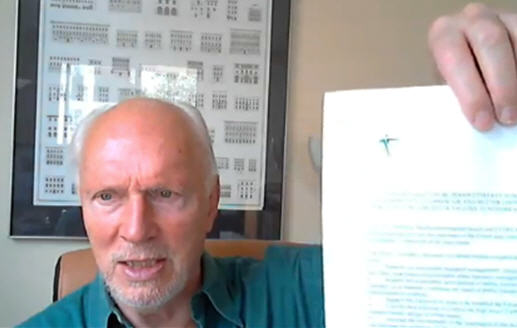

Showing posts with label vision. Show all posts
Showing posts with label vision. Show all posts
Monday, October 21, 2013
"Carsharing 2000": Sustainable Transport’s Missing Link


Friday, August 2, 2013

Thursday, April 18, 2013

Friday, November 4, 2011
Rethinking Car Free Days in Taipei: Part II
Upon my return to Paris after a ten-day stint in Taiwan working with local colleagues in support of several on-going collaborative city projects there, and in particular in support of this year's 10th anniversary Car Free Day program in Taipei City, I received the following letter from the Commissioner of 
Monday, November 8, 2010
Locked in Suburbia: Is there life after Autopia?
Something like ten percent of our lonely planet's population are today thoroughly locked in -- or at least think they are -- to an "automotive life style". While in barely two generations the earth's population has tripled, the automotive age has, step by silent surreptitious step, changed the way we live -- and in the process made us prisoners of just that technology that was supposed to make us free forever. That's a bad joke and bad news. But there is worse yet, and it comes in two ugly bites. For starters, in addition
Wednesday, September 29, 2010
Energy and Equity, Ivan Illich.
Earlier this week I proposed the idea of a group read and commentary on Illich's incisive and important 1974 book "Energy and Equity", but as I thrashed through my 
So here you have it. The whole thing. Print it out. Mark it up. Share your thoughts. Let me take a single phrase from the book to get the ball rolling: "Participatory democracy postulates low-energy technology. Only participatory democracy creates the conditions for rational technology." (And this almost two decades before the phrase "sustainable development" first appeared on the radar screen. So off we go with Illich as our guide!)
Friday, April 23, 2010
The future for roads in 2050
- Australian perspectives on sustainable transportation
 Several days ago Peter Newman of Infrastructure Australia and Professor of Sustainability at the Curtin University Sustainability Policy (CUSP) Institute was asked by the Sydney Morning Herald what the future for roads was going to look like in Australia in 2050. He gave them this:
I think we will have roads with about 50% fewer cars on them in 2050 compared to today.
The first signs are there as all Australian cities have reduced their per person car use over the past 6 years. This is consistent with US cities. Its' a structural shift as public transport use has accelerated rapidly and younger people are driving the market for more urban locations where they need cars less.
We are starting to be over cars, at least over car dependence.
Thus as this trend sets in we will be reclaiming road space for more urban uses, e.g. taking down the freeway at Circular Quay, replacing one lane each way on roads such as Canterbury and Paramatta Roads with a light rail, removing cars altogether from most of the city centre road system and in sub centres.
These sub-centres will be built across the polycentric city. Cycling and walking will be the preferred choice for all local trips as parking will be so expensive and car access into all centres across the city will be much less attractive for cars.
By 2050 we will have a much more extensive electric rail system and all cars will be plug-in electric. This will be run entirely on renewable energy as will the electric power system in our buildings and industry.
Freight will still be by truck but will be using natural gas instead of diesel as oil will have been reduced to simply a fuel for air travel, though that will be about half of present levels as oil-based fuels become incredibly expensive, so electric fast rail between the major capitals will be a significant competitor. Natural gas in freight and industry will have started to be produced from solar energy by then.  The only alternative to this scenario will be business as usual which will lead to collapse of the city as oil becomes scarcer. Then freeways will become sites for market gardening or just weeds as there would be mega death from the economic collapse.
# # #
About the author:
Peter Newman is Professor of Sustainability at the Curtin University Sustainability Policy (CUSP) Institute. His book with Jeff Kenworthy 'Sustainability and Cities:  Overcoming Automobile Dependence' was launched in the White House in 1999. He invented the term 'automobile dependence' to de-scribe how we have created cities where we have to drive everywhere. In 2001-3 Peter directed the Western Australia's Sustainability Strategy , the first state sustainability strategy in the world. In 2004-5 he was Sustainability Commissioner in Sydney. He was a Local Government Councillor in the City of Fremantle from 1976-80, and is a Board Member of Infrastructure Australia that is funding infrastructure for the long term sustainability of Australian cities.
Subscribe to:
Posts (Atom)


 Posts


