To be quite frank, to the point and a bit rude, the famed 20th century Swiss architect, designer, artist and general polymath Le Corbusier when he donned his urbanist hat provided us with several striking examples of how to build a city for cars. We are extremely fortunate that most of them never got off the drawing board. But today, the Danish architect Henrik Valeur tells us about one that did and what perhaps Indian planners and urbanists can now do something to rectify.
Tuesday, December 17, 2013
Corbusier-Free Cities
Sunday, May 12, 2013
Monday, March 18, 2013
Old Mobility: Going, Going, Gone!
In order to understand what needs to be done to create healthier lives and a better performing set of transportation arrangements, World Streets has from the very beginning made a consistent distinction between what we call "Old Mobility" vs."New Mobility." The difference between the two is simple, straight-forward . . . and substantial.
Old mobility was the dominant form of transportation policy, practice and thinking that took its full shape and momentum starting in the mid twentieth century, at a time when we all lived in a universe that was, or at least seemed to be, boundless and free of constraints. It served many of us well in many ways at the time, albeit with numerous and notable exceptions, though we were blind to most of them most of the time. It was a very different world back them. But that world is gone. Gone and it will never come back.
Tuesday, July 19, 2011
"Worst Practices": Regulations that prohibit shared taxis anywhere on the planet
"Regulations that prohibit shared taxis are an example of worst practice."
- Ann Hackett
--> Read on:
Monday, July 18, 2011
"Worst Practices". Los Angeles on the rocks
It's a fine thing of course to know about "best practices" in our troubled sector, and there are quite a number of programs and sources in various corners of the world that are busy assembling these and making them available in various databases. That is excellent. But we decided that World Streets can make a useful contribution if we take all this from the other end -- and launch a series of collaborative "worst practice" (or possibly just "bad practice") profiles, illustrating different ways to get it very wrong.
Saturday, April 16, 2011
Honk! Cars, People and the Planet. It's a Wonderful World (Have a stupid weekend)
Have you ever given any thought to trying to imagine just how dumb some people think we are? My guess is that the good people of Hyundai have laid out serious money for this little film, without giving much thought to IQ's. So we can only assume that they have done this for our weekend viewing pleasure. What can we say? Well, thank you.
Sunday, April 10, 2011
On wrong-minded modernization of transport: Message from Dhaka
World Streets is all about casting a broad net over transportation issues and approaches in cities around the world -- reporting on the good, the bad and the ugly -- so that we can learn from each other and do, hopefully, just a bit better in our own patch. Today's communication from Dhaka reports on a familiar Third World policy conflict about a popular and very important transport mode which is unloved by some but which is providing affordable, environmental, and efficient mobility for almost a third of all trips in the nation's capital. Seven days a week, on demand service when you need it, and with heavy use by women and children. If you have a look at what is going on there in this all-too familiar tussle of ideas and authority, we bet you will learn something for your own city from Dhaka.
Tuesday, February 8, 2011
UK High Speed Rail: Going very fast in the wrong direction
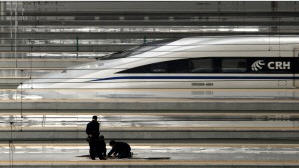
In the field of transport, no matter how straight-forward the issues may seem to be to the busy citizen, merchant, reporter or policy maker, when it comes to making wise policy it really does take a certain level of time and attention to detail to come to grips with the underlying issues and priorities that shape the outcomes. The awful conundrum encumbering the mobility issues of our new century from a policy perspective is that just about everything turns out upon study to be unobligingly complex, interdependent, complicated and time lagged – no matter how simple it may appear to be on the surface. In the article that follows, the authors have a go at a lot of the too-easy thinking that is the main currency of the High Speed Rail discussions in places like Britain and the US, where the only experience with these technologies and operations has been that of a far-away time-lagged dream machine. Let's embrace a bit of complexity here.