Ici chacun sait ce qu'il veut, ce qu'il fait, quand il passe ;
Ami, si tu tombes, un ami sort de l'ombre à ta place. *
Yesterday at the end of a long day I received an email announcing the untimely 

Monday, November 26, 2012
"I don't believe in charity" - In memory of Roland Dreyfus


Saturday, November 24, 2012
Editor's profile updated
As part of the run-up to preparing the work program for 2013, and securing the financial support needed to continue our operations and meet our ambitious objectives in the year ahead, the original 2009 bio note of the editor has been updated. You can find the latest updated version at http://wp.me/psKUY-2vj. More to follow here on the program and support effort in the coming days.

Friday, November 23, 2012
Learning from Lyon: Free Public Transport that really works
Here is a "free transport project" that is working remarkably well: In the Spring of 2005 the community of Greater Lyon in cooperation with their supplier 
* But where is the "free public transport" element?
Thursday, November 22, 2012
Free Public Transport! (But hey, are we talking about the same thing?)
On 22 June 2010 we posted in these pages an invitation to an open thinking exercise welcoming comments and views on the topic of "Free Public Transport". 
But here is the joker: Judging from the responses and conversations that followed it was clear that almost everybody was reading the word "Free" in that phrase as an adjective. But that is not quite what we had in mind. Rather it was part of what we wanted to have views on, but only part of it.
Wednesday, November 21, 2012
Why cycle rickshaws should be driven from the street. (And what it means for mobility, environment, equity and the wellbeing of hundreds of thousands of hard working people and their families)
Let me not poach the information and arguments presented in this fine analysis of the informal transport economy 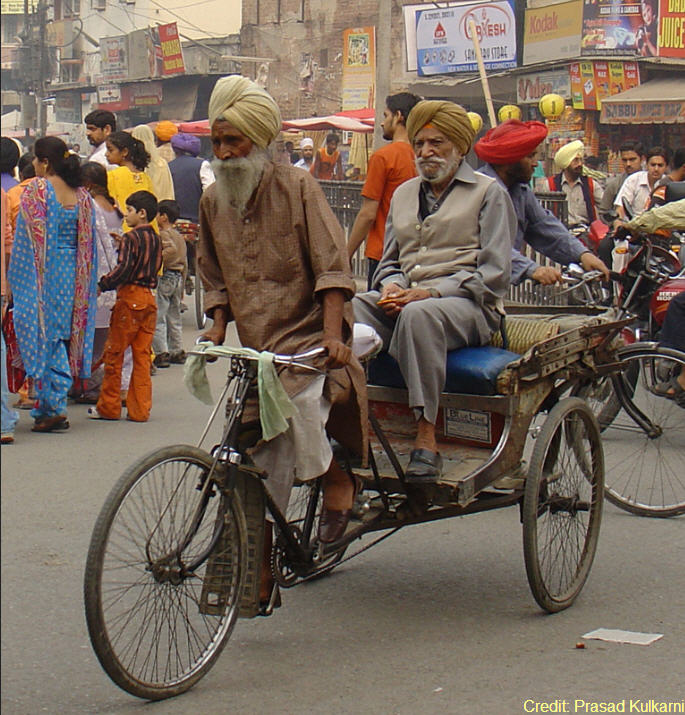
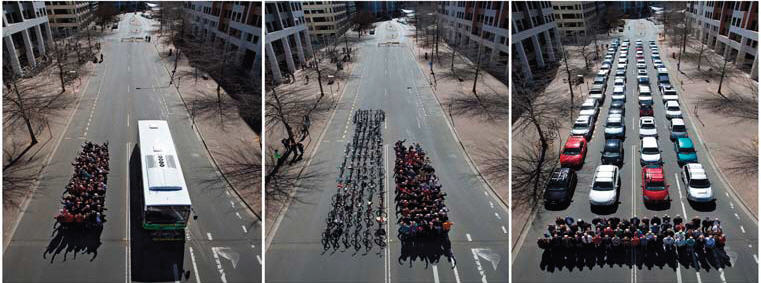
Brief: Cycling is the 'Cinderella' form of transport for the EU money men
Brief: "Cycling is the 'Cinderella' form of transport - ignored, mistreated, and yet to have its day. For the cost of one kilometre of urban 
--> Read on:
Brief. Joy ride: IEA test-drives the Paris Autollib'
Brief. Joy ride: IEA test-drives the Parisian electric car-sharing system
--> Read on:
Tuesday, November 20, 2012
Some Early References on Free Public Transport

Monday, November 19, 2012
Brief: Sydney takes a big step to support carsharing on its streets
Brief: Carsharing set to take up another 300 parking slots in Sydney - on top of the 450 
--> Read on:
Saturday, November 17, 2012
International Advisory Council on Sustainable Transportation
Friday, November 16, 2012
Brief: Los Angeles toll lanes get smooth start, despite some grumbling
Brief: L.A. County toll lanes get smooth start, despite grumbling
Thursday, November 15, 2012
Brief: The long wait at the many unnecessary traffic lights in Germany may soon be over
The long wait at the many unnecessary traffic lights in Germany may soon be over. Communities nationwide are exploring the use of alternative traffic control systems, such as roundabouts and zebra stripes, to resolve the traffic light's growing issues of expense and safety. 
* Click here for article.
--> Read on:xCar Thinking Exercise?
Just to be sure that we are all getting off on the right foot on this, let me excerpt 
Brainstorming - what we are calling here a thinking exercise -- is a group creativity technique by which efforts are made to find a range of insights on a specific problem by gathering a list of ideas spontaneously contributed by its members.
Wednesday, November 14, 2012
The xCar Landscape: New Ways of Owning and Using Cars in the 21st Century
This is a collaborative thinking exercise addressing essentially a single question. 

Tuesday, November 13, 2012
Brief: When it comes to choosing their means of transport . . .
Brief: When it comes to choosing their means of transport, travellers in 
Saturday, November 10, 2012
"CAR21": A Thinking Exercise (or New Ways of Owning and Using Cars in the 21st Century)
From the World Carshare Consortium: I would like to offer a "thought experiment" with anyone here who may wish to jump in with their ideas. criticism and/or proposals -- or perhaps only to pull up a chair and see what happens in a case like this. 
Friday, November 9, 2012
Weekend leisure: Piano Stairs
Take a break. And in case you missed them the first time around check out the Piano Stairs from Stockholm this weekend.
Brief: Paris - Ambitious mobility plans for economy, efficiency and equity.
Paris: Ambitious mobility plans for economy, efficiency and equity.
Thursday, November 8, 2012

Wednesday, November 7, 2012

Achieving the goals of the EC White Paper on Transport: How civil society can help with delivery
The European Economic and Social Committee is organizing a conference on 
Tuesday, November 6, 2012
Congratulations!
That's great. But just because we voted today does not mean that we are done with our duty as a citizen in a true democracy.

Monday, November 5, 2012
Bogota 21: Toward a world-class transit-oriented Metropolis (with commentary)
This report sponsored by Siemens under a program initiated by the German Federal Ministry for Economic Cooperation and Development (BMZ) 
Saturday, November 3, 2012
John Pucher reports on "City Cycling"

Friday, November 2, 2012
"What are the top 3 things Paris has done in the last 10 years to deliver a genuinely sustainable transport system?"
The other day the phone rang and I heard the voice of my long time friend and valued collaborator Professor John Whitelegg telling me: "on 8th November I am giving a presentation in London at a conference organised by SNCF. It's all about London and Paris and what the cities can learn from each other. I will go further (as usual) and argue that both can make a lot more progress on things like bike use, traffic reduction, getting rid of air pollution, zero deaths and injuries etc if they get a lot bolder and start engaging with the vision thing. I will say that Paris can learn from London on congestion charging but I want something quite big that I can say in what ways London can learn from Paris. What are the top 3 things that Paris has done in the last 10 years to deliver a genuinely sustainable transport system?"
Wednesday, October 31, 2012
Young Scholars/Future Leaders Fellows Program: Kaohsiung World Share/Transport Forum 2010
The Young Scholars/Future Leaders program organized in association with the inaugural Kaohsiung World Share/Transport Forum provided a highly innovative and useful component of the 2010 event, which we are keen on build on and extend in the future. To this end, we publish here today background information taken from the original event, as a stepping stone in the direction of bringing the entire program up to date and making it one of the key building blocks of the still to be decided 2013 World Forum. More to follow on this shortly but for now read on here.
Monday, October 29, 2012
NEW MOBILITY AGENDA/GETTING AROUND
WEB, BLOGS & SUPPORTING SOCIAL MEDIA
Sunday, October 21, 2012
New Mobility Strategies from the ground up - Supporting local commerce and enterprise

To my thinking, the concept of mixed use in a society that puts a premium on job creation and local entrepreneurship as well as sheer mobility per se, has not until now gotten a fair run, either in the literature or in practice. And yet it is vital to the future well-being of our cities and all those who live and work there.
Wednesday, October 17, 2012
Friday, October 12, 2012
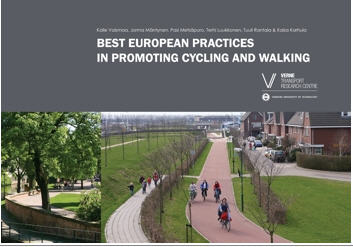
Do It Like The Dutch & Danes: Guide To Becoming A Bike Friendly Mecca
World Streets actively supports the International Day of the Girl
11 October 2012: World Streets supports the full and active citizenship, rights and participation of women of all ages in every home, corner, school and street of every city and every nation of this planet. See PLan International for today's announcement and a first round of background information on this important day.

Thursday, October 11, 2012
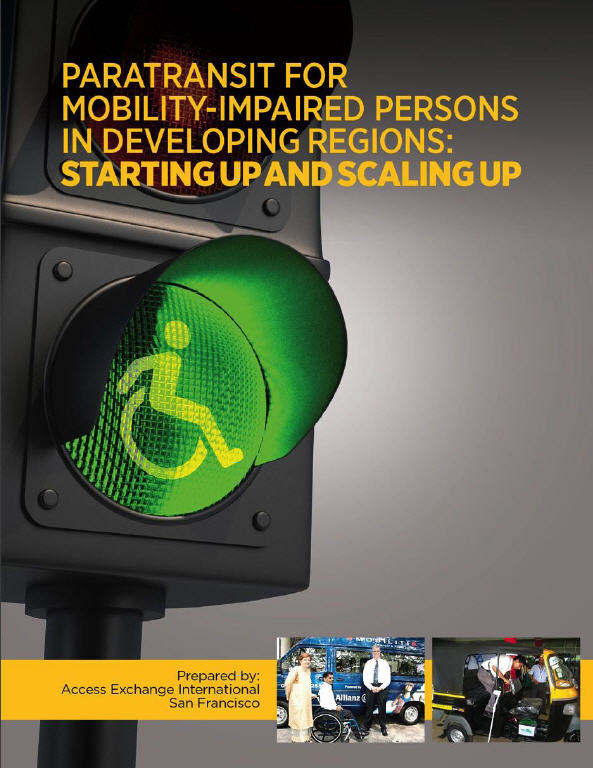
World Transport Policy & Practice – Vol. 18, No. 4
The three articles in this Autumn 2012 issue make an important contribution to transport debate and point clearly to different ways of viewing some of the key public policy issues currently underpinning transport and urban planning thinking.
Wednesday, October 10, 2012
Op-Ed: Why things are not good for UK citizens -- and how to make them better
- By John Whitelegg
 We are not doing very well in the UK on things that matter to most people. We are the 6th richest country in the world and yet we come very near the bottom of most rankings on things like child poverty, inequality, pensioner poverty, excess winter deaths, teenage pregnancy, NEETS, percentage of electricity generated from renewables, levels of cycling and quality of public transport. None of this is necessary and it is safe to assume that local and central government did not set out to achieve these poor quality outcomes. So what is going on?
--> Read on:
Tuesday, October 9, 2012
The "Real Economy" vs. the Financial Economy (And then I rembered Laputa)
The Greek Formula One idiocies of late -- see http://goo.gl/E64Tp for ample backgrouknd there -- have me asking myself, on what planet do these good souls and their ilk live? Or think they live? And then I remembered Laputa.

Tuesday, October 2, 2012
Third International Share/Transport Forum - Jiaozuo China
 This International Forum, the third in the series which got first underway in 2010 in Kaohsiung and met again in Changzhe in 2011, is once again, this year on 21/22 September in Jiaozuo China, bringing together leading thinkers and sharing transport practitioners from the People's Republic of China, Asia and the world, to examine the concept of shared transport (as opposed to individual vehicle ownership or established forms of public transport) from a multi-disciplinary perspective, with a strong international and Chinese-speaking contingent.
World Streets on Facebook (Check it out)
Why consider joining one or more of these focus groups on Facebook? Well, because for better of worse social media are here to stay, and warts and all Facebook definitely has its uses -- as we are showing with these fora. So put aside your reservations and at least check in and have a look for yourself. (And if you don't want to sign in as an identifiable human being, this is no problem. Sign in as your dog (even if you don't have one) and no one will be the wiser for it.)
Subscribe to:
Posts (Atom)


 Posts
Posts


