On Sunday, the NYC Street Memorial Project held the 6th Annual Memorial Ride and Walk. According to the New York City Department of Transportation, 151 pedestrians and 18 bicyclists were killed on the streets of New York City in 2010. Participants called for stronger measures to reduce traffic fatalities. The ride culminated by installing a "Ghost Bike" in front of Brooklyn Borough Hall for the unnamed pedestrians and cyclists killed in 2010.
Tuesday, March 15, 2011
New York City Memorial Project: Remembering walkers and cyclists killed on the city's streets
A family of small mice needs some help with new mobility
Today we want to tell you about a children's book on our subject, and beyond that to see if any of you out there might be interested in lending a hand so that we can create a handsome electronic version, and possibly in other languages.
--> Read on:
Monday, March 14, 2011
World Streets Weekly: Edition of 14 March 2011
* * * Click here for the Weekly Edition of 14 March 2011 * * *
- – - > To receive Weekly Editions freely in 2011: click here
This week's titles:
12 March: 2011 World Streets Bright Awards: City of Basel New Mobility Ticket 11 March: Honk: “Floating Parking” & Bike-Buffer Zones in New York City 9 March: Sustainable Transport and the Importance of Pattern Recognition 8 March: To fix Sustainable Transport: Ensure Full Gender Parity in all Decision and Investment Fora (QED) 7 March: World Streets Weekly: Edition of 7 March 2011 --> Read on:
Saturday, March 12, 2011
2011 World Streets Bright Awards: City of Basel Mobility Ticket
We have often said that new mobility is a strategy which is ultimately made up of a very large number of often very small things that together make a difference. And so it is just in this spirit that we have decided to launch a new series in which you are invited to participate. It is the 2011 World Streets Bright Awards, celebrating "great small convivial ideas that are easy on the pocket and can be multiplied by thousands and make a difference". It's simple and works like this.
Friday, March 11, 2011
Honk: “Floating Parking” & Bike-Buffer Zones in New York City
Let's see what our friends at Streetfilms have to share with us today on the topic of "Floating Parking” & Bike-Buffer Zones in Separated Cycletracks". Here is their short introduction with a narration by the noted traffic engineer Gary Toth of Partners for Public Spaces, by videographer Clarence Eckerson, Jr. who shot and edited the film.
Wednesday, March 9, 2011
Sustainable Transport and the Importance of Pattern Recognition
In order to turn around a very big boat that is moving in the wrong direction – think global warming or any of the other wrong-way trips that we are currently locked into when it comes to transport in cities – it helps to be smart, studious and work very hard. But it is if anything even more important to have a feel for what is really going on. And this is where the fine art of pattern recognition comes in. Pattern recognition: all too often the empty chair when it comes to understanding and decision making in the field of transport policy and practice. No wonder we are doing so poorly.
Tuesday, March 8, 2011
To fix Sustainable Transport: Ensure Full Gender Parity in all Decision and Investment Fora (QED)
Today is International Women's Day. And not only that, 2011 marks the one hundredth anniversary of this great and necessary idea. So what better occasion for World Streets to announce publicly, loudly and yet once again our firm belief that the most important single thing that our society, our nations and our cities could do to increase the fairness and the effectiveness of our transportation arrangements would be to make it a matter of the law that all decisions determining how taxpayer money is invested in the sector should be decided by councils that respect full gender parity. We invite you to join us in this challenge and make it one of the major themes of sustainable transport policy worldwide in 2011.
Monday, March 7, 2011
World Streets Weekly: Edition of 7 March 2011
* * * Click here for Weekly Edition of 7 March 2011 * * *
- – - > To receive Weekly Editions freely in 2011: click here
This week's titles:
4 March: What percent of your city's street space is allocated to non-car uses
3 March: Master of None: The Lahore Transport Master Plan
2 March: Seize the moment: A "Street Code" for Porto Alegre
1 March: What can we learn from the murderous attack on cyclists in Porto Alegre on Friday?
28 February: World Streets Weekly: Edition of 28 February 2011
--> Read on:
Friday, March 4, 2011
What percent of your city's street space is allocated to non-car uses
The pie chart you will find just below graphically illustrates the state of street space allocation today in New York City, after four years of hard work on a committed local effort by city government and many associations to free street space for pedestrians, bikes and buses. All that for less than one half of one percent of the public space given over to cars. So here is our question this morning: Do things look any better in your city in 2011? We invite your reports and comments.
Thursday, March 3, 2011
Master of None: The Lahore Transport Master Plan
As we read Hassaan Ghazali's clear-eyed commentary on the short-comings of the Lahore Transport Master Plan, and the process behind it, it is natural enough that we from other parts of the world think of it as a saga that typifies that city, that country and that part of the world. He tells us that "role of planning in urban development has always been our Achilles heel", which I am sure is the case, But whoa, if we think about it we have to admit that there are all too few cities in the world in which these challenges have been all that well handled. We are all in fact involved in a learning process, and with a little luck we will be able to learn from each other So let's hear what Hassaan has to tell us about Lahore, without forgetting for a minute he is sharing with us a story and a challenge that we all face.
Wednesday, March 2, 2011
Seize the moment: A "Street Code" for Porto Alegre
Dear Porto Alegre and Brazilian Friends,With all due respect, I propose that you give some thought to organizing to get strong citizen and multi-party support to exact "appropriate compensation" for Friday's horrible, dumb and indeed tragic event on the streets of your beautiful city. I would imagine that this is a one-time, not to be repeated opportunity to get something very important and far-sighted out of a shaken city administration. Timing is everything in cases like this. You should thus be able to exact what you need today far better than just one week ago. Or a month or more from now once the heat has dissipated. So go for it!
Tuesday, March 1, 2011
What can we learn from the murderous attack on cyclists in Porto Alegre on Friday?
Porto Alegre Brazil. 25 February 2011. At least forty people were injured when a mad driver slammed his car into a pack of more than 100 cyclists in the city of Porto Alegre in Brazil. The cyclists, mainly young people, were staging a peaceful demonstration calling for a reduction in the number of cars on the streets. The 47-year-old male driver fled the scene of the incident Friday evening and was later arrested after authorities found his abandoned car over the weekend.
Monday, February 28, 2011
World Streets Weekly Edition: 28 February 2011
* * * Click here for Weekly Edition of 28 February 2011 * * *
- – - > To receive the Weekly Editions freely in 2011 please click here
--> Read on:
Saturday, February 26, 2011
What do Tunisia, Egypt, Libya . . . and World Streets have in common?
We try very hard to stay on topic in World Streets, not always easy since our bailiwick is so vast. But there are times when, if we are to do our self-assigned job, we need to look even broader yet.One of the fundamental tenets of World Streets is that the decisions that in the past have shaped the streets and mobility arrangements of our cities now have to be sharply revised and brought into the realities of this very different 21st century. In the past the shaping decisions and investments in the sector were made in more or less closed committees manned (I chose my word carefully) by a very narrow range of social-economic groups (mainly more or less educated males, with secure jobs, fast cars and fat pensions). With the utterly unsurprising results that the mobility system they ordered up was the one that served them best: i.e., lots of roads for fast driving, cheap gas, and plenty of free places to park. Bien sûr mon ami.
Friday, February 25, 2011
Editorial: The Seven Simple Truths of Sustainable Mobility (Come argue with me)
Sometimes in life things can be simple. Let's look at one case.Doubtless the most severe single problem holding us back in the hard up-hill struggle for "sustainable transport" in cities and countries around the world is that so far everyone seems to have a different definition and a different agenda. Google offered 947,000 entries under this phrase this morning and all it takes is a quick tour of the Google News rubric to get a quick education on the enormous range of interpretations of what the phrase means to different people, places and interests.
Tuesday, February 22, 2011
We have no money gentlemen, so we shall have to think.
This is a personal call to those of you who have over the years participated in the rather numerous programs and working groups we have since 1988 carefully crafted and maintained in support of worldwide peer collaboration and exchange in our tough but important field: under the New Mobility Agenda, World Streets or one of its sister publications (see below), or who have of late plugged in to our pages on Facebook or Twitter. I feel pretty quite comfortable in doing this since you know what we are trying to do, and who better for me to turn to at a time of need. (And oh yes, for those who may not recall, that citation above was by Nobel Prize winner Professor Ernest Rutherford, on taking over the quite broke Cavendish Laboratory in 1919, in the wake of the First World War.)
Monday, February 21, 2011
What's a life worth?
Gladwyn d'Souza comments from California an article that has just appeared in the New York Times on this subject. "The United States Environmental Protections Agency, EPA, should really be discussing the allocation of risk. A large curb radius for example transfers risk from the speeding driver to the pedestrian. The issue is that speed and convenience embody an energy bill whose consequences are not repatriated on the basis of least harm to public safety. While the consequences are local, an injury on your street corner, the impact under NAFTA, etc., of comparative or qualitative instead of preventive risk assessment is habitat destructive. . . . "
Analysis of proposed metro rail system in Pune (via India Streets)
Parisar has recently completed two detailed studies on the metro rail proposal for Pune. The first was a preliminary analysis of whether Pune needs a metro rail system and the second analyzed in detail the decision-making processes in approving Pune's metro rail proposal as well as the detailed project report (DPR) of the metro rail proposal. The preliminary analysis of whether Pune needs a metro rail system was based on secondary data from three … Read More
via India Streets --> Read on:
Wednesday, February 16, 2011
Interview with Roland Ries: Cyclist, Senator and Mayor of Strasburg
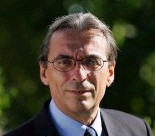
What's happening on the new mobility scene in France in 2011? Here you have, in French but with good subtitles, an interview by one of the outstanding political innovators in the field of sustainable transport policy and practice in France. Roland Ries is serving his second term as mayor of Strasburg, and at the same time heads up the national transport political group GART. He also, by the way, as a member of the French Senate drafted the law defining carsharing in France, thus opening up a part of the way to more and better carsharing nation-wide. Spend three minutes with this short video to get a feel for what the leading edge in France is thinking and doing about transport in cities. You will quickly see that this is a world-level message. Play it for your mayor and talk to her about it.
Hangzhou – View from the saddle of one of China's most liveable cities.
While Paris and London hog the world’s media attention with Boris’ Bikes and the Velib, by some accounts the Chinese city of Hangzhou now boasts the world’s largest and most used public shared bicycle system. Rory McMullan, contributing editor, reports on his impressions of the city, its transport network and the public bike system from an on-street carbon-free visit during the Chinese New Year.
Monday, February 14, 2011
Swedish government looks to virtual meetings as an environmental (and efficiency) strategy
The Swedish government's annual instructions to the National Transport Administration now include a mission to support and improve conditions for virtual meetings across the country. The goal is to find practical ways to harness "Green IT" as an efficient travel substitute as well as to provide both more efficient management and reduced environmental impacts. The core proposal is based on a “ten step method” which the Administration released last year to champion and support virtual meetings within an organization. The project behind this strategy is introduced here. And you are warmly invited to comment and share the fruit of your own experiences.
Friday, February 11, 2011
High Speed Zero: The alternative solution to HS2
It might make some sense, in reviewing the potential of HS2, to take a few samplings on how the year-old HS1 domestic services are performing - or not. S N Barnes reports to World Streets from a crowded rail platform somewhere in the UK.
Thursday, February 10, 2011
Mobility please, not congestion on our roads (via India Streets)
How many times does the need for being pro-people, environmentally concerned, and context specific, in forming an urban transportation strategy need iteration? Simple - till the job gets done. We need to keep reminding city-building professionals, decision makers, politicos, and most importantly, ourselves - the people - of it, until i … Read More via India Streets
Wednesday, February 9, 2011
Support for High Speed Rail in Britain
Strange as it may seem when you do the basic arithmetic, there is strong support from the three main political parties in the UK for the HSR proposal, and if our first article in this series argues that the reasoning behind it is heavily flawed, it is important in these matters to present the arguments of those who may not agree. Here you have some extensive extracts from a group, Greengauge 21, that have aggressively argued for the HSR proposal. We leave it to your attention. Beyond what you see here they have a more detailed leaflet outlining their arguments which you can have here - "HS2 — why the critics are wrong". And once again, we welcome your comments.
Tuesday, February 8, 2011
UK High Speed Rail: Going very fast in the wrong direction
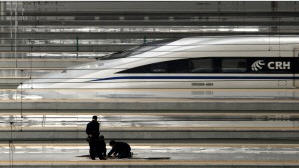
In the field of transport, no matter how straight-forward the issues may seem to be to the busy citizen, merchant, reporter or policy maker, when it comes to making wise policy it really does take a certain level of time and attention to detail to come to grips with the underlying issues and priorities that shape the outcomes. The awful conundrum encumbering the mobility issues of our new century from a policy perspective is that just about everything turns out upon study to be unobligingly complex, interdependent, complicated and time lagged – no matter how simple it may appear to be on the surface. In the article that follows, the authors have a go at a lot of the too-easy thinking that is the main currency of the High Speed Rail discussions in places like Britain and the US, where the only experience with these technologies and operations has been that of a far-away time-lagged dream machine. Let's embrace a bit of complexity here.
Monday, February 7, 2011
Sunday, February 6, 2011
World Streets 2010: Aspirations, accomplishments, building blocks, and work still needed to move ahead
The most significant accomplishment over this last year has been that World Streets has somehow managed to continue publication on a weekly basis, and step by step to improve the journal and steadily build up our international readership and contributions. And all this really quite against the odds and with less than modicum of the necessary financial support. But good cause, high commitment and fair performance carry the day, with the result that each week anywhere from 700 to 2000 readers from more than fifty countries from all corners of the world come in to access the journal.
Saturday, February 5, 2011
Putting Social Media to work on World Streets (Part II)
World Streets Social Media/Networking Game Plan in Brief (Working notes)Target: Let's see if and how we can best select and apply a batch of hopefully synergistic available social media tools to extend readership, content and support for World Streets in 2011.
Our approach/Exec. Summary: Do it as well as we can/Inspect feedback/Adjust as we go along/Invite creative articles from colleagues working directly with these tools/Share all this with our readers.
Friday, February 4, 2011
Putting Social Media to work on World Streets (Part I)
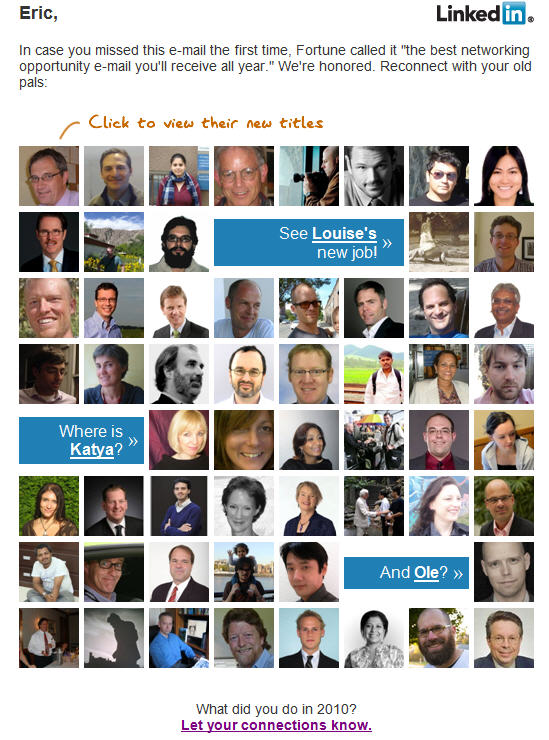
Question: Is there some way (or good reason) to integrate, link, make talk to each other usefully, whatever, the various social media to which we are trying to hook World Streets in some way. We at present have created two-way links (of sorts) between World Streets, Facebook, Twitter and LinkedIn. We are seeing some utility in the individual hookups (but not all that much thus far), however I am baffled when it comes to figuring out how to orchestrate them in some useful way. Are we wasting our time or is there a creative fit? And what might that be? Kind thanks for your thoughts and leads on this puzzling problem/opportunity.
Thursday, February 3, 2011
Día sin Coches en Bogotá XI : Carlosfelipe Pardo reporting live from the street on occasion of the city's 11th Car Free Day
This just in from our fearless embedded reporter on the streets of Bogotá Día sin coches XI. Carlos refers in his email to the seminal project which kicked off the basic structure for organizing days without cars back in 1994 under the title "Thursday: A Breakthrough Strategy for Reducing Car Dependence in Cities" . Later Thursday provided a part of the blueprint for the first Car Free Day to be organized in Bogotá under the exceptional leadership of then-mayor Enrique Penalosa on the first Thursday of the new millennium. You can download Thursday here.
Wednesday, February 2, 2011
Review: Urban Mobility India 2010
The 3rd edition of the annual “flagship event” of the Ministry of Urban Development (MoUD) of India’s federal government, Urban Mobility India 2010 was held in New Delhi between December 3rd and 5th, 2010 with the aim of creating “Accessible and Inclusive Cities”. This article reviews the main themes and happenings of the event, and though it may appear to nit-pick, it does appreciate the effort of the organisers in organising the event, and holds that perhaps the biggest achievement of the event was to be able to have a serious debate on controversial topics (like the Delhi Metro or flyovers).
Tuesday, February 1, 2011
The State of World Streets: 2010, 2011 & your imagination (Part I: Intro)
With the new year of 2011 World Streets is entering its third year of publication and we thought that you might possibly like to have this short report on its status, outlook, and in closing a few points to which you may wish to give some thought for your own personal new mobility agenda in the year ahead.
Saturday, January 29, 2011
Streets are for people.
Roads are for vehicles. Streets are for people.
These are people who are reclaiming their streets.
- Cairo Street scene. January 2011
No man is an island.
World Streets
--> Read on:Friday, January 28, 2011
Testimony: Science and Technology Select Committee, UK House of Lords
In the last weeks I was asked to provide written testimony and evidence in answer to a "Call for Evidence" for the UK House of Lords Science and Technology Select Committee on the subject of "Behaviour Change —Travel-Mode Choice Interventions to Reduce Car Use in Towns and Cities". As can happen in these things, in my remarks I moved away from the chosen topic (instruments for behaviour change), on the grounds that there are other more fundamental issues that need to be tackled first. In the following you will find my submittal of last Monday to the committee, whom I thank for giving me this opportunity to share my views.
Thursday, January 27, 2011
What is the best way to teach an adult to cycle?
Sustainable transport cannot be separated from sustainable cities. Nor sustainable cities from sustainable lives. Here is a small project from Sweden that takes as its goal to teach people how to balance and move safely around on a bike. But who in Sweden cannot climb on a cycle without a thought and toddle off? Well, among others immigrant women coming from Africa and the Middle East who find themselves living in this very different culture in which they are free to cycle like everyone else.
Wednesday, January 26, 2011
Interview: Sharing is important on the World's Streets
On a cold gray Paris winter day Ms Lesley Brown, editor of Mobility magazine, came to World Streets to interview the editor about his noisily stated views on the importance of sharing in the future of the transport sector. Her article made it into the pages of Mobility on 20 January, which you can read in the original here or just below.
Tuesday, January 25, 2011
Ridesharing Institute II. If you will, but Public Transport on the first line please
In yesterday's feature which was intended to inform the exchanges at this week's TRB session concerning the eventual creation of a continuing program to support and expand ridesharing as a central sustainable transport policy, the point is made that the project should concentrate whatever resources it can stump up on ridesharing, as opposed to traditional public transport which has its own institutional and support system (for better or worse) while ridesharing from a policy and institutional perspective is still an orphan. But Simon Norton begs to differ:
Friday, January 21, 2011
Ridesharing Institute – Contribution to today's TRB discussions
Dear Paul, Susan, and other TRB friends having a look at this proposal this afternoon in DC. This is an excellent first-cut proposal and food for thought on a very important policy topic -- and I want to get firmly behind the basic concept right now.
I wish I could be with you for these important discussions because like at least half of you in this audience I am firmly convinced in the potential for ridesharing in its many diverse forms as a vital and critical means in the process of moving from unsustainable to sustainable transportation. [I am sure that much of what you find here is well known to most of you. But here I am at my desk in Paris and I want to share my best thoughts with you on this. So off we go.]
Thursday, January 20, 2011
New tools: Assessing damage of the Queensland Flood - 2
In today from Gordon Price and Price Tags:Gladys We sends along a link to a remarkable set of dynamic before-and-after shots of the floods in Brisbane posted by ABC News, Australia's broadcaster. These aerials were taken in flyovers on January 13 and January 14 - and then matched up exactly. When loaded, you can use your mouse to hover over each photo, and move the line back and forth to view the devastation caused by flooding.
… Click for full article from Price Tags and aerial maps from ABC News and Nearmap.com
Wednesday, January 19, 2011
Sustainable transport in Delhi and Stockholm
This article addresses from an Indo-Swedish perspective issues of the development of transport systems, taking its examples from Delhi and Stockholm. The introduction of the first BRT or bus rapid transport corridor in Delhi and the institution of a congestion tax in Stockholm are presented and discussed in terms of modernisation and sustainable transport. The authors explore the perceptions of politicians and examine the two projects in the search for the driving forces for transport policies. Despite all the differences, some similarities in the development of their urban transport projects have been found.
Monday, January 17, 2011
Toward a sustainable Queensland - A crisis is a terrible thing to waste.
Dear Australian friends and colleagues,
We all know this old saw but this is a time and place where it is, I believe, truly worth thinking about. In this context I have three immediate questions for you:
1. Is it possible that the tragic events of the last weeks could now be turned into an opportunity to develop a new and far more sustainable pattern of mobility (and location) in Queensland?
Friday, January 14, 2011
Reposting exceptional contributions to World Streets
World Streets has from the beginning been defined and run as an open collaborative venture. In addition to its considerable original content, the journal welcomes suggestions concerning outstanding recent articles and reports appearing in other sources, which in their view our readers would do well to know more about. After internal review and selection, we occasionally get in touch with the author or publisher of the selected piece and ask for permission to reprint. All such articles follow the same routines for preparation and publication:
Tuesday, January 11, 2011
Delhi Metro - A Transport Planner's Perspective
[caption id="attachment_702" align="alignright" width="214" caption="http://computerchamps.wdfiles.com"][/caption]
Associate editor Faizan Jawed reports from Delhi: At a time when the Delhi Government, politicos, media and the middle-class is raving about Metro Rail as a panacea to all traffic woes in Delhi (traffic congestion included), an objective assessment of its performance and appropriateness is highly warranted. Built at a cost that could provide free bus-based public transport and high quality non-motorized transport facilities for years, or feed millions of destitute malnourished Indian citizens, the Delhi Metro, now in operations since 2002, seems to not be living up to its promise. Ravi Gadepalli brings us a unique insight in to the planning and workings of the Delhi Metro. [* * * See Comments here.]
Monday, January 10, 2011
"Carsharing will ease Shanghai's traffic problems"
We very much like this article that has just appeared in motoring.asiaone.com, in that it provides an example of how good new mobility ideas that have enjoyed a certain success in one place -- in this instance the long time carsharing project of the City of Bremen -- can start to make their way into other cities and parts of the world. Will this actually work out for Shanghai? Well at least it's a start.
Friday, January 7, 2011
Guaranteed Scottish technique for taming traffic
As the whole world knows, the Scots are an ingenious lot. And in a highly creative response to my yesterday's "Unfair, unsafe and unwise . . . " call for collaborative ideas for car control, one anonymous Scottish expert has just sent in the following technical illustration showing how they are able to slow down traffic and otherwise create a better smelling and more natural environment in Scotland. He recommends it as an efficient, affordable, warm and often delicious sustainability strategy. It has worked for a long time in Scotland and will, they guarantee, work well on your roads and streets too in the future. Auld Lang Syne.
Thursday, January 6, 2011
Unfair, unsafe and unwise - a major crisis abuilding for sustainable transport in Britain
Dear British Friends and Colleagues,Forgive me if I am being naïve, but based on what I am reading and hearing it strikes me that there is a major crisis abuilding for sustainable transport in Britain in the months immediately ahead -- as a result of the coalition government withdrawing funding from a lot of mainly small and local (since they really have to be small and usually local and focused if they are to succeed) sustainable transport initiatives This strikes me as a caring if distant observer as unfair, unsafe and unwise.
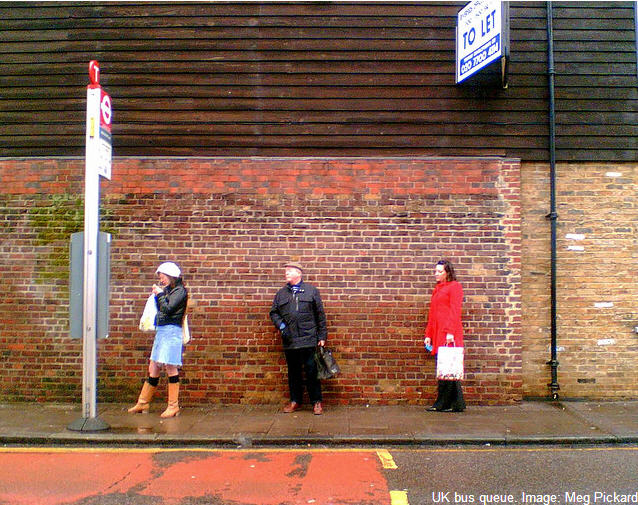
Monday, January 3, 2011
World Transport Policy & Practice – Vol. 16, No. 3
The Journal of World Transport Policy and Practice is the long-standing idea and print partner of World Streets and the New Mobility Agenda since 1995. The Winter 2011 edition appears today, and in the article that follows you will find the lead editorial by founding editor John Whitelegg. (For a more complete introduction to World Transport click here.)
Thursday, December 30, 2010
Democracy: Destination or voyage?
[This thinkpiece comes from my personal blog and while it rambles a bit from the central focus of W/S, it ponders some issues that are to my mind definitely worth a detour. The excellent article by Pasi Sahlberg on "Learning from Finland" that appeared in Monday's Boston Globe is certainly worth your time. There are many analogies with our troubled sector when it comes to learning from each other. Eric Britton]
Let's hop into the car, fill it up with some cheap gas, and take a quick tour of historic America with the help of legendary photographer Margaret Bourke-White. The image you can see just below caught my attention yesterday, arriving here during the festive holiday season thanks to a posting in from the Rebuilding Place blog of urban designer/consultant and activist Richard Layman from Washington DC. As you can see it's … Read More
via Network Dispatches --> Read on: