This collaborative project takes the form of an "open conversation" looking into the pros and cons, the possibilities, barriers and perhaps eventual impossibilities, of creating an equity-based transportation system at the level of a city and its surrounding region. This first pioneering project, in what we hope will become a series of leading world city projects building on this first example, is being carried out under the leadership of the Helsinki Department of City Planning and Transportation, and is taking place over the period mid-February through mid-April 2912. (You will find further working papers and supporting media sources in the second half of this introduction.)
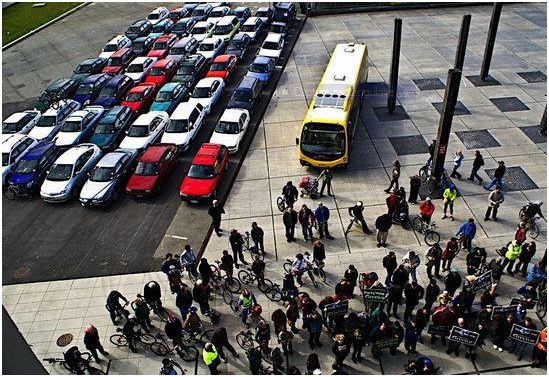
Tuesday, March 13, 2012
Equity/Transport 2012: Road map for Helsinki Stage 1
Monday, March 12, 2012
Pasi Sahlberg on Equity and Education in Finland
In January 2012, Finnish educator and author Pasi Sahlberg visited Stanford University to discuss his recent book, Finnish Lessons: What Can the World Learn from Educational Change in Finland?, and participate in a conference on the U.S. and Finnish education systems. After the lecture, he sat down with us to talk about the policies and practices behind the so-called "Finnish miracle" and the central role of equity in Finland's school reform.
Saturday, March 3, 2012
Weekend pause: Equitable Music Flash from a Train Station in Helsinki
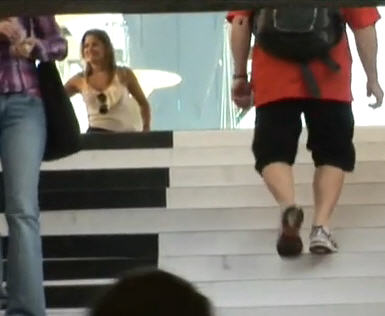
In the main rail station in Helsinki, host to the first Equity/Transport Civil Society project, a musical event that can help us to understand.
And should you wish some print background information on the city of Helsinki and its population, in addition to the usual useful synopsis offered by Wikipedia at http://en.wikipedia.org/wiki/Helsinki you can click here for a summary presentation prepared by the city.
Shortly we shall be presenting here as well information on the transport and mobility scene, including the good, the bad and the ugly (where we find it). But in the meantime it's the weekend and you may wish to kick back and listen to Finlandia again.
And the lark of morning in the brightness sings,
Thursday, March 1, 2012
Helsinki Equity/Transport project kicks-off today
Today is the opening day of the 2012 Helsinki Equity-Based Transportation peer review program, the first in what we hope will become a growing thread of cooperating city projects querying the impact of first reviewing and eventually restructuring our city and regional transportation systems around the fundamental core principle of equity. You will find details on the EBT site at http://equitytransport.wordpress.com/ starting at noon today.
Wednesday, February 29, 2012
Thinking on Equity/Transport: Todd Litman, Canada
We are inviting comments and background information on this our central concept behind this project, i.e., what is this thing we call transportation equity all about? We are looking for a variety of views and perspectives on our topic and not some kind of warm and glass-eyed unanimity. If we cannot handle contradictions and fuzziness, then we are not about to make headway with this one. This first note comes in from Todd Litman executive director of the Victoria Transport Policy Institute in Victoria Canada.
Tuesday, February 28, 2012
Gauging the socio-economic impacts of future urban transport initiatives
As we set out on the first of the city programs organized in this pioneering Equity/Transport series, the Helsinki project that gets underway on 1 March, it is useful to bear in mind that to fully understand the concept of equity as a major driver of policy in the sector requires that we move well beyond the more traditional techniques of investment and impact analysis such as cost-benefit analysis. The authors take direct aim at this issue when they state: "The classical cost-benefit analysis, then, needs to be replaced by a socio-economic impact assessment methodology (SEIA) to get a measure of expected benefits and costs to different groups." So without further ado let's turn to see what the authors have to share with us on this important topic.
Monday, February 27, 2012
Sunday, February 26, 2012
Friday, February 24, 2012
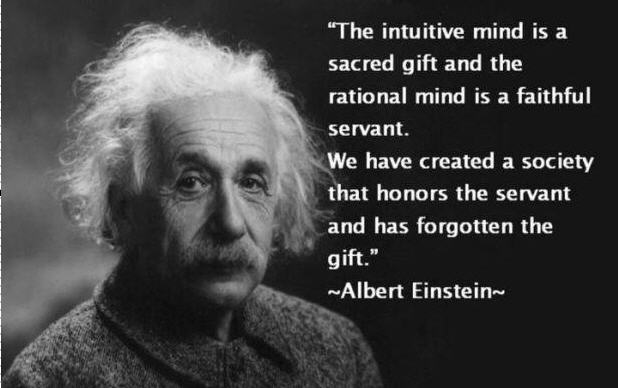
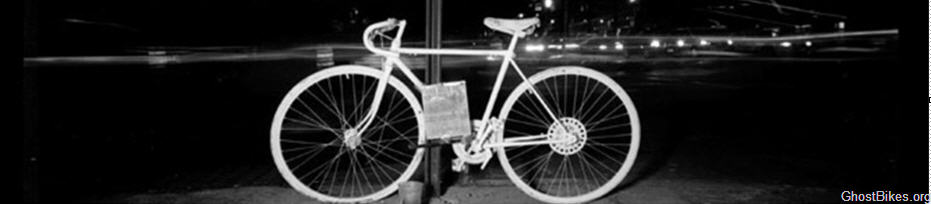
The Invisible Cyclist: Transportation Justice
From Equity-Based Transportation Systems: Paradigm Shift.
The transportation justice movement calls into question government subsidies of transportation forms that tend to benefit largely white and affluent urban and suburban commuters and advocates for better transit options and safer streets for poor people and people of color. This population of cyclists is largely uncounted, unrecognized, and unrepresented. Put simply, these are the invisible cyclists. In many cases, invisible cyclists are the constituents of transportation justice organizations, but only insofar as they are poor people of color. As cyclists, they remain invisible.
Wednesday, February 22, 2012
Equity-based Educational Reform in Finland
In the Helsinki stage of our on-going Equity/Transport program and process, it is particularly important that we have and share a clear understanding of the manner in which the equity-base education reform process has transformed Finland's schools over the last decades from middling to world level (See OECD PISA results for verification). To this end we are gathering and presenting here a selection of reports and articles that help us in this respect. The following report was prepared by Mrs. Lorraine Frassinelli Ell in 2006, and while six years have intervened since she completed it, the paper still provides a good synopsis and expert outsider view of the Finnish experience from someone working internationally in the field of educational reform and measurement.
Monday, February 20, 2012
Equity-Based Transportation Planning, Policy and Practice: First Helsinki project announcement
This week we initiate work on the first stages of preparatory organization in support of an "open conversation" looking into the pros and cons, the possibilities and eventual impossibilities, of creating an equity-based transportation system at the level of a city and the surrounding region. This first pioneering project, in which we hope will become a series of leading world city projects building on this first example, is being carried out under the leadership of the Helsinki Department of City Planning and Transportation, and is running over the period mi-February through mid-April.
Sunday, February 19, 2012
Weekend musing: Lewis Mumford on the city, in 1963. (Le plus ça change)
This is not the first time anyone addressed these themes. In the City in History, a classic text of urban design. Mumford urged in 1963 that technology achieves a balance with nature and hoped for a rediscovery of urban principles that emphasised humanity’s organic relationship to its environment. Forty-five years on, the film clips look incredibly old and the message delivered in a rather morbid and factious manner (to quote Jane Jacobs), with a slightly ‘Outer Limits’ or ‘Twilight Zone’ ambience. Yet some of the key ideas promoted by Mumford have increasing resonance with the sustainability and green agenda of the early 21st century. In the increasingly praxis orientated and commodified world of urban design, whether anyone is listening or not is another matter.
Friday, February 10, 2012
Is World Streets doing its job?
We asked 100 experts for their views - - and 101 responded.
Tuesday, February 7, 2012
World Streets 2012 – Focus Programs (Review draft)
If you wish to review and comment the latest working draft for our 2012 program, please click here.
--> Read on:Monday, February 6, 2012
Evaluating Public Transport Health Impacts
In the last days on the Sustran Global South Forum, Gregorio Villacorta of Metro of Lima (Peru) posted the following question to the group: "We would like to find some paper about road safety and social inclusion relationated to Metros, or other massive public transport." In the usual good spirit of Sustran there were immediately several communications offering to lend a hand. This one from Todd Litman of the Victoria Transport Policy Institute is one that we think is well worth sharing here.
Sunday, February 5, 2012
Progress report and work plan for 2012 - For comment and finalization
Dear Reader,
We have our work cut out for us in 2012. Look at the numbers. Despite the great efforts of the best and the brightest in leading cities and programs worldwide, we are still losing the sustainability wars. And we are losing them badly, whether in terms of climate, environment, resources, social justice, quality of life and, perhaps worse than the rest, in terms of those key underpinnings of efficiency and economy. Efficiency, economy and . . . equity are the indispensable pillars of a sustainability policy no matter what the sector. But more on that in a bit. --> Read on:
Saturday, February 4, 2012
Weekend leisure: Bollywood Bicycle Boogie's back
Take a break. It's the weekend. And even if you have seen some of these before, let's invite you to take your head out of that fat report and come with Navdeep Asija and me to the movies in India, the Bollywood Bicycle Boogie. The idea behind World Streets has from the beginning been to seek out and share universal lessons, from specific times and different places but which, with a bit of thought, can open up our eyes, ears and hearts to many things, including with a bit of luck to ourselves and our own limitations and quirks. For this Sunday's musing Navdeep brought us a packet of Bollywood films for your weekend viewing pleasure. Let me turn over the word to Navdeep so that he can explain it for himself:
Friday, February 3, 2012
Network Media. (Do we know what we are doing?)
If that's a question, then the answer is a resounding . . . kind of. The truth is that we are not embarrassed to say that when it comes to the new network media we are entirely improvising. On the net today there are no straight lines: everything changes so fast that what may look pretty good at one point may suddenly become absolutely vital to our operations -- or, at the other end of the spectrum, deceive, or worse yet even offer some dangers. It is, in a phrase, a real existential drama, but since we are trying to communicate on a world wide scale, we really have no chance but to try to take all these bits and pieces in hand and do with them the best we can. E pur si muove!
Thursday, February 2, 2012
Is World Streets doing its job? We asked 100 experts for their views - - and 101 responded.
"World Streets needs to catch on before my feet get wet." The Netherlands
Wednesday, February 1, 2012
From the editor: Safe Streets? Who cares?
It is a truly dreadful thing for anyone, me for instance, to lay on you anything as hackneyed as: a picture is worth a thousand words. But let me run the risk and show you a couple of pictures and leave it to you to draw your own conclusions. The topic is the first round of reactions to our start-up 2012 collaborative project aiming at clarifying the concept of Safe Streets from a strategic planning and policy perspective.
Monday, January 30, 2012
Carlos Pardo: On Slow(er) transport?
I was thinking that, since the concept of “slow” has been around for a while, but applied to concepts such as food and “living” in general, one could think of applying it to transport policies and projects… that is, create the term “slow transport” or “slower transport”, but responsibly. Below are some notes that could generate ideas towards that direction: where the concept comes from, why and how we can apply it, and some obstacles or possible problems. I will be as brief as possible, since I could write for ages about this. My main concern would be to develop a (or yet another) way of justifying the promotion and development of sustainable transport. And my main worry is that we could just generate a new empty term related to urban transport (we have enough already).
Saturday, January 28, 2012
Book report: Sustainable Transportation Planning
Michael Alba reports from Boston on this new guide for transport planners:Sustainable Transportation Planning seeks to tackle the greatest social and environmental concerns of the 21st century, focusing on the role of transportation in creating more sustainable communities. It is a how-to guide for anyone interested in the economic, social and ecological health of cities.
Friday, January 27, 2012
Getting outside that box (which may require being just a bit unreasonable)
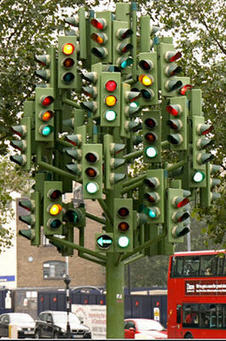
Once we are cozily set up in our box -- a box of course that we can neither see nor really appreciate (What box?) -- we become accustomed to thinking of things comfortably wedged within our invisible container as "that's the way things are". And from there it is a very small step to become a pragmatically "reasonable person". To which I can only quote Bernard Shaw when he said so long ago (with social justice and the emancipation of women firmly in the middle of his sites): The reasonable man adapts himself to the world; the unreasonable one persists in trying to adapt the world to himself. Therefore all progress depends on the unreasonable man. Let's see if Preston Schiller can help us to get outside the box of the automobile.
Thursday, January 26, 2012
Story-telling time at World Streets
The readers of World Streets will, I am sure, have little difficulty putting this old tale by Edgar Allan Poe right into our 21st century context: climatic, environmental, economic, social and human. As we dance dance dance.
Wednesday, January 25, 2012
Groningen: The quiet example
What? You know all about transport in cities and you have never heard of Groningen? Well, check out this : an unexpected street interview in Groningen, a slice of life as filmed by our old friend and transport innovating colleague Robert Stussi. He has titled it: "A Homage to Hans Monderman". Hear, hear!
Tuesday, January 24, 2012
Whenever I hear the word revolver . . . I reach for my culture.
We have long-held a theory at the New Mobility Agenda that you can never tell where the next good idea is going to come from. So you really do have to keep your eyes, ears and minds wide open, and learn where you can, where you can, from whom you can. For example, Volkswagen in the New Mobility Agenda? Well, what not? Let's show you one great idea that you may not have seen the first time around and that we have just this morning plucked out from our archives.
Monday, January 23, 2012
EQUITY/TRANSPORT READING ROOM. V1
Here you have the beginning of a basically unstructured reading list of articles and books that dig from a wide variety of angles into the complex but oh so important issues that underlie the concept of an equity-based transport systems and policy. In time we will organize this with greater rigor and more detail (but not too much, time is so important), but here you have it today as a useful first reference point, in addition to those you have yourself.
Friday, January 20, 2012
Charina Cabrido reports on SAFA Tempos (Electric three-wheelers) in Nepal
SAFA tempos or Nepal’s version of electric three wheelers are typically seen in Kathmandu’s busy streets. Running at an average speed of 60 kilometer per hour, safa tempos serve at least 127 thousand people everyday transporting individuals to their destinations. This is quite a challenge for a country that has been constantly confronted with power cuts that reach sixteen hours a day especially during winter season.
Safer Streets LA - Wrap a couple of spare neurons around this one
From the 2012 Safe Streets Challenge project:
If you are (a) into safer streets and (b) ready to dig in to understand that things out there are not necessarily what one might necessarily think, may we suggest that you check out here this slightly counterintuitive piece that was posted this morning in our parallel Safe Streets project.
Thursday, January 19, 2012
Roads vs. Streets: Wherein the greater danger?
Michael Blastland plays around with some statistics, usefully!, on roads vs. streets when it comes to accidents and safety in this article that appeared in today's BBC magazine. (Click here for his article in full and here for the often quite stinging comments that it has triggered.) Ours here is quite another focus, but it is interesting to keep our eyes open for short pieces like this.
Wednesday, January 18, 2012
Op-Ed: What/who keeps holding back New Mobility reform?
If you get it, New Mobility is a no-brainer. However, while the New Mobility Agenda is a great starting place, it is not going to get the job somehow miraculously done just because it is the only game in town when it comes to sustainable transport. There is plenty of competition for all that space on the street and between the ears. We have a few potential sticking points here that need to be overcome first. Let's have a quick look to get this exchange off the ground. After some years of talking with cities, and working and observing in many different circumstances, here is my personal shortlist of the barriers are most frequently encountered in trying to get innovative transportation reform programs off the ground, including even in cities that really do need a major mobility overhaul.
Monday, January 16, 2012
Op-Ed: A rethinking of what parking is in the first place
"If your parking policy debates are going in circles, there is a good chance the protagonists are 'framing' parking in totally different ways." (Let's see what Paul Barter of Reinventing Parking had to say on this earlier today in Singapore.)
Saturday, January 14, 2012
Honk! Getting off the ox (when it comes to cars and cities).
There is a bit of ancient Hindu wisdom that goes, roughly: How can a man riding an ox and looking for an ox, ever find the ox. The answer being of course, only when he gets off the ox. Thus it is in life, but for many of us it is somewhere between hard and impossible to ever get off the ox of our perceptions and set values. But there are, thankfully, creative people who can do this.
Here by way of a quick warm-up is one quick demonstration of this off-the-ox approach from the lively mind of Jean Tinguely of his Cyclograveur, in short a bicycle that, as you pant and pedal, paints beautiful (?!?) pictures. And now t for your weekend reading pleasure let's have a look at what our friends over at Streetsblog have just reported on another more timely off-the-ox transportation project, this time by the ever-ingenious Chris Burden with his post-Tinguely road-wrapping machine, Metropolis II. Off we go.
Friday, January 13, 2012
John W. Verity on New Scare City
It's a fictional streetscape we wander, here, a metropolis whose buildings, boulevards, and back alleys are in a constant state of flux. This is every place, and yet, no place at all - a city of dreams and a dream of a city.
Saturday, January 7, 2012
What happened with Kampala's first-ever Car Free Day in 2011
It started like a dream, and became a reality. After the long awaited workshop in April this year, some major steps have been taken so far in Kampala. By the end of the workshop which was organized and financed by Kampala Capital City Authority in association with Goudappel Coffeng, Goudappel Africa and Iganga Foundation, a pilot project was prepared by the same partners. With its artistic impressions, Kampala looked like a heavenly city, with the people friendly infrastructure in place.
Friday, December 30, 2011
Krugman on Keynes: No time to duck
A collaborative network activity such as World Streets needs to find its own best combination of Sir Isaiah Berlin's variant on the Greek parable of the Hedgehog and the Fox ("the fox knows many things, but the hedgehog knows one big thing"). Given the huge information overload with which we live in this highly strung twenty-first century, it is absolutely critical that we play the hedgehog and stick rigorously to our topic. But... at the same time the many sided reality is that our topic by its very nature requires us also to be a fox. Thus are the contradictions and challenges of maturity.
Man and car: Who is driving whom this morning?
What is it about what the English call a motor car that, when an otherwise perfectly decent human enters it and slams the door shut, somehow there is a total transformation of that person gripping the stirring wheel into something, into someone who is just a little bit less decent and a little bit less human. A consistent theme of World Streets is that over the last hundred years or so our cars have not only transported us but they have also in the process also transformed us. Oops. And in the process they have fatally (I chose my word) altered the dimensions of the space in which we live our daily lives, and in the same process made this thing that was supposed simply to transport us from A to B at our leisure, into a defining part of our daily lives -- and indeed in some ways part of ourselves. A cruel critic might say, half Faust and half Frankenstein.
Tuesday, December 27, 2011
Parks in, Cars not out? Is that going to be our future?
Michael Kimmelman reports in today's New York Times about the new trend whereby "All around the world, highways are being torn down and waterfronts reclaimed; decades of thinking about cars and cities reversed; new public spaces created." That is certainly good news and true, but there is a bit more to it than that as you will see if you read on.
Saturday, December 24, 2011
Op-Ed: Do you know your ecological footprint?
Toward the end of each year, I take a few minutes to run my personal Ecological Footprint scan to see if I can get a handle on how I am doing relative to myself, to others and to the planet. Seems like the least I can do, not less because it does oblige me to think about my life pattern and choices in the greater scheme of things. "Walk the talk", etc., etc. (PS. On a more global basis, to get a feel for where the high scores hang out, this map of earth lights at night will provide you with some good clues.)
Friday, December 23, 2011
Defining principles: Remembering Mrs. Jacobs
As we move ahead with the Safe Streets project over the course of the year ahead, there will be a small group of people to whom we shall be referring from time to time who have, through their insights and contributions, basically redefined the entire field of transport in cities. And Mrs. Jane Jacobs is of course one of this wonderful group. We are honored to be able to share these leadership profiles with you, and for Mrs. Jacobs we pass the word to Michael Mehaffy who reminds us of her contributions and takes on her critics head-on.
Wednesday, December 21, 2011
La femme est l'avenir de l'homme

The French poet Louis Aragon told us some two generations ago that "Woman is the future of man". And if we had any doubts about that as we enter into 2012, we have today before our eyes this exceptional, moving photograph of a street demonstration yesterday in which several thousand brave women marched through central Cairo in an extraordinary expression of anger over images of soldiers beating, stripping and kicking female demonstrators in Tahrir Square. --> Read on:
Tuesday, December 20, 2011
Safe Streets defining principles: Remembering Donald Appleyard
Safe Streets is a collaborative worldwide project which will aggressively network over the whole of 2012 in our search for shaping ideas with some of the leading thinkers, groups and programs in the field , looking to the future but also not forgetting the past -- including drawing attention to the defining contributions of a certain number of leading thinkers. teachers, writers and sustainability activists, who are no longer with us but who through their work have laid down some of the most important principles which we now need to recall and take into account as we move to create a broad common framework for sustainable streets all over the world. For those of you who do not already know about the formidable vision and work of Donald Appleyard, we have pulled together a collection of reference points that should give you a good first introduction, and at the end of this piece some additional reference materials for those wishing to go further (as indeed you should).
Monday, December 19, 2011
Whitelegg proposes radical overhaul and extension of congestion charge in London.
This report by Professor John Whitelegg scrutinizes the possibilities for developing the existing London congestion charge as a response to concerns about future levels of congestion, air pollution and health and economic efficiency. These concerns are important policy considerations at any time but against a background of forecast increases in population and economic activity in the Greater London area they become more important still. World Streets is more than pleased to share this original work with our readers, not less because we take a strong stance against the introduction of technology-based road pricing in cities of the Global South, where it is our view here are more effective ways of achieving the goals of traffic reduction and much-needed new sources of income for public and non-motorised transport. Let's see what John has to say in this timely report from a London perspective.
What happens in a high-tech Smart City when the lights go out?
Wouldn't you say that is worth thinking about while you are figuring out how to spend the taxpayers money for safe streets?
Thursday, December 15, 2011
Geetam Tiwari on Pro-Poor Green Urban Transport
In this ten minute video Professor Tiwari takes a useful step back from the usual pure transport and all too often dominant technology/infrastructure perspective, taking us back for starters to the fundamentals of what is going on at the level of city dynamics and the daily lives of the vast. of the neglected great majority of all who live and need to get around in the cities in her great and sprawling country. She comes down hard on past policies that have heavily favored the well to do, while all too systematically ignoring the daily needs of the rest. And that of course is unsustainable. Let's listen to what she has to say:
World City Modal Split Database: An invitation
This open project from EPOMM -- the European Platform on Mobility Management -- is an absolutely brilliant idea. It does not require much explanation to get started; you can be off and going if you simply to click here and dig into their Google map. That said, a few words of introduction may not be altogether without their use to help you take full advantage of their good work.
Wednesday, December 14, 2011
Report on 2011 Urban Mobility India Conference
Report for India Streets by Vidyadhar Date, Mumbai
The fourth annual Urban Mobility India conference organised in Delhi from December 3 to 6 by the ministry of urban development was no doubt a useful exercise. It did well to give more focus on bicycles and public transport than the previous conference. But the venue itself was highly inaccessible, difficult to reach even by a private car, leave alone public transport. --> Read on:
Tuesday, December 13, 2011
Man – > Technology – > Speed – > Distance – > Destruction of proximity
This out of control bulimic spiral begins with man's uncontrollable tool-making itch, and from thence ,and unknown to us at the time, to tools which take on transforming lives of their own -- one of which in the domain of mobility being ever-increasing speed, which in turn leads to ever-increasing distances, and which finally and in largely unnoticed fatal tandem destroys the reality and oh-so important qualities of proximity and community. That's the deal and facing all this is the challenge of this collaborative project for 2012. What we thought was merely more convenient transportation, has snuck up on us and turned into very inconvenient and altogether unanticipated transformation.
Saturday, December 10, 2011
Combating the Myth That Complete Streets Are Too Expensive
Tanya Snyder from Streetsblog DC takes a good look at this often-advanced view that, good as they may be for a wide range of reasons, the fact is that we just can't afford complete streets. One more great reason not to change, eh?
Friday, December 9, 2011
Safe Streets 2012 Challenge: Let's take a step back to get some context
Joel Crawford of Carfree Cities writes:
"Cities in the modern era have been overrun by cars and trucks. Streets have been stolen from human uses by invasive street users. Not only is this method unlikely to be sustained into the future, it also robs society of some of its most important public spaces. Carfree cities are a delightful solution to many different problems at once." With that, let's have a look at his short film that bangs these points home.
[vimeo http://www.vimeo.com/32922989 w=400&h=225]
Occupy All Streets: The Role of Carfree Cities in a More Sustainable World from J.H. Crawford on Vimeo.
Thursday, December 8, 2011
Safe Streets 2012 Challenge: Is there only one way to skin this cat?
[vimeo http://www.vimeo.com/32958521 w=400&h=225]
Traffic in Frenetic HCMC, Vietnam from Rob Whitworth on Vimeo.
Tuesday, December 6, 2011
The Safe Streets Challenge: 2012 - 2015
After considerable and at times quite contentious discussions over the last months with colleagues around the world through various discussion fora, social media, programs, conferences and personal visits, we have decided to make one of the principal themes of our work here at World Streets for the coming year that of Safe Streets.
Sunday, December 4, 2011
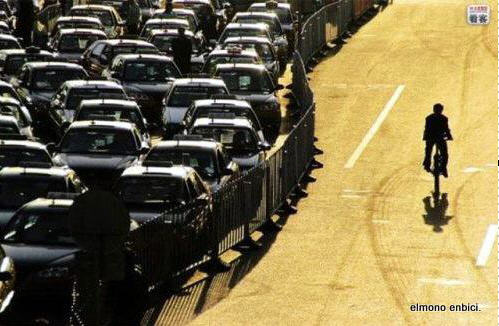
"I prefer corruption to pollution"
The full message from Todd Edelman -- as part of a discussion on the Sustran/Global South forum of attempts to limit parking in cities through regulation, which sometimes achieve at least some of their objectives, and at other times risk to open up opportunities for favoritism and corruption --reads: "Briefly (and simplistically): I prefer corruption to pollution." Now I find this a terrific provocative thought and while I leave you to sort that one out for yourself, here's a bit of context on this important, powerful, unambiguous, but nonetheless largely ignored policy issue behind his contentious phrase.