In June of 2012 your editor was invited by the mayors of Tallinn to give a public talk 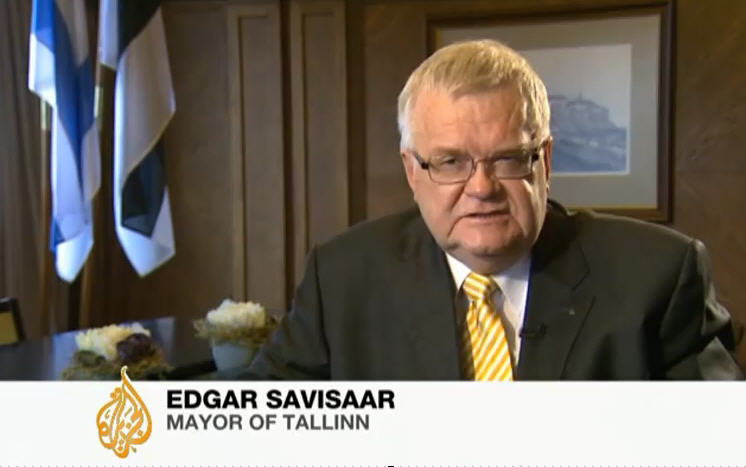
The first transformative event they were considering for 2013 was the first-ever Free Public Transport project in a European capital. After careful planning their project went into service on 1 January. In the run-up to this important event World Streets in cooperation with our readers has been developing and drawing to the city's attention a broad repertory of expert comments on FPT, all of which you can see at http://worldstreets.wordpress.com/category/free-public-transport/. We invited contributing editor Anzir Boodoo to read through the various comments and see if he could put them in some kind of order for our busy readers in a single article, which you can now read here.
Monday, January 7, 2013
To support the Tallinn FTP project, World Streets readers comment on Free Public Transport


World Streets Social Networking ABCs
In our world-wide outreach to readers we are trying to put to work the full range 

Sunday, January 6, 2013
Behind the Rape in the Bus
Behind the Rape in the Bus
Over at India Streets today - http://www.facebook.com/IndiaStreets - the
 distinguished Indian journalist and writer, Vidyadhar Date, posts an article entitled "Rosa Parks, The Power of Resistance and the Rape In The Bus In Delhi". He makes a point which I believe is central to understanding a great part of both (a) the what and (b) the why of this tragic event in Delhi, when he writes:
--> Read on:
distinguished Indian journalist and writer, Vidyadhar Date, posts an article entitled "Rosa Parks, The Power of Resistance and the Rape In The Bus In Delhi". He makes a point which I believe is central to understanding a great part of both (a) the what and (b) the why of this tragic event in Delhi, when he writes:
--> Read on:
Thursday, January 3, 2013
2013 Book announcement: NO (MORE) EXCUSES
Memorandum: First background on book in process to appear end-2013.
No ExcuseS, Sir!
(A tale of cities, indolence, complexity and finally . . . simplicity)
Introduction: No Excuses is a book in progress by Eric Britton about cities and people, and how we get around in our day-to-day lives. It is about the failure of a generation -- but also how with a little imagination and a lot of willpower we can do it better on all scores, and in a way that is fairer for all.
 If we say it is about cities and not transport, it is because the focus is not on the usual transport infrastructure, technology or big investments of hard-earned taxpayer money. That is the old way of looking at it, the mindset that effectively dominated transport policy and practice in the 20th century and which is just starting to lose its hold today. Good things are happening but still in far too few places. These are the places and projects, and the people and strategies, that No Excuses is all about.
--> Read on:
If we say it is about cities and not transport, it is because the focus is not on the usual transport infrastructure, technology or big investments of hard-earned taxpayer money. That is the old way of looking at it, the mindset that effectively dominated transport policy and practice in the 20th century and which is just starting to lose its hold today. Good things are happening but still in far too few places. These are the places and projects, and the people and strategies, that No Excuses is all about.
--> Read on:
Tuesday, January 1, 2013
Happy New Year . . . and what BTW is this "New Mobility Agenda" business all about?
To kick off the New Year, it would seem like a good idea for us to remind our 
Monday, December 31, 2012

Sunday, December 30, 2012
Zetabytes, Open Systems and Worrying about Equity
Zetabytes, Open Systems and Worrying about Equity
This is the first in a series on big data and its impact on society from CSPO co-
 director Daniel Sarewitz, published in Slate on 27 Dec. 2012. It also appears on As We Now Think, a site edited by the Consortium for Science, Policy, and Outcomes at Arizona State University. ASU is a partner in Future Tense with Slate and the New America Foundation.
We share this with our readers with one eye to our on-going Zetabytes/Open Systems series that will be getting close attention in the year ahead -- with the other eye to our Equity-Based Transport series, also to continue full speed ahead in 2013.
--> Read on:
Monday, December 24, 2012
For your holiday reading pleasure: Top twenty World Streets postings in 2012
While you are away from the office and the pressures to stay on 
Saturday, December 22, 2012
Signals, Perception, Behavior : Questions, Blurs and Hints
In transportation circles, most often in Europe but not uniquely there, we often hear the term "behavior modification", which is usually brandished as something 
Friday, December 21, 2012
Cities, Transport and Equity in Africa: Unasked Questions
In a fair world it should be unthinkable to ignore the needs of close to one billion 
The transportation arrangements in most people’s daily lives in Africa come in several flavors, few of them appetizing: ranging from world-class traffic jams making it close to impossible to negotiate the streets of the larger cities for hour each day, to at the other extreme no provision for vital survival transport (water, wood for fires, food) for the remainder of the continent.
Monday, December 17, 2012
New Mobility Consult: 2013
One way of looking at World Streets and its world wide network of diverse international partners, publications, programs, multiple networks, 
Op-Ed: Toward More Prosperous Cities
- Op-Ed Contributor: Wendell Cox, published 14 Dec. 2012. Comments invited
I appreciate Eric Britton's gracious invitation to contribute my views on cities and urban transport to World Streets. Obviously, many readers will disagree with all or part the article. Nonetheless, the state of knowledge is never complete and progress continues to depend on open minds and civil discussion of perspectives among people of good will. There is extensive use of "hyperlinks," which provide direction to greater detail for any interested. The article begins with the public policy context, then follows with urban policy, urban transport and sustainability. --> Read on:
Sunday, December 16, 2012
Albert Hirschman in Latin America: Notes on Hirschman´s Trilogy on Economic Development.

Thursday, December 13, 2012
My basic theory about 2013 is this.

My basic theory about 2013 is this:
If what we try to do in 2013 looks like something that we would have done back in the late years of the last century, it will not be good enough. That's the test I try to apply to my work every day.
Being different is not a guarantee of success. But NOT being different is a guarantee of sure failure. --> Read on:
Letter from Bangalore: The Derelict Mile
Sujaya Rathi reports from Bangalore:
Wednesday, December 12, 2012
Earth, receive an honoured guest. In Memory of Albert O. Hirschman
Lyon. 12 December 2012. A personal tribute for my friends and family.
 The news came in the middle of the night in the cold winter of Lyon. My professor and life example Albert Hirschman has left us. And I am finally very glad, because those last few years of illness were far too harsh for any man or woman to bear.
I have a hard time in organizing my thoughts this cold morning, but two things I do know and would like to share with you. The first being that Albert Hirschman was a great man and a huge influence in the field that he had chosen for his own, economics in the broadest sweep of the term. And well beyond that. --> Read on:
Editorial: No FPT without SCR (Systematic Car Reductions)
This is a simple fact! Free Public Transport (FPT) has no possible justification whatsoever unless your governing officials are willing to do something about adjusting the modal mix and bringing down car ownership and use in the city strategically and as quickly as possible SCR - (Systematic Car Reductions).
The tools for achieving these necessary adjustments in the modal split are well known, experience-proven and widely used in cities of all sizes in many parts of the world. There is no possible justification that competent public authorities not be aware of these proven tools and policies. They include most notably:

Heads-up: To avoid duplicate mailings from Facebook
Heads-up: To avoid duplicate mailings from Facebook
Dear Patient Reader,
 To avoid duplicate mailings from our various programs and fora, it may be useful to note the difference between our two main FB pages at (1) http://www.facebook.com/NewMobilityAgenda and (2) http://www.facebook.com/worldstreets. The former posts only information that appears in World Streets (http://worldstreets.org), while the latter includes all these but also contains other pieces, heads-up and observations from our vigilant editor.
--> Read on:
To avoid duplicate mailings from our various programs and fora, it may be useful to note the difference between our two main FB pages at (1) http://www.facebook.com/NewMobilityAgenda and (2) http://www.facebook.com/worldstreets. The former posts only information that appears in World Streets (http://worldstreets.org), while the latter includes all these but also contains other pieces, heads-up and observations from our vigilant editor.
--> Read on:
Tuesday, December 11, 2012
Op-Ed: The Story of UK Roads/Streets.
Op-Ed: The Story of UK Roads/Streets
Poorly designed roundabouts - enabling even HGV's to travel around them at speed, the police thinking a cyclist could make a driver aware of "him" with a bell or a whistle...
- Police on bicycles without blue lights or sirens, chasing others through red lights... then stopping others for doing the same, who proceeded with caution,
- Advanced stop lines seem to provide little benefit, and may have been partly to blame for the death of Cynthia McVitty's daughter.
- Humans get territorial, and thus cycle lanes become hazards for cyclists when too narrow, and for pedestrians when they step onto them,
- Too many cyclists in the UK cycle at speeds inappropriate to the situation.

- Ian Perry. Cardiff, Wales, UK ianenvironmental@googlemail.com
--> Read on:Monday, December 10, 2012
Op-Ed: Awful Injustice in Parking
Op-Ed: Awful Injustice in Parking
Misguided parking policy is harmful and unjust.
No surprise there, you may say. There is no shortage of complaints about parking prices ("unfair!") and about how difficult it is to find parking. We hear the same thing all over the world, whether in Sydney, San Francisco, Singapore, Moscow, Delhi , Jakarta, Beijing, Sao Paolo, Lagos or Nairobi.
Sorry to be unsympathetic. But complaints like those are a problem. They are fuel for the never-ending push for more parking and cheaper parking.
So what? --> Read on:
Thursday, December 6, 2012
Civil Society and European Union Policy and Practice in the Field of Transportation
Look out. This time our friends over at the European Economic and Social 
Cities of the Future: From Norway with love
Cities of the Future: From Norway with love
 Cities of the Future are densely built. This means we can walk and cycle instead of using cars, reducing pollution. Fewer cars and roads make more room for bike paths and parks. This makes our cities prettier and makes us healthier. The parks will also help absorb the increasing rainfall expected in the future. Cities of the Future is a collaborative project between the Norwegian Government and the 13 largest cities in the country to reduce greenhouse gas emissions and make our cities better places to live.
--> Read on:
Cities of the Future are densely built. This means we can walk and cycle instead of using cars, reducing pollution. Fewer cars and roads make more room for bike paths and parks. This makes our cities prettier and makes us healthier. The parks will also help absorb the increasing rainfall expected in the future. Cities of the Future is a collaborative project between the Norwegian Government and the 13 largest cities in the country to reduce greenhouse gas emissions and make our cities better places to live.
--> Read on:
Tuesday, December 4, 2012
The crux of the problem with transportation is that . . .
The crux of the problem with transportation is that . . . everyone wants the same thing at the same time, feels entitled to it and doesn’t want to pay more, or differently. And that's not all . .

Oops! What is happening to the American Dream? Are cars on the way out?
The concept of 'Peak Car' responds to the fact that developed countries around the world are seeing car traffic level off rather than increase in line with forecasts 
Sunday, December 2, 2012
Consultancy and Advisory Services: 2013

Friday, November 30, 2012
Support World Streets (And why)
We have no money gentlemen, so we shall have to think.
– Ernest Rutherford, on taking over Cavendish Laboratory in 1919
World Streets is an independent public interest publication which, as a matter of 
Wednesday, November 28, 2012
Is World Streets doing its job? We asked 100 experts for their views - - and 101 responded.
World Streets needs to catch on before my feet get wet. - The Netherlands
 The results are there for all to see and judge. And we now know that we are going to need a literal world wide web of inputs, collaboration and other forms of support if we are to continue this independent international sustainability adventure in the year ahead. Is what we are doing useful and worthy of support? 101 of our readers picked up their pens and responded to our question.
--> Read on:
The results are there for all to see and judge. And we now know that we are going to need a literal world wide web of inputs, collaboration and other forms of support if we are to continue this independent international sustainability adventure in the year ahead. Is what we are doing useful and worthy of support? 101 of our readers picked up their pens and responded to our question.
--> Read on:
Support World Streets: Preliminary guidelines for readers
We have no money gentlemen, so we shall have to think.
– Ernest Rutherford, on taking over Cavendish Laboratory in 1919
World Streets is an independent public interest publication which, as a matter of
policy, we make freely available to all who are looking to understand, support, and contribute to the sustainability agenda anywhere in the world. We firmly believe that there should be no barriers, and especially not commercial ones, to the free circulation of news, tools, counsel and peer exchanges when it comes to the important issues of sustainable development and social justice. To ensure our full independence we do not accept advertising. We depend on the support of our readers, concerned public agencies, foundations and actors in the private sector to keep going.--> Read on:
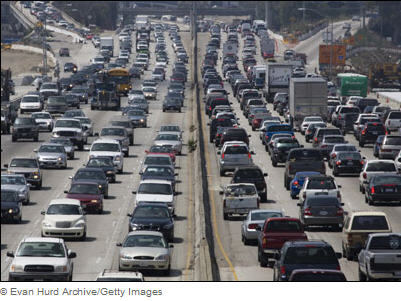
Congestion as policy. (I have seen worse.)
Tuesday, November 27, 2012
2013 Work Program Highlights

Thinking about China: 2013-2015
THINKING ABOUT CHINA: 2013-2015
 The drive to sustainable transport and sustainable cities in China is one of the central focuses of the World Streets 2013-2015 work program just getting underway (it would have to be, wouldn't you say?), as you will see on the small menu item just to your top/left here. Thus far it is organized in two parts:
- What World Streets has had to offer thus far - Click here
- And from our Facebook page of this title - Click here
- - - >But stay tuned. More to follow here
--> Read on:New Mobility Agenda - Website updating in process

Over the last three years our primary communications medium has shifted from this historic website that has been in constant operation since 1996, to other means of communications and sharing. And as we look ahead to the new year and the challenges it will bring, we are giving thought as to how, if at all, to retrofit and improve the old friend that you see here.
Monday, November 26, 2012
What is the right price for Free Public Transport?


 Posts
Posts


