Carlton Reid is writing a book about roads history. He's focusing on the period  1880-1905, which saw the Bicycling Boom and then – pop – the start of Motoring Mania. Examining tangents, finding new areas to explore, digging out deeper and more convincing evidence to show that cyclists had far more influence on government road policies than previously thought. Not just previously thought by the public at large, but by social history and transport academics, too. In today's W/S article he shares with us some of the historical quotes he has uncovered, which relate in important ways to the matters which concern us here. Let's have a look at a selection of these.
Tuesday, January 22, 2013
Slaughtering, stinking engines of iniquity


Op-Ed. Italian Perspectives on Carsharing: Past Practices, Future Prospects
 This report on carsharing history, practices and prospects in Italy is contributed by Carlo Iacovini who has been one of the most active figures in the development of the industry in Italy since he became actively involved in planning and developing new carsharing systems in 1996.
Sunday, January 20, 2013
Weekend musing: On Nixon in China
While musing about China these days, and particularly about how they are handling policy and invement decisions involviing transport, mobility and public space during this period of possible change of thinking at the highest policy levels there (See World Streets http://wp.me/psKUY-2Kb), I am listening this weekend once again, decades later, to the still surprising Nixon in China of John Adams. And wondering how my Chinese friends might react to this.
Friday, January 18, 2013
Op-Ed: Think again about China and Innovation
This is excellent piece of analytic work by a young Canadian scholar, strips away many of the all too easy myths about China and Chinese copycat culture, and puts before us quite a different picture of their competitive potential for a very different future. . Let me quote the author's opening paragraph which does a good job of setting the stage for what follows. Conversations about innovation in the United States are rife with the adversarial language of exceptionalism. Rather than view China’s economic rise as a threat, American businesses and policy makers should take an open-minded look at the Chinese national innovation system. Innovation, according to the Chinese, should be in service of overcoming social and environmental challenges, not only generating prosperity and new inventions. And rather than viewing innovation as an individual pursuit, the Chinese recognize the necessity of a strong government role.
And from this end I want to transpose this message specifically to the transport sector as it concerns us here at World Streets. If in the past we have seen that the Chinese response to their rapid city growth and exploding transportation requirements has been to mimic the (worst of) the West yard by yard, can we reasonably assume that they will continue on such a path in the future? I for one doubt it, so let’s keep a weather eye on the new generation of problem-solvers, solutions and approaches they are going to put to work. Since we all surely will have a great deal to learn from them. But now let's hear what Eric Kennedy has to say about China's new national innovation system:
Wednesday, January 16, 2013
Announcing World Streets Editions

Announcing World Streets Editions (The Plan)
World Streets Editions is at present a start-up project under study whose purpose is to work with international authors with high expertise in their fields and publish highly readable and affordable pocket books on the topics of sustainable transport, sustainable cities and sustainable lives. To this extent it will generally reflect the scope and values found over these last years in World Streets. We are also looking at publishing children's books and possibly other media dealing with these topics in imaginative ways.
--> Read on:
Tuesday, January 15, 2013
Homo Urbanus

Photographer unknown but picture relayed by Micha Walter, who writes (in German, of which this is the Google translation):
"Homo urbanus" is the latest scientific findings. forerunner of modern "homo economicus", considered the most radical species of hominid
--> Read on:
Monday, January 14, 2013
Streetsblog: Doing its job year after year in New York City. In memoriam 2012
Each year our friends over at Streetsblog in New York City publish a heart-rending testimonial to the mayhem that automobiles have wrought over the year on their city's streets and the cost in terms of lives lost by innocent pedestrians and cyclists. Put ting names, faces and human tragedy to what otherwise takes the form of dry numbers, faceless hence quickly forgettable statistics is an important task. We can only encourage responsible citizens and activists in every city on the planet to do the same thing, holding those public officials (and let's not forget, we call them "public servants", and for excellent reason) responsible for what goes on under their direct control.
Saturday, January 12, 2013
Weekend Musing: Asking the mayor of Freedonia to walk the walk
Asking the mayor of Freedonia to walk the walk
 Freedonia City Hall, 12-Jan-13.09:00. The mayor is comfortably seated at his imposing desk, looking fondly at an unlit cigar. The editor of World Streets knocks lightly and waits timidly at the door, entirely drenched and more than a bit disheveled. Not a pretty sight.
The Mayor: Well sir, you are a fine mess. Careful, you are dripping on my favorite chair.
--> Read on:
Thursday, January 10, 2013
Op-Ed: Where Does SLoCaT Stand in Realizing Sustainable Transport?
Three years ago the Partnership on Sustainable, Low Carbon Transport  (SLoCaT) was established to address the relative absence of sustainable transport in the global discussions on sustainable development and climate change. Rapid motorization in the developing world and its negative impacts motivated the organizations that came together in SLoCaT. There was agreement that SLoCaT should initially have a mandate for three years only and that by the end of 2012 a decision would be made whether to call it a day or to go on, possibly, with a revised mission. Those three years have gone by. So where is SLoCaT now and what is next; declare victory and move on, admit defeat and move on, or stay in the fight?
Did someone say, White Chairs?
Did someone say, White Chairs?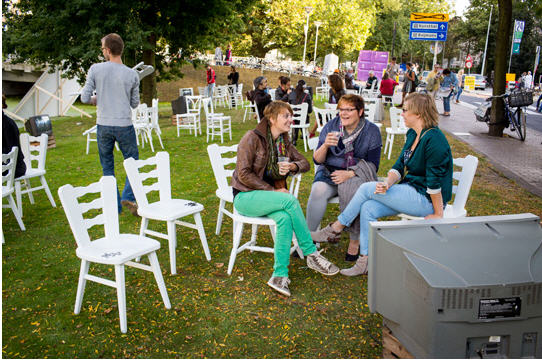 During Rotterdam’s public art festival Wereld van Witte de With, urbanism office M.E.S.T. reanimated this idea. But instead of bikes, the designers left 350 white chairs in public space in Rotterdam. The chairs served as a terrace for all the decentralized performances, and fed a discussion about public space and ownership at the same time. People were allowed to use the white chairs freely and to take them to any other location as long as they remained part of public space. The white chairs were slowly spread across the city. According to the festival organization, they were even spotted at the Central Station of Leiden, a town somewhere between Rotterdam and Amsterdam.
Monday, January 7, 2013
To support the Tallinn FTP project, World Streets readers comment on Free Public Transport
In June of 2012 your editor was invited by the mayors of Tallinn to give a public talk 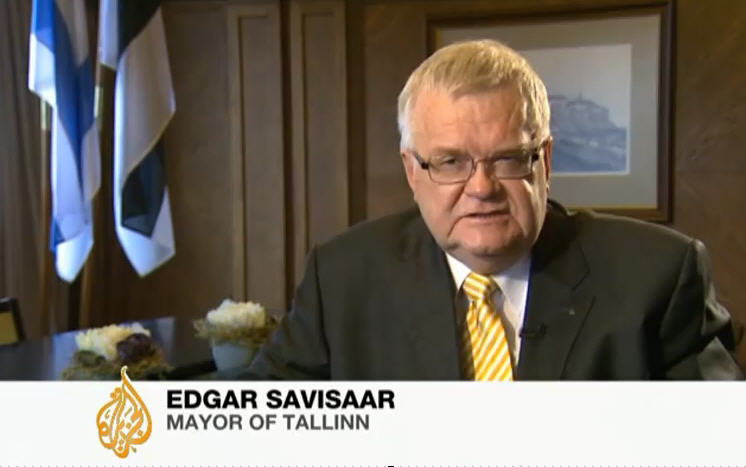 to comment on how some of the policy concepts developed over the last two decades under the New Mobility Consult program might be put to work to support their decision to take new approaches to transport policy challenges starting in 2013. Subsequent to that visit we signed with the City of Tallinn a public agreement of strategic cooperation over 2013.
The first transformative event they were considering for 2013 was the first-ever Free Public Transport project in a European capital. After careful planning their project went into service on 1 January. In the run-up to this important event World Streets in cooperation with our readers has been developing and drawing to the city's attention a broad repertory of expert comments on FPT, all of which you can see at http://worldstreets.wordpress.com/category/free-public-transport/. We invited contributing editor Anzir Boodoo to read through the various comments and see if he could put them in some kind of order for our busy readers in a single article, which you can now read here.
World Streets Social Networking ABCs
In our world-wide outreach to readers we are trying to put to work the full range  of available contact and sharing tools to best serve and to make best use of these carefully developed networks. Among them a certain number of Facebook Groups which seem to lend themselves pretty well to these purposes, and also LinkedIn, Google+, YouTube, Scribd, Picasa (public photo galleries) and Twitter (still something of which we are hard pressed to see the fit, but one perseveres).
Sunday, January 6, 2013
Behind the Rape in the Bus
Behind the Rape in the Bus
Over at India Streets today - http://www.facebook.com/IndiaStreets - the
 distinguished Indian journalist and writer, Vidyadhar Date, posts an article entitled "Rosa Parks, The Power of Resistance and the Rape In The Bus In Delhi". He makes a point which I believe is central to understanding a great part of both (a) the what and (b) the why of this tragic event in Delhi, when he writes:
--> Read on:
distinguished Indian journalist and writer, Vidyadhar Date, posts an article entitled "Rosa Parks, The Power of Resistance and the Rape In The Bus In Delhi". He makes a point which I believe is central to understanding a great part of both (a) the what and (b) the why of this tragic event in Delhi, when he writes:
--> Read on:
Thursday, January 3, 2013
2013 Book announcement: NO (MORE) EXCUSES
Memorandum: First background on book in process to appear end-2013.
No ExcuseS, Sir!
(A tale of cities, indolence, complexity and finally . . . simplicity)
Introduction: No Excuses is a book in progress by Eric Britton about cities and people, and how we get around in our day-to-day lives. It is about the failure of a generation -- but also how with a little imagination and a lot of willpower we can do it better on all scores, and in a way that is fairer for all.
 If we say it is about cities and not transport, it is because the focus is not on the usual transport infrastructure, technology or big investments of hard-earned taxpayer money. That is the old way of looking at it, the mindset that effectively dominated transport policy and practice in the 20th century and which is just starting to lose its hold today. Good things are happening but still in far too few places. These are the places and projects, and the people and strategies, that No Excuses is all about.
--> Read on:
If we say it is about cities and not transport, it is because the focus is not on the usual transport infrastructure, technology or big investments of hard-earned taxpayer money. That is the old way of looking at it, the mindset that effectively dominated transport policy and practice in the 20th century and which is just starting to lose its hold today. Good things are happening but still in far too few places. These are the places and projects, and the people and strategies, that No Excuses is all about.
--> Read on:
Tuesday, January 1, 2013
Happy New Year . . . and what BTW is this "New Mobility Agenda" business all about?
To kick off the New Year, it would seem like a good idea for us to remind our  readers and contributors (and ourselves) of what we think this phrase means. This is important here since these three words are at the core of what World Streets is all about, as well as the main meat of our in-process collaborative book for 2013, No Excuses, Sir! A tale of cities, indolence, complexity and, finally, simplicity.
Monday, December 31, 2012
Sunday, December 30, 2012
Zetabytes, Open Systems and Worrying about Equity
Zetabytes, Open Systems and Worrying about Equity
This is the first in a series on big data and its impact on society from CSPO co-
 director Daniel Sarewitz, published in Slate on 27 Dec. 2012. It also appears on As We Now Think, a site edited by the Consortium for Science, Policy, and Outcomes at Arizona State University. ASU is a partner in Future Tense with Slate and the New America Foundation.
We share this with our readers with one eye to our on-going Zetabytes/Open Systems series that will be getting close attention in the year ahead -- with the other eye to our Equity-Based Transport series, also to continue full speed ahead in 2013.
--> Read on:
Monday, December 24, 2012
For your holiday reading pleasure: Top twenty World Streets postings in 2012
While you are away from the office and the pressures to stay on  focus, here for your holiday reading pleasure are the twenty most read articles to appear in World Streets over 2012. Quite a varied lot, and when your editor reads them he generally prefers to do so not at a desk but seated comfortably with a tablet or largish window smartphone in hand to take advantage of those unstructured unexpected free moments that can pop up in any day. After all, World Streets is for the reflective back of your mind, not the whirring front.
Saturday, December 22, 2012
Signals, Perception, Behavior : Questions, Blurs and Hints
In transportation circles, most often in Europe but not uniquely there, we often hear the term "behavior modification", which is usually brandished as something  that somebody else has to learn to do and cope with. More often than not this matter of behavior modification when it comes to how, when and where people drive cars, but we can also hear about it with reference to pedestrians, cyclists and other drivers and street denizens. And as we can see from the results, this matter of behavior and modification turns out to be quite a challenge.
Friday, December 21, 2012
Cities, Transport and Equity in Africa: Unasked Questions
In a fair world it should be unthinkable to ignore the needs of close to one billion  of the poorest people on the earth living in its second-largest and second most-populous continent. A part of the world with already one-third of the population living in cities, most of whom in slums, and with the flow of people from the country side continuing at record rates.
The transportation arrangements in most people’s daily lives in Africa come in several flavors, few of them appetizing: ranging from world-class traffic jams making it close to impossible to negotiate the streets of the larger cities for hour each day, to at the other extreme no provision for vital survival transport (water, wood for fires, food) for the remainder of the continent.
Monday, December 17, 2012
New Mobility Consult: 2013
One way of looking at World Streets and its world wide network of diverse international partners, publications, programs, multiple networks,  focus groups. continuing research and professional activity in our chosen field is to see it as the visible tip of a very large iceberg of experience and competence which can be put to work on your projects and programs. The greater part of this considerable mass is the New Mobility Agenda, an open collaborative program that has been in constant progression since 1988. By making use of our consultancy and advisory services through New Mobility Consult, you are, I might add, also helping us to fund and carry on with the non-profit work of the journal. Here are some of the ways in which this competence can be put to work for your city, agency or firm.
Op-Ed: Toward More Prosperous Cities
- Op-Ed Contributor: Wendell Cox, published 14 Dec. 2012. Comments invited
I appreciate Eric Britton's gracious invitation to contribute my views on cities and urban transport to World Streets. Obviously, many readers will disagree with all or part the article. Nonetheless, the state of knowledge is never complete and progress continues to depend on open minds and civil discussion of perspectives among people of good will. There is extensive use of "hyperlinks," which provide direction to greater detail for any interested. The article begins with the public policy context, then follows with urban policy, urban transport and sustainability. --> Read on:
Sunday, December 16, 2012
Albert Hirschman in Latin America: Notes on Hirschman´s Trilogy on Economic Development.
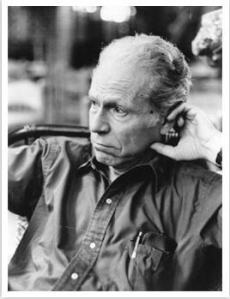 This paper published in 2004 by professor Ana Maria Bianchi of the Faculty of Economics of the University of São Paulo offers more in this series on the work and considerable contributions of the great economist and social scientist Albert Hirschman who died on Monday of this week in Princeton New Jersey. (Also see the earlier homage that appeared here "Earth, receive an honoured guest. In Memory of Albert O. Hirschman" at http://wp.me/psKUY-2DJ )
Thursday, December 13, 2012
My basic theory about 2013 is this.

My basic theory about 2013 is this:
If what we try to do in 2013 looks like something that we would have done back in the late years of the last century, it will not be good enough. That's the test I try to apply to my work every day.
Being different is not a guarantee of success. But NOT being different is a guarantee of sure failure. --> Read on:
Letter from Bangalore: The Derelict Mile
Sujaya Rathi reports from Bangalore: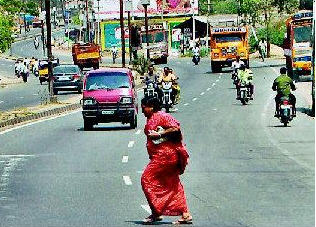 Private vehicles in India have seen an unprecedented growth in past two decades and there is no sign of slowing down. Many initiatives to curb the trend have not been successful. This article highlights an important aspect that attribute to the above unsustainable phenomenon, which has been ignored: "The Derelict Mile".
Wednesday, December 12, 2012
Earth, receive an honoured guest. In Memory of Albert O. Hirschman
Lyon. 12 December 2012. A personal tribute for my friends and family.
 The news came in the middle of the night in the cold winter of Lyon. My professor and life example Albert Hirschman has left us. And I am finally very glad, because those last few years of illness were far too harsh for any man or woman to bear.
I have a hard time in organizing my thoughts this cold morning, but two things I do know and would like to share with you. The first being that Albert Hirschman was a great man and a huge influence in the field that he had chosen for his own, economics in the broadest sweep of the term. And well beyond that. --> Read on:
Editorial: No FPT without SCR (Systematic Car Reductions)
This is a simple fact! Free Public Transport (FPT) has no possible justification whatsoever unless your governing officials are willing to do something about adjusting the modal mix and bringing down car ownership and use in the city strategically and as quickly as possible SCR - (Systematic Car Reductions).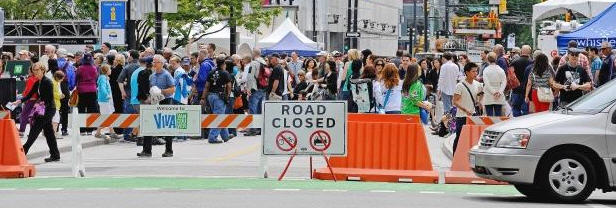
The tools for achieving these necessary adjustments in the modal split are well known, experience-proven and widely used in cities of all sizes in many parts of the world. There is no possible justification that competent public authorities not be aware of these proven tools and policies. They include most notably:
Heads-up: To avoid duplicate mailings from Facebook
Heads-up: To avoid duplicate mailings from Facebook
Dear Patient Reader,
 To avoid duplicate mailings from our various programs and fora, it may be useful to note the difference between our two main FB pages at (1) http://www.facebook.com/NewMobilityAgenda and (2) http://www.facebook.com/worldstreets. The former posts only information that appears in World Streets (http://worldstreets.org), while the latter includes all these but also contains other pieces, heads-up and observations from our vigilant editor.
--> Read on:
To avoid duplicate mailings from our various programs and fora, it may be useful to note the difference between our two main FB pages at (1) http://www.facebook.com/NewMobilityAgenda and (2) http://www.facebook.com/worldstreets. The former posts only information that appears in World Streets (http://worldstreets.org), while the latter includes all these but also contains other pieces, heads-up and observations from our vigilant editor.
--> Read on:
Tuesday, December 11, 2012
Op-Ed: The Story of UK Roads/Streets.
Op-Ed: The Story of UK Roads/Streets
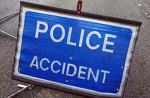 Poorly designed roundabouts - enabling even HGV's to travel around them at speed, the police thinking a cyclist could make a driver aware of "him" with a bell or a whistle...
- Police on bicycles without blue lights or sirens, chasing others through red lights... then stopping others for doing the same, who proceeded with caution,
- Advanced stop lines seem to provide little benefit, and may have been partly to blame for the death of Cynthia McVitty's daughter.
- Humans get territorial, and thus cycle lanes become hazards for cyclists when too narrow, and for pedestrians when they step onto them,
- Too many cyclists in the UK cycle at speeds inappropriate to the situation.

- Ian Perry. Cardiff, Wales, UK ianenvironmental@googlemail.com
--> Read on:Monday, December 10, 2012
Op-Ed: Awful Injustice in Parking
Op-Ed: Awful Injustice in Parking
Misguided parking policy is harmful and unjust.
No surprise there, you may say. There is no shortage of complaints about parking prices ("unfair!") and about how difficult it is to find parking. We hear the same thing all over the world, whether in Sydney, San Francisco, Singapore, Moscow, Delhi , Jakarta, Beijing, Sao Paolo, Lagos or Nairobi.
Sorry to be unsympathetic. But complaints like those are a problem. They are fuel for the never-ending push for more parking and cheaper parking.
So what? --> Read on:
Thursday, December 6, 2012
Civil Society and European Union Policy and Practice in the Field of Transportation
Look out. This time our friends over at the European Economic and Social  Committee (JDE62) in Brussels are doing a terrific thing. Tomorrow morning they open their doors for a one day conference and peer brainstorm on Civil Society and European Union Policy and Practice in the Field of Transportation (my title). As latest background information you will find here the final copy of their program and a list of their speakers, panelists, etc.
Cities of the Future: From Norway with love
Cities of the Future: From Norway with love
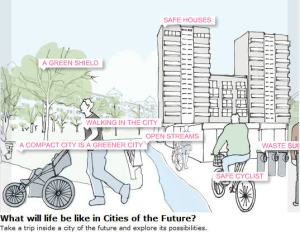 Cities of the Future are densely built. This means we can walk and cycle instead of using cars, reducing pollution. Fewer cars and roads make more room for bike paths and parks. This makes our cities prettier and makes us healthier. The parks will also help absorb the increasing rainfall expected in the future. Cities of the Future is a collaborative project between the Norwegian Government and the 13 largest cities in the country to reduce greenhouse gas emissions and make our cities better places to live.
--> Read on:
Cities of the Future are densely built. This means we can walk and cycle instead of using cars, reducing pollution. Fewer cars and roads make more room for bike paths and parks. This makes our cities prettier and makes us healthier. The parks will also help absorb the increasing rainfall expected in the future. Cities of the Future is a collaborative project between the Norwegian Government and the 13 largest cities in the country to reduce greenhouse gas emissions and make our cities better places to live.
--> Read on:
Tuesday, December 4, 2012
The crux of the problem with transportation is that . . .
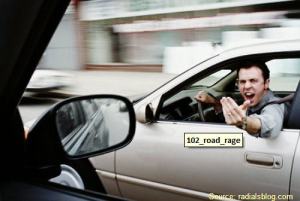
The crux of the problem with transportation is that . . . everyone wants the same thing at the same time, feels entitled to it and doesn’t want to pay more, or differently. And that's not all . .
Subscribe to:
Posts (Atom)


 Posts
Posts

