Challenging year ahead. Here are the main program areas to which we intend to give attention over the  course of the year ahead. All of these are complex system challenges and require patient attention and mental flexibility if we are to find the best way to proceed in each case. And in each case it is not enough to be right in terms of the basic principles -- it is every bit as important to be able to communicate them and to convince the public, government and other key actors that these ideas and approaches are worth getting behind. Nobody ever said that the move to sustainable transport and sustainable cities was going to be simple.
Showing posts with label free public transport. Show all posts
Showing posts with label free public transport. Show all posts
Thursday, March 27, 2014
2014: The Battle of Ideas


Thursday, March 20, 2014
Editorial: No FPT without SCR (Systematic Car Reductions)
This is a simple fact! Free Public Transport (FPT) has no possible justification whatsoever unless your governing officials are willing to do something about adjusting the other half of the modal mix to bring down car ownership and use in the city strategically and as quickly as possible . . . SCR - Systematic Car Reductions.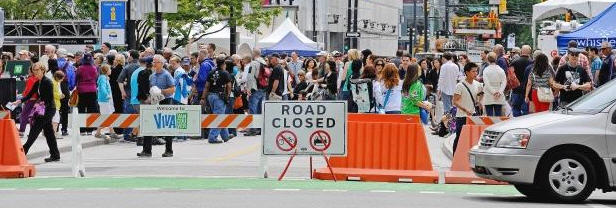
The tools for achieving these necessary adjustments in the modal split are well known, experience-proven and widely used in cities of all sizes in many parts of the world. There is no possible justification that competent public authorities not be aware of these proven tools and policies. They include most notably:
Wednesday, March 19, 2014
Letter from Stockholm: Public Transport is a Common Good
World Streets welcomes discussion of fare free  public transport because we believe that it is important to listen to alternative views from different organizations and countries in order to arrive at wise public policy. This contribution comes from one of the most active international groups pushing zero fair public transport, Planka.nu in Sweden.
Wednesday, March 5, 2014
Free-for-all: Organizations around the world suppprting free public transport
The following listing of organizations around the world that are "fighting for free public transport" has been compiled by the Swedish activist group Free Public Transport, whose aim is to provide a global forum for the free public transport movement. Their website among other things provides information about local organizations around the world fighting for free public transport, as well as cities which have already implemented it. For their latest listing, click to http://freepublictransports.com/organization/.
Monday, February 3, 2014
Zero Fare Public Transport in Tallinn shows a way
The topic of "free public transport" (FPT), or better yet "zero fair public transport" (ZFPT), is one that has gotten considerable attention here in World Streets over the last several years, on the grounds that it is an extremely rich concept which is worthy of careful attention. If at first humanistic and caring glance it appears to be a great and just concept, the fact is that like much of life it is more than a little complicated. Let us have a look at a recent article which first appeared in the pages of our sister publication Citiscope, which we reproduce here with their and the author's permission. ZFPT in Tallinn, an insider's view
Tuesday, July 16, 2013
Friday, January 25, 2013
Public transport riders wide open to infection by parasites and viruses
Just when we thought we were finally starting to figure out how to make a major shift to public transport, this troubling article shows up in the main paper in Tallinn Estonia, at the time of their introduction of a new program to create FFPT Fare Free Public Transport. Now someone has to figure out how to offer Germ Free Public Transport. GFPT. Quite seriously. Where do we start to work out way through this one? Have a look and tell us what you think about it.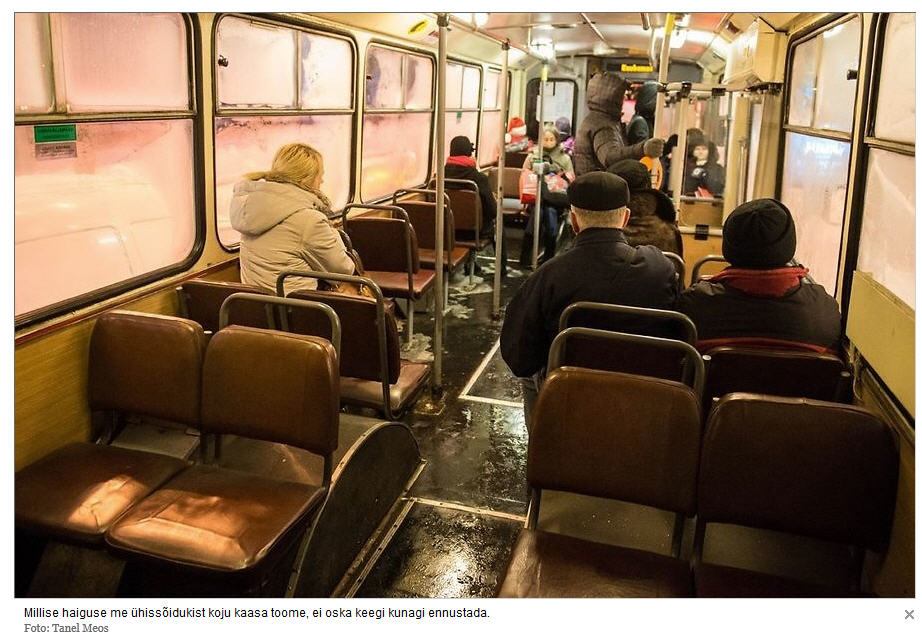
Monday, January 7, 2013
To support the Tallinn FTP project, World Streets readers comment on Free Public Transport
In June of 2012 your editor was invited by the mayors of Tallinn to give a public talk 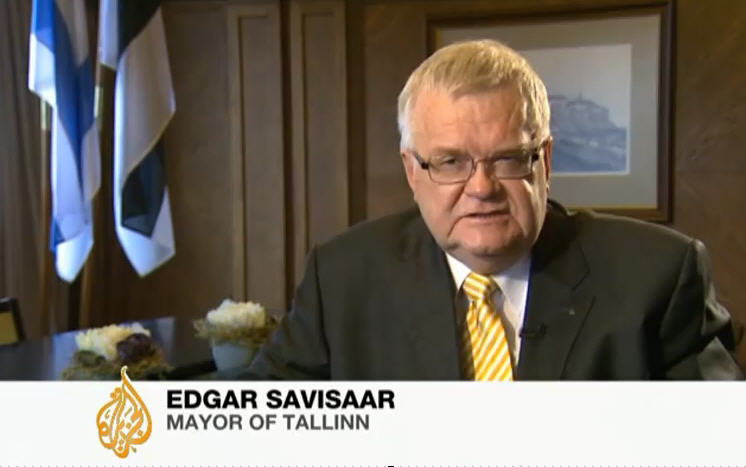 to comment on how some of the policy concepts developed over the last two decades under the New Mobility Consult program might be put to work to support their decision to take new approaches to transport policy challenges starting in 2013. Subsequent to that visit we signed with the City of Tallinn a public agreement of strategic cooperation over 2013.
The first transformative event they were considering for 2013 was the first-ever Free Public Transport project in a European capital. After careful planning their project went into service on 1 January. In the run-up to this important event World Streets in cooperation with our readers has been developing and drawing to the city's attention a broad repertory of expert comments on FPT, all of which you can see at http://worldstreets.wordpress.com/category/free-public-transport/. We invited contributing editor Anzir Boodoo to read through the various comments and see if he could put them in some kind of order for our busy readers in a single article, which you can now read here.
Wednesday, December 12, 2012
Editorial: No FPT without SCR (Systematic Car Reductions)
This is a simple fact! Free Public Transport (FPT) has no possible justification whatsoever unless your governing officials are willing to do something about adjusting the modal mix and bringing down car ownership and use in the city strategically and as quickly as possible SCR - (Systematic Car Reductions).
The tools for achieving these necessary adjustments in the modal split are well known, experience-proven and widely used in cities of all sizes in many parts of the world. There is no possible justification that competent public authorities not be aware of these proven tools and policies. They include most notably:
Monday, November 26, 2012
What is the right price for Free Public Transport?
 No Dorothy, it would be nice but there is no such thing as a free lunch. Not even in Kansas. Our cities need money to operate and maintain all the many parts of their hopefully high quality "public transport" systems", but they also need schools, sanitation, health facilities, elderly care, parks and public spaces, security . . . and the long list goes on. Transport, which can finance itself largely if you have the brains to get it right, should not be poaching from these no-less critical basic needs of the community. More, we need our public transport systems (21st century definitions) to be both freely and extensively used (what is sadder than an empty bus!) -- and at the same time build in provisions so that the system is fully equitable as well as efficient.
Friday, November 23, 2012
Learning from Lyon: Free Public Transport that really works
Here is a "free transport project" that is working remarkably well: In the Spring of 2005 the community of Greater Lyon in cooperation with their supplier  JCDecaux launched the world's first mega Public Bike System, Vélo'v. The project put some 3000 bikes into service, available in about 300 stations spread for the most part over the City of Lyon. All this is successful, amply detailed in many places and continues to this day to yield yeoman service for some 60,000 registered users (including the author). To gain access to the system, in addition to one day or one week tickets, the user pays an annual fee of € 25, and when using a bike a caution is debited from the users credit card until it is returned to a parking slot. From a user perspective it is a very successful system and use experience.
* But where is the "free public transport" element?
Thursday, November 22, 2012
Free Public Transport! (But hey, are we talking about the same thing?)
On 22 June 2010 we posted in these pages an invitation to an open thinking exercise welcoming comments and views on the topic of "Free Public Transport".  Two weeks later to get the ball rolling we followed up with a first article setting out some basic principles under the title "Why Free Public Transport is perhaps a bad idea". That posting has been among the more widely read here; as of this morning having been accessed 4,503 times. Beyond that it opened up a small Tsunami of comments, reactions and clarifications, a number of which of high interest and thoughtfulness.
But here is the joker: Judging from the responses and conversations that followed it was clear that almost everybody was reading the word "Free" in that phrase as an adjective. But that is not quite what we had in mind. Rather it was part of what we wanted to have views on, but only part of it.
Tuesday, November 20, 2012
Some Early References on Free Public Transport
 This list is taken from the 2010 posting provided by the Free public transportation Debate at http://debatepedia.idebate.org/en/index.php/Debate:_Free_public_transportation. It needs to be updated but still is a useful point of reference, along with the latest Wikipedia entry at Free Public Transport. Please send us your updates either as Comments here, or to editor@worldstreets.org. Thank you.
Friday, July 9, 2010
Why Free Public Transport is a bad idea?!? (v. 1.1)
There are a number of proponents around the world for the idea that public transport should be free. And if we here at World Streets have some thoughts of our own on  the subject, we also think it is always very important to check out both sides of the issues. Just below, you will find four short statements setting out arguments against FPT, and we are interested in hearing from our readers and colleagues around the world both (a) their comments on these criticisms and (b) yet other critical views. In later issues we will look at this from more positive sides, but with the intention of developing a range of views and recommendations on this important topic. Today however, we want to hear from you about the downside. Let's have a look at what we have thus far (and please do take the time to review the comments just below which enrich this first draft considerably):
(You will find extensive comments and additional information on this article at http://worldstreets.wordpress.com/2010/07/07/why-free-public-transport-is-a-bad-idea/#comments)
The fact that most public transport is not "zero-fare" is evidence that there are arguments against this policy option. Some of these arguments include:
1. Fairness. Some people's transport needs may not be well-served by the public transport network, and yet they (as tax-payers) are forced to contribute to the cost of the service. At least in ideal economic models, user-pays systems lead to the most efficient allocation of scarce resources. Could the cost of paying for the public transport be better spent elsewhere?
2. Financial sustainability. Any extension or improvement to the public transport service must be fully funded from the public purse: being free, it cannot recover part of its cost from increased farebox revenue. As patronage on the system increases, so does the cost of provision. This may create resistance to measures to improve public transport or promote public transport use.
3. Crowding. Fares can be used to moderate demand. If cheaper fares are available off-peak, then people with more flexibility have an incentive to travel at off-peak times. This results in more effective use of limited resources. (Demand management is also used in telecommunications and energy markets.) It could be anticipated that a free service would be particularly crowded at peak times.
4. Impact on car industry. Greater public transport means that people use fewer cars; as a result, car manufacturers and service providers (e.g. mechanics, gas stations, etc.) can go out of business.
Source of the four above comments: http://en.wikipedia.org/wiki/Free_public_transport
# # #
Thank you for pitching in on this side of the debate. Of course we are also interested to hear from you with other comments and suggestions on this important transport policy issue. (See http://worldstreets.wordpress.com/2010/06/22/should-public-transport-be-free-stay-tuned/ for an earlier World Streets article on this topic. Also: http://worldstreets.wordpress.com/category/free-public-transport/) --> Read on:
Thursday, June 24, 2010
Should public transport be free? Ver. 1.0
World Streets is pleased to announce publication in the weeks ahead of a  series of articles and other media to investigate this idea in-depth in these pages. We would ask our readers to bear in mind that there is a great deal more to this idea, approach than may at first meet the eye. So let's see what we get when we stretch our minds together on this perhaps surprisingly important and practical concept.
If you have any thoughts on this we invite you to get in touch via email - editor@worldstreets.org, Skype: newmobility, Tel. +331 7550 3788. For some background on how we organise articles for publication, we invite you to have a look at http://worldstreets.wordpress.com/about/editorial-team/editorial-guidelines-2/.
We look forward to the discussions and your contributions with genuine interest.
Subscribe to:
Posts (Atom)


 Posts
Posts

