This is a simple fact! Free Public Transport (FPT) has no possible justification whatsoever unless your governing officials are willing to do something about adjusting the other half of the modal mix to bring down car ownership and use in the city strategically and as quickly as possible . . . SCR - Systematic Car Reductions.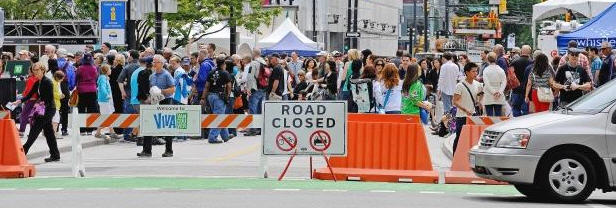
The tools for achieving these necessary adjustments in the modal split are well known, experience-proven and widely used in cities of all sizes in many parts of the world. There is no possible justification that competent public authorities not be aware of these proven tools and policies. They include most notably:
Showing posts with label Open Systems. Show all posts
Showing posts with label Open Systems. Show all posts
Thursday, March 20, 2014
Editorial: No FPT without SCR (Systematic Car Reductions)


Monday, May 6, 2013
Due to lose? Well maybe not quite yet.
An article of April 26, 2013," The Race of Our Lives"(GMO) by Jeremy  Grantham, is a worthwhile read on your Tablet. Click here for article.) . In part because his basic thesis is that the white horse of hope for the future of our endangered species and planet just might turn out to be the triple whammy of (a) serious autopilot demographic downsizing, (b) deus ex machina help from our extended 21st century brains (think internet and/or Zetabytes) and (c) the bountiful near-term harvest of renewable energy. It's a pretty good read for your spare time.
Thursday, March 14, 2013
What is an Equity-Based Transport System ?
 We understand that in the transport sector this is not a well-known nor much appreciated concept, at least in the positive sense we are trying to develop here. So we are making every effort to share broadly, to invite questions and to clarify. In this spirit I was discussing this program the other day with a bright young woman from the Emirates who is on an MBA program here, who smiled at me indulgently as I asked her views and said: ‘Don’t you understand Eric, life is not fair”. That gives us, I would say, a good point of departure.
Wednesday, January 30, 2013
SEARCH FOR A CITIZEN APP: "CLICK-TO-FIX"
 For my colleagues in the city of Lyon, I am trying to give them a reference for an app which permits citizens to identify and report on problems on the streets in very specific and convenient ways. Here is how it might/should work:
Sunday, December 30, 2012
Zetabytes, Open Systems and Worrying about Equity
Zetabytes, Open Systems and Worrying about Equity
This is the first in a series on big data and its impact on society from CSPO co-
 director Daniel Sarewitz, published in Slate on 27 Dec. 2012. It also appears on As We Now Think, a site edited by the Consortium for Science, Policy, and Outcomes at Arizona State University. ASU is a partner in Future Tense with Slate and the New America Foundation.
We share this with our readers with one eye to our on-going Zetabytes/Open Systems series that will be getting close attention in the year ahead -- with the other eye to our Equity-Based Transport series, also to continue full speed ahead in 2013.
--> Read on:
Wednesday, December 12, 2012
Editorial: No FPT without SCR (Systematic Car Reductions)
This is a simple fact! Free Public Transport (FPT) has no possible justification whatsoever unless your governing officials are willing to do something about adjusting the modal mix and bringing down car ownership and use in the city strategically and as quickly as possible SCR - (Systematic Car Reductions).
The tools for achieving these necessary adjustments in the modal split are well known, experience-proven and widely used in cities of all sizes in many parts of the world. There is no possible justification that competent public authorities not be aware of these proven tools and policies. They include most notably:
Tuesday, December 4, 2012
The crux of the problem with transportation is that . . .
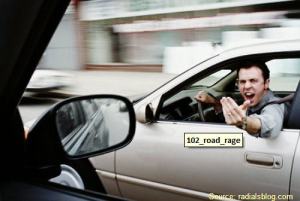
The crux of the problem with transportation is that . . . everyone wants the same thing at the same time, feels entitled to it and doesn’t want to pay more, or differently. And that's not all . .
Wednesday, November 7, 2012
Achieving the goals of the EC White Paper on Transport: How civil society can help with delivery
The European Economic and Social Committee is organizing a conference on  "Achieving the goals of the White Paper on Transport: how civil society can help with delivery". This one day conference will take place at the Committee's premises on 7 December. The principal document under discussion is entitled "Roadmap to a Single European Transport Area - Towards a competitive and resource-efficient transport system". It is available here . We are inviting comments on this document since it is at the core of the meeting. But first some background:
Saturday, September 8, 2012
Thinking about Equity-Based Transport Systems: Get Ready to Embrace Complexity (or Get Off the Bridge)
As is or at least should by now be well known, a transportation "system" is well more than a collection of largely free-standing bits of infrastructure, modes, links, agencies, institutions, operators and more, concerning which decision scan be taken on a piecemeal basis. . It is in fact a textbook example of a disorganized complex system, or more specifically a vast, chaotic but ultimately manageable ecosystem. And if it is our ambition -- which it should be -- to construct, or rather reconstruct, our city transport systems into functional high-performing sustainable ecosystems. it can help to build up our understanding of the process in steps.
--> Read on:Sunday, July 1, 2012
Transportation Innovation and Reform: Finding the Way to Social Sustainability
As wise and balanced a summary as you will find of the fine art of dialogue and  engagement when it comes to the hard job of developing and integrating new transport arrangements into a space as varied and in many ways contradictory and conflicted as a 21st century city, in any part of the world. Bravo! With kind thanks to Christopher Zegras of MIT’s Department of Urban Studies and Planning, one of the conveners of this event, for sharing this with our readers. (You may also wish to check out the short note of conclusion of the editor.)
--> Read on:
Monday, June 18, 2012
Hacking Sustainability: Part 2
Information + Choice + Feedback: The basic idea is familiar: i.e., putting that smart phone in our pocket to work to help us calibrate and understand a range of inter-connected variables related to our mobility choices. An app to handle not one but two sets of related challenges: personal and environmental.
Saturday, March 17, 2012
Late Night Thoughts on Equity from Helsinki
 Equity? Hmm. This, it turns out on inspection, is not quite so easy a concept to get across. In English, and after two days of discussions with a wide variety of groups and people here in Helsinki, it's already tough enough. And I have learned, it's even more challenging in Finnish. Here are some late night thoughts on this word that I share with you here in the hope that it may inspire comments and clarification. So here you have my notes, more or less in the order that they came to mind late in the night.
Tuesday, March 13, 2012
Crowdsourcing Equity/Transport/ Helsinki
 What are, say, the five questions concerning transport and equity (and Helsinki) that you would like to have me ask in your behalf in Helsinki starting tomorrow in our first Stakeholder/Peer Group Dialogues? Maybe easiest if you might give me your list via eric.britton@ecoplan.org
Equity/Transport 2012: Road map for Helsinki Stage 1
This collaborative project takes the form of an "open conversation" looking into 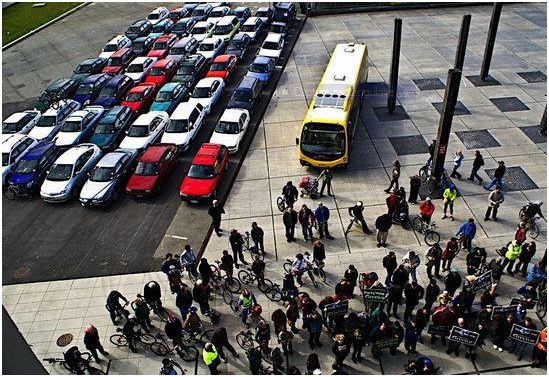 the pros and cons, the possibilities, barriers and perhaps eventual impossibilities, of creating an equity-based transportation system at the level of a city and its surrounding region. This first pioneering project, in what we hope will become a series of leading world city projects building on this first example, is being carried out under the leadership of the Helsinki Department of City Planning and Transportation, and is taking place over the period mid-February through mid-April 2912. (You will find further working papers and supporting media sources in the second half of this introduction.)
Thursday, March 1, 2012
Helsinki Equity/Transport project kicks-off today
 Today is the opening day of the 2012 Helsinki Equity-Based Transportation peer review program, the first in what we hope will become a growing thread of cooperating city projects querying the impact of first reviewing and eventually restructuring our city and regional transportation systems around the fundamental core principle of equity. You will find details on the EBT site at http://equitytransport.wordpress.com/ starting at noon today.
Wednesday, February 22, 2012
Equity-based Educational Reform in Finland
In the Helsinki stage of our on-going Equity/Transport program and process, it is particularly important that we have and share a clear understanding of the  manner in which the equity-base education reform process has transformed Finland's schools over the last decades from middling to world level (See OECD PISA results for verification). To this end we are gathering and presenting here a selection of reports and articles that help us in this respect. The following report was prepared by Mrs. Lorraine Frassinelli Ell in 2006, and while six years have intervened since she completed it, the paper still provides a good synopsis and expert outsider view of the Finnish experience from someone working internationally in the field of educational reform and measurement.
Friday, January 27, 2012
Getting outside that box (which may require being just a bit unreasonable)
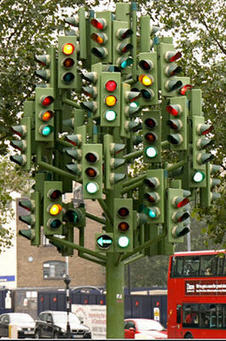 Once we are cozily set up in our box -- a box of course that we can neither see nor really appreciate (What box?) -- we become accustomed to thinking of things comfortably wedged within our invisible container as "that's the way things are". And from there it is a very small step to become a pragmatically "reasonable person". To which I can only quote Bernard Shaw when he said so long ago (with social justice and the emancipation of women firmly in the middle of his sites): The reasonable man adapts himself to the world; the unreasonable one persists in trying to adapt the world to himself. Therefore all progress depends on the unreasonable man. Let's see if Preston Schiller can help us to get outside the box of the automobile.
Friday, January 20, 2012
Safer Streets LA - Wrap a couple of spare neurons around this one
 From the 2012 Safe Streets Challenge project:
If you are (a) into safer streets and (b) ready to dig in to understand that things out there are not necessarily what one might necessarily think, may we suggest that you check out here this slightly counterintuitive piece that was posted this morning in our parallel Safe Streets project.
Wednesday, January 18, 2012
Op-Ed: What/who keeps holding back New Mobility reform?
 If you get it, New Mobility is a no-brainer. However, while the New Mobility Agenda is a great starting place, it is not going to get the job somehow miraculously done just because it is the only game in town when it comes to sustainable transport. There is plenty of competition for all that space on the street and between the ears. We have a few potential sticking points here that need to be overcome first. Let's have a quick look to get this exchange off the ground. After some years of talking with cities, and working and observing in many different circumstances, here is my personal shortlist of the barriers are most frequently encountered in trying to get innovative transportation reform programs off the ground, including even in cities that really do need a major mobility overhaul.
Thursday, November 17, 2011
More on public, private and social space. Andrew Curry reports from occupied London - Part II
Hopefully we have learned at least one hard lesson of life, and that is that a crisis is a terrible thing to waste. And here right before our eyes we have a case in point with the  Occupy movements that are sweeping Europe and North America, a public crisis that is most unexpectedly taking place on "public land". And then suddenly, with no advance notice, everything starts to morph and the issues involved start to encompass not only the continuing unchecked egregious abuses of the financial community but also important (for democracy) issues of public space -- one of our consistent concerns here at World Streets. So in an effort to make sure that we do not miss the opportunity behind this crisis, we pass the word back to Andrew Curry so that he can build further on his article under this title earlier this week
Subscribe to:
Posts (Atom)


 Posts
Posts

