World Streets has four main functions: (a) It is a specialized daily journal. (b) A collaborative international network. (c) An in-depth international resource.  And finally (d) an active lobby for sustainable transportation, sustainable cities and sustainable lives, supporting projects and programs all over the world. Here we introduce the resource/research function which, as you will see, provides exceptionally deep and broad coverage of the sector from a truly international perspective.
Please start here:
We cordially invite you to give this a careful read the first time you come to this site, because this is your key to getting full value from this carefully constructed toolset.
The resource base and toolset introduced here has been specifically pieced together with our readers and their needs in mind. Our readers come from many different parts of the world, with often very different cultures and historical endowments, and levels of available resources for dealing with all these issues that vary hugely. What they have in common is that overwhelmingly they either work with cities or public agencies concerned with matters of transportation, environment, city development, land use, public health, etc., or are activists or researchers, professors or students, operators or regulators, consultants or concerned citizens. Or are representatives of the media, new and old.
These are the kinds of people and institutions who we have set out to serve.
How to make best use of the site and toolset:
The blog itself is divided into two main sections. The one that most people are immediately aware of and turn their eye to is the larger central column which presents the main content of the daily newspaper. That is our intention.
However, day after day, month after month the sheer quantity of articles and commentaries that appear here tend to gradually enter into something which is analogous to a close drawer on your desk. It is there, it is maybe important for you at some point, but how to get at it when you need it? That is the second part of our challenge.
So to this end, we will focus here entirely on the smaller column just to your left here, the "rest of the iceberg" if you will. This turns out to be a bit more complicated and is worth introducing carefully so that you can get best use of it. We are confident that the time you invest to familiarize yourself initially with this extensive tool set will be well compensated.
Let us start by simply listing the main headings/categories. that constitute the resource base. And then once you have a quick look at the overall collection we can then examine each in turn and in more detail.
Here is the overall listing as it stands at this date:
1. First time visitor ABC's
2. World Streets in World Languages
3. Search World Streets: 2009/2010
4. The latest from World Streets
5. Featured series for (month)
6. Featured video clips for (month)
7. Latest news from the world's streets (Headlines and links)
8. Editorial/volunteer team
9. New Mobility building blocks
10. Subscribe, support World Streets 2010
11. Free daily delivery: RSS
12. New Mobility combined search engine
13. World Streets weekly archives
14. Search all key sources (See below)s
15. Key sources, links, and blogs
16. World Streets sentinels
17. World Streets correspondents
18. In Memoriam
19. They are talking about . . .
20. (Some draft sections)
Now going into more detail:
It is our hope that the entire process will be sufficiently well labeled and logical that most of our readers will simply be able to click through them to see where they lead. But we thought it might be useful as well if we supply some more detailed indications, which is what we shall now do, taking each in the indicated order.
1. FIRST TIME VISITOR ABC'S - This important introductory section is divided in turn into five parts:A. Start here / The Brief- This 4 page/4 minute introduction is proposed is must reading if the readers to understand fundamentally what this initiative is all about. It is a fast read, quickly setting out the main defining points and characteristics of World Streets, and the New Mobility Agenda just behind it.
B. New Mobility / The Strategy -- Plan A: Goals, strategy, building blocks. Once again we propose this as an essential read for the first time reader, since it sets out the basic issues and political philosophy that underlie entire approach and selection of the journal. This is not just any collection of "interesting articles" that involve issues of transport in and around cities. It is about sustainable transportation quite strictly defined. Please read.
C. World Streets / The Resource (this page)
D. Expert views / The reaction -- 101 readers report their critical views on World Streets. Replaces here because we believe it provides important perspective from readers with high expertise in many areas and for many parts of the world. As editors we can tell you how good we think we are all day long, but these words from entirely independent people provide you with something you can count on.
E. Implementation / Now what: -- contribute, subscribe, support, get involved in making World Streets of success. This is for us an extremely important section, though life being what it is and timing as short as it is, we have to keep in mind that many readers will be too busy to give this their attention. We hope you will, because your collaboration is part of what is needed to make this collaborative venture work. Thanks for taking the time to read this.

2. WORLD STREETS IN WORLD LANGUAGES
This is tricky, but very important. It is easy to have prejudices on this in terms of the violence of the translations can do to your language; but be patient, there is more to it than that. There is a language reality out there of which many people working in the field internationally are not necessarily aware. And that is that the bulk of the people on this planet who are involved in transportation policy and practice in any given place where English is not the primary language, simply do not have the time to devote to reading articles, even summaries of articles, that are in something other than their main working language. That is a reality. But since World Streets has the pretension of being a truly worldwide cross-cultural source, we have tried to figure out how to make some kind of inroads into this seemingly intractable problem. With that in mind and making use of this borrowed toolset, from our very first day of publication we have tried to take advantage of best available technology in order to provide workable translations for the roughly 6,000,000,000 people on this planet for whom English is not their main working language. For more on this, have a look at http://tinyurl.com/ws-languages .
3. SEARCH WORLD STREETS: 2009/2010
Remember our analogy that the past content of World streets runs the risk of being equivalents of potentially interesting papers and reports that are caught in a closed-door of your desk? As an example as of March 2010 have been more than 500 articles and commentaries published in the course of the first year. But these are not just articles were given day, but potential resources. This search function scans via your selection of keywords the entire contents of World Streets from its inception. The same familiar approach as for Google. Try when you need it and we think you will not be disappointed. (In other parts of this resource section you will see additional Combined Search Engines which we have created to scan the contents of hundreds of related sources worldwide. You will see more on that below.)
4. THE LATEST FROM WORLD STREETS .
This tool sets out two searches, the first of which calls up the latest articles appearing in the journal with the most recent up top, while the second is the same for your comments.
5. FEATURED SERIES FOR (MONTH)
The items under this heading vary from month to month depending on the goals and orientation of the overall program in that period. In all cases however they are standardized to the extent that the first item calls up the World Streets Monthly Report for the last full month, while the last item -- Check out (month's) featured clips -- provides an introduction to the selected video clips for the month, which appear immediately below and are directly clickable.
6. FEATURED VIDEO CLIPS FOR (MONTH)
because we live in a multimedia world, and because in order to advance the sustainable transportation agenda we have to take advantage of every tool at our disposal, this section presents each month a selection of short videos which we propose for viewing, perhaps during your coffee break. As you can imagine, we give careful thought to the selection.
7. LATEST NEWS FROM THE WORLD'S STREETS (HEADLINES AND LINKS
In the big and varied world in which we live the concept of creative linking is a very important one. On the other hand we must be extremely careful since, given the enormous wealth and great facility of making these contacts, you can always end up connecting to everything, and then at the end of the day have no time to do your own work. So in this case what we decided to do is to select a total of a dozen sources of news, generating for the most part daily news, which treat in various ways the main issues to which World Streets is dedicated. (Not necessarily reflecting our views and priorities but working energetically to make these issues and trade-offs better known.
The idea is that our readers will be able to run down that list in a minute or two, and then if they spot something that appears to be possibly relevant for their work, all they have to do is click to it and the original source will be at their service. And if you wish to see more from that source, you can also find them listed in the "Key Sources" section just below. There is considerable variety in the range and tgype of sources selected here, but that is as it must be in a world in which issues are complex and the answers are sure to be surprising. Let us use our peripheral vision to make sure we are not missing anything important.
8. EDITORIAL/VOLUNTEER TEAM
This short section introduces the team of volunteers who are cooperating to lead and support this independent and until now largely unfunded effort in support of sustainable transport worldwide. The second part of this listing provides information such as guidelines for contributors, comments on fair use, and a rough shopping list setting out some of the technical and other innovations and competences that we would hope to build and program without too much delay.
9. NEW MOBILITY BUILDING BLOCKS
-> Marquee: This running display has been set up in order to give someone who is sufficiently curious a review of the way that we view the main components and delivery modes that together constitute the New Mobility Agenda. Admittedly it is almost impossible to read in its present form, but the content is important and will be the subject of articles and clarification in the near future. The bottom line point is this: the future of transport and cities is not a question of cars used in the old way and/or public transit is delivered in the old way. There is a lot more to it than that, which indeed is what World Streets is all about. To continue.
-> Behind World Streets: the New Mobility Agenda: world streets is basically the unified publishing arm of the New Mobility Agenda, whose numerous programs, libraries, message services, and links feed into the Journal and provide it with much of its backing and content.
-> Knoogle search > 800 selected world sources: Knoogle is the Combined Search Engine and specialized knowledge browser that we initiated in 2008 and have subsequently continued to develop it into a search tool which provides access to a very large number of carefully selected sources dealing with sustainable transportation and sustainable cities worldwide.
-> Meet the World Streets Sentinels: The "sentinels" are colleagues working in this field around the world who have agreed to share with us their findings and observations within their cities and countries. (This program is and will continue to be under development.)
-> Read Nuova Mobilità: Nuova Mobilità is our sister publication, the first in what we hope will develop into a series of affiliated projects aiming to provide useful materials on our topic to professionals and others working in that country and language group. The site is in Italian, however on the upper left you will see there is the possibility of into English or other language of your choice. We invite you to drop in and have a look from time to time to see how our Italian sisters and brothers look at the challenges of sustainable transportation.
10. SUBSCRIBE, SUPPORT WORLD STREETS 2010
This section invites our readers to be part of the solution and to join in to support this collaborative program through financial contributions, their willingness to work with us to find sponsors, their availability for writing articles and other forms of technical support, and in general joining in this international collaborative effort. The very important part of this concerns are invitation for readers who share our values to set forth in order to work with us as ambassadors in order to help us intensify and contact organizations known to them, and in particular within their own countries, for future collaboration and exchange.
11. FREE DAILY DELIVERY: RSS
One click access to setting up your preferred RSS feeds for both articles and comments.
12. NEW MOBILITY COMBINED SEARCH ENGINE
Just before we get to the Journal's archives, which organized by week and year, we thought it would be useful to place another search engine which gives the reader the choice of looking through those archives directory, clicking on yet more general look through the very large number of sources that are covered by our Knoogle knowledge browser. Or more generally the full Web.
13. WORLD STREETS WEEKLY ARCHIVES
Every week somewhere between five and seven new articles are posted, and these archives are intended to be handy to check out daily postings going all the way back to the first edition in March 2009. In most cases when one is referencing anything more than a week or two back, unless you know the approximate date, probably the best way to locate the items you are looking for is via the preceding search engine. Another excellent possibility is to use the key word items that are associated with each article.
14. SEARCH ALL KEY SOURCES (SEE LISTING JUST BELOW)
Yet another search engine, this time aiming at the more than 200 carefully selected sources that are listed just below. So put in other words, if you are curious as to what this collection of outstanding sources as to say on any given subject, you have a very simple tool here in order to carry out your research.
15. KEY SOURCES, LINKS, AND BLOGS
This is a potential gold mine for researchers. We give great importance to this collection of sources and are continuously soliciting our readers to review them and suggest further additions, or if they feel the source is not up to the standard to be dropped from the listing. At the time this page was prepared there were some 204 sources identified on that list, all available with a single click. And all fully searchable through the preceding customized search engine.
16. WORLD STREETS SENTINELS
This world map identifies the first one hundred-plus people working in more than forty countries on all continents who have stepped forward with offers to share with all interested latest information and clues from their cities, good news and bad news that has perhaps lessons for others. This listing is continually in process, and recommendations for qualified people are much appreciated. (For more, click here - http://newmobilityagenda.blogspot.com/2009/03/world-streets-correspondents.html )
17. WORLD STREETS CORRESPONDENTS
List of some of the people reporting on projects, problems, etc. in their cities in different parts of the world. (Ever in process)
18. IN MEMORIUM
If you are familiar with the work of these pioneering figures, you will understand why we are here and working to build on the foundation they have so generously given us.
19. THEY ARE TALKING ABOUT . . .
this is not a particularly sophisticated collection of links, but we at least find some use in reviewing them from time to time to get a better feel for the extent to which World streets, Nuova Mobilità and the New Mobility Agenda are being referenced or in the news.
20. TABLE OF CONTENTS (working draft)
This is at this point a catch-all with ideas for bits and pieces to be integrated, perhaps, into the resource base at an appropriate time
# # #
Dear reader.
I have to admit it. This has been a long slog, for us to write and you to read. But that is exactly what sustainability is all about: new mental architecture, carefully thought-out philosophy, breadth of vision, consistent criteria, great energy, unremitting discipline, deep collaboration, and an ability to hang in there for the long slog. This is not a job for lazy people. :-)
Eric Britton
Editor, World Streets
Tuesday, March 16, 2010
World Streets / The Resource Base


Monday, March 15, 2010
Il bike sharing in Italia: un'istantanea del 2010.
(This is a W/S language laboratory experiment)
You may have noticed that the first half of the title of this journal is the word "World", and that to us carries a real obligation. If we bear in mind that 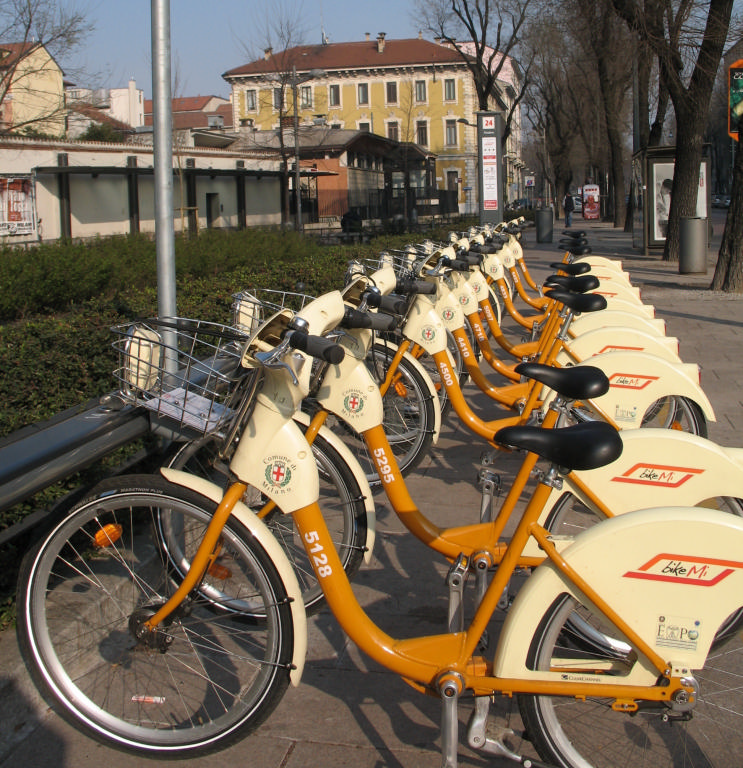
Figure out with a little help from our friends, fortunately, in this case Google Translate. So this first "language lab" experiment will be in cooperation with our excellent Italian sister publication Nuova Mobilità, from whom we have selected a recent article that we know will be of interest to many of our readers -- and then to turn it over to you so that, if you wish, the full text will be accessible to you in an operational if not quite Shakespearian English (or more than a dozen other languages of your choice), with a single click. And oh yes, the topic is our report on bicycle sharing in Italy. But of course you already figured that one out.
And once you have an opportunity to review both the substance of the article and to organize your thoughts as to the usefulness of this kind of translation, it would be great to hear from you. This you can do either by posting your comments to the editor at editor@Worldstreets.org or alternatively clicking the Comment button at the end of this article to post them directly here.
- - > Now all you have to do is to click here for full text of the article in English.[Not happy with the quality of the language as it appears? Two quick points then if I may: First, may I suggest that you think of this as an opportunity to learn from a person who is highly knowledgeable on the subject but who does not fully master your language? Would you still wish to listen to such a person on that subject? Second, let's not forget that this is still work in progress, and if you had been following it for the last few years you would note enormous, steady improvement. So stay tuned, it will get steadily better and your patience will be rewarded. But at the end of the day, it's your choice.
Note: The Google Translate tool in the top left column for now works only to translate our articles from English to the other indicated languages. ]
# # # Da Giorgio Ceccarelli riceviamo questo interessante report sul bike sharing in Italia: molte cose sembrano essersi mosse negli ultimi anni e molto resta ancora da fare per raggiungere una qualità di servizio paragonabile a quella di altri paesi europei. Le difficoltà che incontrano i servizi di biciclette pubbliche in Italia sono conseguenti anche alle particolari caratteristiche demografiche del nostro paese, oltre che alla mancanza di scelte politiche coerenti.
Giorgio Ceccarelli
Attualmente in Italia sono attivi circa 130 sistemi di bike sharing con una prevalenza nei Comuni del Nord e del Centro rispetto al Sud.In particolare le regioni in cui si rileva una maggiore presenza del bike sharing sono:
Emilia Romagna (19) – Piemonte (16) – Veneto (15) – Lombardia (13). Seguono Marche, Puglia, Liguria e tutte le altre regioni, escluse Campania, Calabria e Basilicata.
(fonte: relazione dell’Ing. Lorenzo Bertuccio al Congresso del Club delle Città per il Bike Sharing – Milano, ottobre 2009)
Questa quantificazione tiene conto soltanto dei sistemi di bike sharing evoluti (che possono essere definiti di terza generazione) e non considera i casi del tutto riconducibili al tradizionale noleggio, quale è ad esempio quello di Bolzano.
A loro volta questi 130 sistemi possono essere suddivisi in due tipologie:
Nel primo caso l’utilizzatore deve acquisire tramite uno sportello una chiave che inserita nel posteggio libera la bici e lo identifica; la bici dovrà essere riconsegnata, senza particolari limiti di orario, nello stesso stallo per poter ritirare la chiave.
I sistemi a chiave sono in genere gratuiti e permettono l’utilizzo delle bici in città diverse con la stessa chiave.
I sistemi a scheda magnetica invece permettono la riconsegna in un qualunque altro posteggio e soprattutto permettono, mediante la regolazione tariffaria, di incentivare l’uso della bici per un breve periodo, in modo da riconsegnarla e permetterne l’utilizzo ad un altro utente: quindi poche bici per tante persone.
I sistemi a scheda magnetica inoltre hanno la possibilità di registrazioni tramite internet e di pagamento tramite carta di credito o telefoni portatili; sono inoltre i sistemi che, come vedremo, aprono le nuove prospettive dell’integrazione tariffaria tra i vari sistemi di trasporto.
In tutti i Comuni che utilizzano la scheda magnetica, esclusa Roma, la tariffa prevede la prima mezz’ora di utilizzo gratuito, con le successive ore a pagamento via via aumentato, fino a prevedere dei veri e propri blocchi dell’abbonamento se si superano le quattro ore di utilizzo, come è previsto ad esempio a Milano
L’utilizzo dell’una o dell’altra tipologia di bike sharing in Italia dipende in pratica dalla divisione del mercato tra due sole aziende fornitrici:
Su circa 130 sistemi attivi ad oggi 2/3 sono chiave e 1/3 a scheda, con una distribuzione territoriale molto legata alla localizzazione d’origine e alla conseguente penetrazione commerciale delle due aziende fornitrici.
C’entro in bici che ha sede a Ravenna è prevalente nelle zone dell’Emilia e del Veneto, mentre Bicincittà è di Torino e ha la prevalenza nel Nord Ovest; Bicincittà è inoltre presente anche sul mercato internazionale con i sistemi di Pamplona e Losanna.
Questa forma di duopolio legato a una partizione territoriale tra sistemi tecnicamente diversi è sintomo di come il bike sharing in Italia sia ancora giovane e debba ancora evolvere verso una molteplicità di offerta caratteristica di un mercato più maturo.
Unica eccezione a questa partizione rigida del mercato fra due aziende, ciascuna con la propria differente tecnologia, è rappresentata dal Comune di Milano, che utilizza il sistema sviluppato dalla società americana Clear Channel.
Milano è attualmente il sistema italiano di maggiori dimensioni: denominato BIKEMI, è stato inaugurato nel Novembre 2008, prevede 1.300 bici distribuite su circa 100 stazioni ed è economicamente basato sul sistema di concessione di spazi pubblicitari in cambio dell’attivazione e gestione del servizio da parte di Clear Channel.
Dato il successo registrato da BIKEMI, che ha quasi raggiunto il livello di saturazione rispetto agli utenti previsti, è in progetto la sua estensione fuori dalla Cerchia dei Bastioni, arrivando a toccare nodi ferro viari periferici e poli universita ri: in totale 170 nuove stazioni a 33 stalli e un parco di 5.000 bici clette
Sono però emersi problemi tra l’Amministrazione e la ditta appaltatrice, legati soprattutto al tema economico degli introiti pubblicitari, che in qualche modo stanno rallentando il previsto sviluppo del sistema.
Una nota particolare meritano i sistemi di Genova e Siracusa in quanto rappresentano in assoluto le prime esperienze di utilizzo di biciclette a pedalata assistita su veri e propri sistemi di bike sharing, mentre già se ne potevano trovare su tradizionali ciclonoleggi.
Il sistema di Genova, inaugurato nell’Aprile 2009, è denominato MOBIKE, dispone di 55 bici distribuite su 6 stazioni ed è stato realizzato grazie a un contributo del Ministero per l’Ambiente a favore della mobilità elettrica. E’ realizzato e gestito direttamente da Bicincittà.
L’utilizzo delle biciclette assistite può essere indicato in una città come Genova che presenta molte parti collinari, anche se le postazioni realizzate ad oggi, collocate lungo l’arco del vecchio porto e nelle zone centrali, presentano un dislivello fra loro inferiore a 50 metri, decisamente accettabile anche per una bici tradizionale.
L’utilizzo del bike sharing genovese risulta comunque fortemente penalizzato dalla quasi totale mancanza di percorsi protetti per le bici.
Analogamente il sistema di Siracusa, aperto poco dopo Genova, si basa sulla tecnologia di Bicincittà e utilizza un finanziamento dato dal Ministero per l’Ambiente in occasione del G8.
Il sistema è in questo caso di tipo misto con la previsione a regime di 200 bici tradizionali e 50 assistite, distribuite su 15 stazioni.
Tra i sistemi di cui si attende una prossima apertura è da segnalare quello di Torino, la cui inaugurazione è prevista nel Giugno 2010.
Dopo due gare andate deserte, l’ultima gara di appalto è stata vinta da Bicincittà che avrà la gestione di spazi pubblicitari in cambio di un sistema, denominato ToBike, che prevede 1200 bici su oltre 100 stazioni: si tratta finalmente di un progetto di grande impatto che dovrebbe coprire una parte importante della città. 
In particolare, con riferimento al numero di biciclette previste, i sistemi in Italia numericamente più consistenti dopo Milano sono:
Rapportando il numero di bici al numero di abitanti, tra i migliori rapporti risultano:
Siamo dunque ben lontani da valori tali da rappresentare un significativo contributo alla mobilità urbana, come quelli che troviamo ad esempio in grandi città francesi quali Parigi (1/100) o Lione (1/160).
In generale quindi l’Italia si caratterizza per un elevato numero di sistemi prevalentemente di piccolissima dimensione.
Nella tabella seguente il dato italiano è confrontato con quello di Francia e Germania:
Si può inoltre ragionevolmente supporre che questa tendenza aumenterà nei prossimi anni con il prevedibile estendersi dell’interesse per il bike sharing nelle città del Centro e del Sud.
La diffusione di sistemi di piccolissima dimensione è una tipicità italiana che può dipendere dalla conformazione del nostro territorio, caratterizzato da una urbanizzazione diffusa, con molte città medie o piccole.
Le dimensioni limitate delle città probabilmente non consentono di innescare livelli di redditività tali da consentire la realizzazione da parte di privati di sistemi di bike sharing in cambio della concessione di spazi pubblicitari, come invece avviene altrove.
Ne deriva quindi la necessità da parte delle Amministrazioni locali di rivolgersi quasi esclusivamente a fondi pubblici con la conseguenza di avere finanziamenti limitati, tempi incerti e prospettive non sicure circa il mantenimento del servizio.
Non è da sottovalutare inoltre l’ostacolo alla creazione di sistemi numericamente importanti rappresentato dalla arretratezza italiana nella realizzazione di infrastrutture ciclabili.
Spesso nelle nostre città i percorsi ragionevolmente fattibili in bici si riducono a poche aree centrali in cui solo le zone 30 o le zone pedonali consentono di muoversi con un minimo di sicurezza.
Lo sviluppo del bike sharing può avvenire se coordinato con altre azioni aventi come obbiettivo la ciclabilità, così come accade se le Amministrazioni si dotano di un apposito Biciplan che, oltre al bike sharing, preveda percorsi, facilitazioni per chi va in bici quali rastrelliere o scivoli, promozione e informazione, manutenzione dell’esistente.
Ad oggi in Italia sono pochi gli studi o le ricerche sul fenomeno del bike sharing e non esiste una approfondita analisi di carattere generale su di esso.
Si muovono comunque in questo senso le iniziative di alcune Associazioni, tra cui si possono segnalare:
Il C.C.B.S. – Club delle Città del Bike Sharing, promosso da Euromobility, www.euromobility.org , l’Associazione Italiana dei Mobility Manager, a cui aderiscono oltre 30 città.
Il C.C.B.S. ha come scopo la promozione del bike sharing e organizza annualmente un convegno in cui viene presentato il report aggiornato delle situazione in Italia, costituendo al momento la visione più complessiva che si possa trovare.
F.I.A.B. – Federazione Italiana Amici della Bicicletta www.fiabonlus.it , aderente a E.C.F. European Cyclist Federation, che promuove tra l’altro un forum di discussione dedicato al tema e la raccolta di documentazione sul bike sharing nel sito istituzionale.
Il progetto europeo OBIS – Optimising Bike Sharing in European Cities www.obisproject.com , che si propone di identificare i fattori di successo, i limiti e le potenzialità del mercato sia a livello europeo che negli otto stati che hanno aderito al progetto.
#####
L'autore: Giorgio Ceccarelli, architetto, è consigliere nazionale della Federazione Italiana Amici della Bicicletta - FIAB e responsabile sul tema del bike sharing e delle biciclette pubbliche.
Si occupa di progettazione legata ai temi della mobilità attraverso il ridisegno e il recupero di spazi urbani e di uso collettivo, con particolare attenzione all’applicazione di metodologie partecipative.
Nell’attività rivolta alla bicicletta, oltre progetto di percorsi e alla redazione di piani comunali per la ciclabilità, ha curato il servizio di bike sharing del Comune di Genova, primo sistema realizzato con biciclette a pedalata assistita.
Vai all'elenco di post sul bike sharing


Sunday, March 14, 2010
Musing: Thoughts on Communicating Science
Losing the battle for hearts and minds
Food for thought as we try to turn our great ideas into reality (at which most of us  are not so hot. Present company included I am afraid.) Here is a think piece musing on our communications skills by our long-time colleague Keith Sutter from Australia. He takes us into "minds", "hearts", "gut", and then, since it is the weekend and we can deal with it, "reproductive organs". His source argues that that these are the four “layers” of communication, rather like a pyramid, with the layers getting broader as they move towards the base. Oops.
COMMUNICATING SCIENCE
Introduction
On February 3 2010, while being the Crawford Miller (Oxford-Australia) Visiting Research Fellow at St Cross College University of Oxford, I was able to attend the Commonwealth Partnership for Technology Management (CPTM) Smart Partners Hub meeting in London.
The meeting was on “Smart Partnership, Climate Change and Science”. I was asked to say a few words on the state of the Australian debate. That statement was based on a short aide memoire I had prepared for The Club of Rome. (This will published in due course by the European Support Centre of The Club of Rome: www.clubofrome.at) A summary of the total meeting has published by CPTM. (http://www.cptm.org)
The purpose of this note is to amplify a few comments I made in the context of reporting on the Australian climate change debate: the problem of communicating science.
Science and the Media
I am not a scientist and so I look at the science profession from the outside – that of being, among other things, a foreign affairs presenter on Australian television and radio. It is evident that the science profession is losing the battle for hearts and minds when it comes to the climate change debate.
Welsh physicist Sir John Houghton has been quoted as saying something similar. He told BBC Wales on February 12 2010 that most scientists were now in a “PR war” with [climate change] sceptics: “We are in a way and we’re losing that war because we’re not good at PR. Your average scientist is not a good PR person because he wants to get on with his science”. (“Climate Change Scientists Losing ‘PR War’ to Vested Interests”, reprinted: Common Dreams: http://www.commondreams.org/print/52766)
This is not necessarily a new issue. Walter Isaacson, former managing editor of Time magazine, has produced a large biography of Albert Einstein. (Walter Isaacson Einstein: His Life and Universe, New York: Simon & Schuster, 2007, p 269.) After his work on Relativity, Einstein became a very famous scientist. He became a trend-setter: “In the current celebrity-soaked age, it is hard to recall the extent to which, a century ago, proper people recoiled from publicity and disdained those who garnered it. Especially in the realm of science, focussing on the personal seemed discordant” . He became the world’s most famous scientist – but his fame got him into trouble with other scientists!
In May 1959 another dispute erupted: CP Snow (1905-80), a celebrated novelist with a science background from Cambridge, spoke about “The Two Cultures and the Scientific Revolution” (annual Rede Lecture, University of Cambridge) . He argued that there was then a gap between scientists and “literary intellectuals”: scientists didn’t read Charles Dickens and humanities professors didn’t know the Second Law of Thermodynamics. Snow warned that many key decisions in public life were being made by people without much knowledge of science. The situation probably has not improved in the past half century. (Robert Whelan “Fifty years on, CP Snow’s ‘Two Cultures” are United in Desperation” The Daily Telegraph (London), May 5 2009)
Communicating Science
One of the best books I have encountered recently on this problem of how to communicate science is by Randy Olson Don’t be Such a Scientist: Talking Substance in an Age of Style (Washington DC: Island Press, 2009). Olson was a science academic who changed life in mid-career and went to California to learn movie-making (he now specializes in science and environmental movies). One of his theatre lecturers told him “not to be such a scientist” and the reprimand stayed with him.
I have found his book helpful to understand, how in effect the Australian Labor Party Government headed by Kevin Rudd could move from winning an election in November 2007 partly on the climate change issue, to losing the public debate over climate change in two years (with the then Leader of the Opposition, Malcolm Turnbull, losing his own position to a rebellion within his own party and for him to become the world’s first party leader to lose his position because he was supporter of taking action against climate change; he has been replaced by a climate change “sceptic”)
Olson argues that there are four “layers” of communication, rather like a pyramid, with the layers getting broader as they move towards to the base. 1. At the top of the pyramid is the “mind” – which is where most scientists spend most of their time. They communicate learnedly with each other in a careful, heavily foot-noted style.
2. The next layer down is the “heart”: the locus of love.
3. The third layer is the “gut”: locus of fear.
4. The base of the pyramid are the “reproductive organs”, which is why so many people, companies and organizations use romance etc for marketing – it is the easiest way to reach the broadest number of people whatever is being sold: cars, chocolate, clothes etc.
Applying the top three layers of the Olson model to the Australian climate change debate, we can see how the model helps explain the change within Australia.
In the years 1996-2007, the Australian Prime Minister was the conservative John Howard. Australia had been committed to the Kyoto Protocol process and for a while it seemed that the incoming Howard Government would continue that process. But then, under pressure from US President George W Bush, Howard suddenly announced that Australia would not proceed with the Kyoto Protocol. The US and Australia were the two developed countries to stand outside the process.
Howard was lobbied by some of his more moderate colleagues, such as his eventual (albeit temporary) successor Malcolm Turnbull, to accept the Protocol and so negate the support going to the Opposition Labor Party headed by Kevin Rudd. Howard remained stubborn to the end and he lost the November 2007 election (and even his own seat – only the second time since federation in 1901 that a prime minister had been rejected by his own constituency).
Rudd’s Labor Party had campaigned on many issues. The climate change one had struck a chord with most of the electorate (including moderate Liberals). Rudd (in Olson’s model) reminded Australians of their love of the Great Barrier Reef (the “”world largest living object”) – the “heart” - and the fear of the risk that it could be destroyed by climate change – the “gut”.
Rudd argued that Australia should act to protect the Great Barrier Reef. This was rather misleading because Australians account for only 1 or 2 per cent of the total global emissions and so no matter how good Australia’s climate change record might be, Australian actions alone could not save the reef. However, this was overlooked by commentators in the interests of securing the dramatic Labor victory in November 2007.
But then Kevin Rudd as Prime Minister moved up Olson’s model. He left the “heart” and “gut” and he started to read out speeches written in the “head” style by public servants. He – and his colleagues – failed to communicate with the same skill they had had before the election to the “heart” and “gut”.
Meanwhile, the conservative Opposition initially disowned the Howard climate change policy and endorsed the Rudd Government’s December 2007 ratification of the Kyoto Protocol – the first time that the first action of a new Australian Government was to ratify a treaty.
But the climate change sceptics then got to work – as per Olson’s model – on the “heart” and “gut”. They argued that the proposed Rudd emissions trading system (ETS) would really be an “extra tax system” (appealing to the “gut” and fear of a new tax). They warned that climate change policies would cost jobs (“heart” and the love of being employed). In late 2009, the sceptics within the conservative Opposition party rebelled against their moderate leader Malcolm Turnbull and replaced him with one of their own (Tony Abbott).
As at early 2010, the Rudd Government has no new emission trading system, little chance of securing any ambitious climate change measures, and a declining popular interest in the subject of climate change. It is unlikely on current showing that Rudd will make as much fuss of climate change in the 2010 election as he did in 2007.
New Thinking on Communication
Being smart is not much use if that cannot be communicated. The lesson of the Olson book is that much more attention needs to be given to the basics of communication.
A good lesson here is from the oil industry. The industry distinguishes between “upstream” and “downstream” activities. The upstream activities relate to finding oil and drilling for it. The downstream activities relate to the distribution out to the consumers. Science needs to pay more attention to the “downstream” activities. The Olson book provides some ideas.
Another good example comes from nurse Georgia Sadler. (See: Malcolm Caldwell The Tipping Point: How Little Things Can Make a Big Difference, London: Abacus, 2000, pp 253-55.) She wanted to educate women on certain health issues. She did the right thing – speaking at religious institutions, community organizations etc. But the women who came to hear her were already aware of the issues. How could she reach the women who were not coming to her presentations?
Sadler used creative thinking. An American woman has a more intimate relationship with her hair stylist than with virtually anyone else. She realized that a hairdressing salon would provide women with a relaxed atmosphere in which to hear new ideas. She sought advice on how to educate hairdressers on how they could in turn inform their clients about the health issues. She then created a highly successful education programme.
Conclusion
The conclusion is, then, we need to find more innovative ways of communicating science to the general public. There are certainly plenty of “lateral thinking” ideas available on communication. It just needs a more innovative mobilization of those techniques. Perhaps this could be a CPTM “Smart Partnership” project?
# # #
About the author
Keith Suter is a futurist and media personality in the areas of social  policy and foreign affairs. His first doctorate was in the international law of guerrilla warfare and his second in the economic and social consequences of the arms race. He is a member of the Club of Rome, President of the United Nations Association (NSW) and President of the Society for International Development (Sydney Chapter). He lives in Sydney Australia and can be via webeditor@keithsuter.com. .
Friday, March 12, 2010
Honk? Green power for electric cars
Let's think about it before hitting the road this time.
Here we go again. Green power? A nice little electric car is a great way to get around in a city. I should know since I drove one in Paris for the better part of a decade (eyes right). Whether or not it is a good idea to multiply the kinds of cars that  the main players have in mind (definitely not the one you see here) by say one billion or even some notable fraction of that is another matter. Have a look at this good attempt from Greenpeace, Friends of the Earth Europe and Transport and Environment to make some sense out of this one, where often enthusiasm and self interest way outpace solid information. And then let's talk about it.
Harvesting the climate potential of electric vehicles
- A study by CE Delft
- Commissioned by Greenpeace, Friends of the Earth Europe and Transport and Environment
Introduction
Transport is the sector with the fastest growing greenhouse gas emissions in the EU. Since 1990 its emissions have increased by 38%. (Including emissions from international shipping and aviation. Source: Statistical Pocketbook Energy and Transport 2009.)
European Commission President José Manuel Barroso recognised this problem in September 2009 in his ‘political guidelines for the next Commission’. He said: “the next Commission needs to maintain the momentum towards decarbonising the transport sector as well as the development of clean and electric cars.”
A number of European countries have launched national programmes and promotion strategies for electric cars ranging from support for research and development to purchase incentives. But current EU policies offer no guarantee that more electric vehicles on Europe’s roads will lead to savings in carbon emissions over coming years.
Greenpeace, Friends of the Earth Europe and Transport and Environment have commissioned a study that:• Analyses the impact of electric vehicles on the European power sector and on CO2 emissions.
The report is released as the EU begins to develop its electric vehicle initiative and action plan (announced for May 2010).
• Assesses how policies should be changed in order to maximise greenhouse gas emission savings from the introduction of electric vehicles.
The study finds that electric vehicles can in principle substantially contribute to decarbonising road passenger transport. They compare favourably to (even advanced) internal combustion engine cars in that:- They are substantially more efficient than conventional vehicles.
However, increasing the number of electric vehicles without a change in current legislation could result in:
- They can be fuelled with electricity generated from a large range of energy sources, including renewable sources with virtually zero CO2 emissions.
- They have no direct emissions.
- They can charge up with energy generated by renewables when there is a surplus of supply.- An increase in oil consumption and CO2 emissions in the EU car sector, compared to a situation without electric vehicles.
- An increase in coal- and nuclear-based electricity production, instead of an increase in energy production from renewable sources.
Below are the main findings of the report and its recommendations to ensure that electric vehicles become an effective tool to reduce CO2 emissions.
1. Ensuring that electric vehicles reduce CO2 emissions from the car sector
Existing EU legislation on car emissions allows manufacturers to use sales of electric vehicles to offset the continued production of gas-guzzling cars. So-called ‘super credits’ for electric vehicles allow carmakers to sell 3.5 high-emitting cars for every electric car they sell, without affecting the overall CO2 target for their fleet. The report shows that this has the effect of actually increasing oil consumption and associated CO2 emissions, compared to a situation without electric vehicles. It finds that increasing sales of electric cars to 10% of total car sales could lead to a 20% increase in both the oil consumption and CO2 emissions of the overall fleet (conventional and electric vehicles).
The so-called ‘super credits’ for electric vehicles also reduce the contribution of electric vehicles to reaching the transport target of the EU’s renewable energy directive. The directive requires that 10% of the energy supply for the transport sector in 2020 come from renewable sources (biofuels and renewable electricity). Biofuels and renewable electricity for vehicles are in direct competition to achieve this target. As long as biofuels remain largely unsustainable, renewable electricity is the greenest option.
Policy recommendations:
a) Abolish so-called super credits for electric vehicles granted under EU legislation on CO2 emissions from cars and under forthcoming legislation on CO2 emissions from vans.
b) Ensure binding and ambitious 2020 targets for CO2 emissions from cars and vans that will increase overall efficiency for both combustion and electric vehicles.
2. Ensuring that the additional electricity demand resulting from the uptake in electric vehicles is met by additional renewable electricity
Carbon emissions from electric vehicles depend on the type of electricity they consume. When charged on renewable electricity, electric vehicles have a greenhouse gas impact of nearly zero. Charging them on electricity produced with coal results in equal or higher emissions than for comparable conventional vehicles.
The additional power demand for electric vehicles is expected to be relatively low. Assuming an uptake of up to 30 million battery electric and plug-in hybrid vehicles on EU roads, the increase would be less than 3% compared to current EU demand. But without demand management, any increase in energy consumption could simply increase fossil fuel and nuclear energy production. (Increasing electricity demand from transport is therefore likely to have an upward effect on the CO2 price in the EU’s emissions trading scheme. This effect has not been fully studied in this report, but is expected to remain small in the coming decade, as the additional electricity demand will be limited.)
In order to avoid these market distortions, EU member states should boost the supply of renewable electricity. They should also monitor and report estimates of the share of renewable electricity used in cars for the purpose of reaching their 10% renewable energy transport target. This would stimulate the deployment of smart charging technologies that favour renewables and create an attractive market for electric vehicles.
Policy recommendations:
c) Encourage member states to raise their renewable electricity targets in line with the additional demand for electric vehicles.
d) Encourage member states to report the estimated share of renewable electricity actually used in electric cars, and not simply the share of renewables in national electricity production.
3. Enabling the use of renewable electricity in electric vehicles
To enable a greater share of renewable electricity in the power mix and in electric vehicles, the electricity system should be made more flexible to allow for the integration of energy from variable renewable sources, such as wind and solar energy. Electric vehicles can play an important role in this development, as they combine long periods of connection to the grid with large storage capacity in their batteries. But they will only do so if they are equipped with on¬board metering systems. These would help them manage electricity input and primarily be charged when surplus electricity – mostly from renewables like wind and solar – is available on the power grid. Unless charging is properly managed, electric vehicles will not play a role in enabling the future renewable energy system.
To guarantee that car manufacturers apply the necessary technology for smart metering, the technology needs to be standardised and enforced through EU legislation. The standardisation and compatibility of such hardware and the ability of cars and electricity grids to exchange information would guarantee that drivers of electric vehicles could charge up anywhere.
Policy recommendations:
e) Develop smart cars and smart grids that are able to exchange data and that favour the use of renewable electricity.
f) Standardise charging technology to ensure that every driver can charge up anywhere in Europe.
# # #
Press release:
www.greenpeace.org/eu-unit/press-centre/press-releases2/green-electric-cars-08-02-10 Report: www.greenpeace.org/eu-unit/press-centre/reports/green-power-for-electric-cars-08-02-10
Contacts:
Greenpeace – Franziska Achterberg: Greenpeace EU transport policy advisor, +32 (0)498 362403 (mobile), franziska.achterberg@greenpeace.org.
Transport & Environment – Jos Dings: Director, Transport & Environment, +32 (0)498 51 53 19 (mobile), jos.dings@transportenvironment.org.
CE Delft – Bettina Kampman: Senior researcher/consultant,
+31 (0)15-2150171, +31 (0)6 21520939 (mobile), kampman@ce.nl.


Thursday, March 11, 2010
Listening to children
Volume 15, Number 1. March 2010
This issue contains two articles that on first reading may appear totally unrelated.
 This is not the case. The Kinnersly article – "Transport and climate change on a planet near you " - is a comprehensive reflection on the links between economic growth, poor quality democracy, lack of will to deal with sustainability and biodiversity and the perversity of reckless decision taking that supports a business as usual (BAU) model of the world.
 Tranter and O‟Brien in "Positive psychology, walking and well-being: Can walking school buses survive a policy of school closure?", show convincingly and persuasively that a child-centred policy based on listening to children, thinking about the wider issues around children and the journey to school can bring about a very different outcome to the ones currently on offer.
Kinnersly‟s well-founded worries about BAU are neatly dealt with by the child-centred model (CCM) advanced by Tranter and O‟Brien. Equally there will be other non-BAU models that raise alternative visions and perspectives and this journal want to hear from older people, those with mobility difficulties and those who live in the accessibility poor “facility deserts” that we have created in many British cities.
It is clear from both articles in this issue that we cannot expect intelligent, ethical, human-centred, quality of life outcomes from our expert led, neo-classical economics, “bean counter”, top-down perspectives.
The failure of the Copenhagen climate change summit last December which is dealt with by Kinnersly captures these points in a rather dramatic manner. It is clear that whatever was going on in Copenhagen it was nothing to do with a human-centred, ethical view of the world and nothing to do with precautionarity or quality of life.
We are lucky that the politicians and world leaders who drew up the failed “accord” in Copenhagen last December were not around in the first couple of decades of the 19th Century. If they had been around they would have presented a wonderful story in favour of continuing the business known as “slavery”. Slavery is after all very good for the economy, it would be disruptive to ban it, any ill-informed criticism of slavery can only result in “foreigners” benefitting from the desirable business model and it will still be there anyway. Abolishing slavery was not easy but luckily there was a different mood around and it was done.
Kinnersly also represents a valuable tradition in the development of so-called western civilisation. Like David Engwicht in Australia (see end note) he has thought about his subject matter very deeply and produced a fine intellectual product with a strong policy resonance.
This is lacking in the ranks of professional planners, economists, traffic engineers and others and highlights the need for “citizen science” or productive engagement between the professionals and those who have something highly intelligent to say. This productive engagement does not exist at the moment. Our professional world of science and expert evidence has produced an arrogant, dismissive model of the universe.
The dismissive model applies to children. Asking children about the journey to school as described in Tranter and O‟Brien is a brilliant way of sorting out what we should be doing for children and is more likely to produce more active travel, less obesity and happier children than high-blown waffle in official documents.
Clearly we do not listen to children and like Tranter and O‟Brien. I have heard
 children speak eloquently about roads and traffic and against the closure of their school and seen a completely dismissive response. The roads and traffic policies continue to ignore children and to prioritise the needs of the person in the car to the detriment of the child on foot or bike and a very fine secondary school in Hornby (Lancashire, UK) much-loved by its local community, was closed in spite of massive protest and a unanimous vote by a group of councillors to keep it open.
 This is now being repeated in the decision to close Skerton primary school in a deprived community in Lancaster UK which will produce the result of exposing children to severe traffic danger as they travel to more distant schools.
This issue contains important messages about a desirable future, the real need for alternatives to BAU and the importance of other voices, and we look forward to more of this in future issues
John Whitelegg Editor
Engwicht, D. (2005) The smarter way Envirobook, Annandale, Wales, Australia
Abstracts & Keywords
Transport and climate change on a planet near you
Patrick Kinnersly Creating a sustainable transport system requires more than merely reducing carbon emissions from vehicles. A superficial greening of transport is essential to the continued expansion demanded by a market-driven model of unlimited growth, inducing further carbon emissions and resource conflicts and preventing the sustainable development required to avert climate crisis.
Keywords: Transport, climate change, carbon emissions, economic growth, environment
Positive psychology, walking and well-being: can walking school buses survive a policy of school closures?
Catherine O‟Brien and Paul J. Tranter Children provide an insight into our understanding of the link between walking and happiness, as walking is a playful experience for them. Many adults make trips simply because they are focussed on getting to a destination. Children on the other hand, are more often able to enjoy the “places” along the way, rather than being focused on the “next task.” Evidence from positive psychology indicates that happiness and positive emotions contribute to our health and well-being. Slowing down, enjoying life's pleasures, and appreciating our friends, community and environment are all linked to enhanced well-being. Despite an awareness of such benefits, government policies can often be seen as undermining well-being, even by discouraging walking to school by children. This paper examines the impact of a policy of school closures on the viability of walking school buses.
Keywords: positive psychology, walking school buses, children, community, environment
# # #
* Click here for full issue: http://www.eco-logica.co.uk/pdf/wtpp15.4.pdf
About the authors:
For the past decade Catherine O'Brien has been leading efforts in Canada to create child and youth friendly communities and Catherine is currently developing child and
 youth friendly land use and transport planning friendly guidelines for every Canadian province. More recently, she has been exploring how sustainability and happiness studies can contribute to a more sustainable future. Catherine is an education professor at Cape Breton University where she developed the first university course in the world on sustainable happiness! Articles on sustainable happiness can be found at www.sustainablehappiness.ca. Catherine lives in Sydney, Nova Scotia with her husband, two teenage children, a dog, a cat, and a turtle.
 Paul Tranter is Associate Professor in Geography in the University of New South Wales. He writes: "Creating resilient cities? It’s child’s play! Paul’s research in the areas of child-friendly environments, effective speed, road safety and sustainable transport, has led him to the realisation that if we can create environments where children can playfully and safely explore their neighbourhoods and cities, we will also be creating places that are happier, healthier and more livable for all city residents, both now and in the future."
Patrick Kinnersly describes himself as follows: "Patrick blames Mrs Thatcher for turning him into a transport activist. After two decades campaigning against the
 hazards of work he escaped to write a novel, but wherever he went one of her ‘roads to prosperity’ was heading for the place. In 1993 he helped form an alliance of local groups that dismantled government plans for a ‘superhighway’ between the M27 and the M4. They had to do it again as local councils revived dead schemes for their own ‘strategic corridors’. It took ten years and a fortune in professional fees to make ministers reject the last of these ‘undead’ roads. Such victories are rare. Expanding roads, runways and ports still dominates transport policy - and the lives of objectors with better things to do. But the folly is so obvious it may not need a novel to expose it!"
 John Whitelegg is visiting Professor of Sustainable Transport at Liverpool John Moores University and Professor of Sustainable Development at University of York's Stockholm Environment Institute, and is founder and editor of the Journal of World Transport Policy and Practice. John is a local councillor in Lancaster, and Leader of the North West (of England) Green Party.
--> Read on:
Wednesday, March 10, 2010
Lesa þessa grein í íslenskum
(World Streets and the many languages of our small planet)
Some of us who have been working internationally on the tough challenges of sustainable transportation and sustainable cities have for some years made  best possible use of machine translation tools as available on the web. For years this has required a heroic combination of great interest, enormous patience and some linguistic ingenuity to figure out what the contents of the original x-language piece might actually be saying. But when one is curious and deeply interested, one perseveres and with a bit of luck is able to figure out something if not all of what the whole thing is supposed to be all about.
(For example, you doubtless recognized that the Icelandic language title to this article reads easily in English as "Read this article in Icelandic". Of course you did.)
Fortunately, life has become considerably easier over the last year or two, as the best of the free translation services have made giant steps in terms of quality and usefulness. To this end we have worked over the course of the last decade pretty consistently with the increasingly satisfactory Babelfish/Yahoo engine at http://babelfish.yahoo.com/ and more recently with the Google translate tool which you can find at http://translate.google.com.
When we started publication of World Streets in March of last year, we decided from the beginning and for a variety of reasons which have to do above all with our readers' requirements and interests to do our best to create seamless "other language" access to the contents of our new worldwide daily sustainability journal. If you have not yet had an opportunity to check our initial position on this, let me invite you to have a look at http://tinyurl.com/ws-languages
Today the front page of the International Herald Tribune carries an article on recent developments in machine translations which you might like to have a look at. You will find it posted at http://www.nytimes.com/2010/03/09/technology/09translate.html?ref=technology . (If for some reason you are not able to get the full text from that address, drop us an e-mail to editor@Worldstreets.org and we will send you a copy.)
Flip-flop translation
In closing, let us take a look at what might be a worst-case, flip-flop translation. Our point of departure is here, the last sentence in the IHT article.Mr. Och acknowledged that Google’s translation system still needed improvement, but he said it was getting better fast. “The current quality improvement curve is still pretty steep,” he said.
And this is how it looks when we translate it first into Icelandic, and then the Icelandic text back into English. (In principle, if the past is any guide, this should not look very sharp. Let's see.)
The Icelandic test run:Mr. Och admit that Google translation system is still in need of reform, but he said it would get better quickly. "The current quality improvement curve is still pretty steep," he said.
Hmmm. Now that is, you have to admit, pretty reassuring. Let us see if we can try a tougher test moving through a non-European language of fundamentally much different construction, say traditional Chinese. Here is what we get after our Google round-trip on this:
The Chinese test result:Austrian district, admitted that Google's translation system still needs to be improved, but he said it was getting better and better faster. "The current quality improvement curve is still quite steep," he said.
Still, "Austrian district" and all Google's machine has handed us a pretty good understanding of what Mr. Och had to say.
Now what about Haitian Creole: (Noting that this still an alpha version)?Ok men acknowledged that Google's translation system still needs improvement, but he said it was faster. "Curve current improvement is still beautiful cliff," he said.
Ok men, with three simple tests now behind us, what can we venture to say about machine translation 2010 Google-style?
It is a tool, it works, it is not perfect.
But if you need it and you are ready to supplement it with your good sense and knowledge of context, it would be foolish not to use it when the occasion presents itself. (On the other hand, be prepared to have your that-language colleagues bellyache that the translated version in their language is not strictly idiomatic and further that it is, we have been told, "ugly as sin". Ugly perhaps, but not all of our best friends are necessarily all that pretty.)
Thanks Google. And to all of the rest of you in this competitive sector who are going to respond with improvements of your own, thanks too. 
Eric Britton
Editor
Tuesday, March 9, 2010
World Streets Annual New Mobility Country Reviews
Nuova Mobilità reports on carsharing in Italy
As you are seeing in the other country reports in this series, the state of carsharing 
Carsharing In Italy - 2010
* The original article in Italian under the title "L'intervento: il car sharing in Italia" is available here.
* And here below you have the (almost) untouched machine translation of the original via Google Translate:Today Tiziano Schiavon, commercial director of City Car Club, a carsharing service in Turin, describes from his point of view the present status of carsharing in Italy.
In Italy today there are 36 million cars running on our roads; and it is estimated that 30% of all journeys involve distances of less than three kilometers. Just consider that an average of five million car trips are made to accompany children to school, although 86% of students live within one quarter of an hour by foot.
To counter the negative impact of traffic on the environment, Italy has introduced car sharing, a service of "public transport to individual use," which represents a concrete alternative to the car ownership, because you can only buy the use of the medium, rather than the medium itself.
The Ministerial Decree of 27/03/1998 has, among other measures, entrusted to local authorities the task of creating car sharing services: the following Memorandum of Understanding in January 2000, signed between the Ministry of Environment and the municipalities that joined the Initiative, sanctioned the establishment of a national program aimed at ensuring a coordinated management of all local services car sharing.
Municipalities constituted I.C.S. (Initiative Car Sharing): Italian carsharing is structured in a national circuit, coordinated by the ICS, which provides assistance to the institutions concerned. The participation of the latter is through joint ventures, in partnership with the local transport companies and / or business entities.
Developed using advanced technologies, the circuit ICS stands for the ability to use the service, with identical mode, even in common other than their inclusion. Parties are active in 2002, carsharing ICS is now active in Turin, Biella, Milan, Brescia, Genoa, Savona, Venice, Bologna, Florence, Parma, Modena, Rome and Palermo, which will follow shortly other experiences. Bolzano has a carsharing operation that is not part of the national circuit. The various local managers follow the standard ICS package: use the same technology, with guaranteed minimum quality and procedures.
Basic statistics: (City, Operators, Cars, Parking, number users.)
Notes
Note the relationship between cars and people: 1:25 in a nation where the average is about two car every three inhabitants: aged, babies, blind and disabled included. Many of carshare users have given up the first family car.
Characteristics Of Italian Carsharing
Subscribers can reserve (24/24) for any parked car, indicating time of pick-up and time of arrival. The parked car is opened by pressing the special ID card to the windshield. Throughout the booking - which may vary from one per hour to one or more consecutive days - you use the carsharing vehicle as a regular car that can go anywhere (in the city and out of town) and time of delivery should be located where the parking was taken.
But how much does this cost? The cost of subscription is added the cost of use (for each race, and depending on the model), calculated by adding a share to a kilometer per hour. Rates vary depending on the city in which case the inscription on average for a typical urban ride (two hours for 10 km) would cost about 10 Euro. Including VAT and fuel! A nice savings for those who, for example, has a small car with which runs 5000 kilometers per year: Shifting to carsharing has the opportunity to save about € 1,800 (or 30% of the cost of ownership).

Italians like Carsharing
Carsharing I.C.S. now has attracted 15,000 subscribers, using 570 vehicles distributed in 380 car parking places: numbers in a consolidated service, constantly growing, which is gradually integrating with the habits of personal mobility. In this context, it distinguishes the experience of Turin, which provides its 2350 members with 124 vehicles, distributed in 85 places: a quantitative and qualitative measurement of a carsharing that works is this, that the facilities made available to subscribers. The Turin experience is increasing in the major towns of the province, but also in other capitals in the region, with the project of Biella and the - probable - of Alexandria.
Returning to the national perspective, who are the users? Typically 'a male (62%), between 25 and 54 year old employee, 60% of whom live in ZTL or the Blue Zone is an occasional driver who uses the car during free time, thanks to carsharing has abandoned the family car (63%), and increasingly uses of public transportation (74%). Important numbers that determine a reduction of about 7,000 cars circulating in urban areas: in miles, the average annual fall is estimated at around 27%, with an annual saving of about 34,000,000 miles. In environmental terms are thus reduce about 7,000 tons of CO2 and 3.7 tons of PM10 per year.
Summary of Carsharing: An Intelligent Solution
In terms of economic and managerial carsharing service is a high risk industry, which requires considerable investment and an organized structure and specialization. Its survival is closely related to rapid growth in sales (in which the start-up is the most critical moment). All aspects that determine the weak entrepreneurial spirit that surrounds the initiative, forcing several operators to true economic equilibrium.
Carsharing is not yet covered by the Italian Highway Code, with consequences on frequent squatting spaces reserved for the service. It should be still considered the strong divide between the propensities of citizens and the subsequent actual behavior, demonstrating the poor attitude of the "people car" to "contamination" modal.
Carsharing, along with other measures do not individually decisive, is an important solution to reduce pollution, offering increased mobility choices for people without cars or they rationalize their use for occasional travel.
Carsharing encourages the development of competition between different modes of transport, thus increasing the use of public transport. Obviously the carsharing leads to reduction in the number of cars in circulation, increasing the free parking in city (one car in carsharing replaces 10/12 private cars), reducing the cost of travel and mileage.
# # #
The website of the Carsharing Initiative is at: http://www.icscarsharing.it/
Related articles on carsharing in Nuova Mobilità:
About the author  Tiziano Schiavon is Commercial Director of CarCityClub (carsharing in Turin), and responsible for all marketing activities and communication. Strong promoter of sustainable mobility and the possible integration between different transport systems, in his free time is devoted to family, practices karate, and is passionate about military history of the eighteenth century.


 Posts
Posts


