 appeared on 31 March 2009 with an opening message by the editor -- click here -- announcing the targets, intent and proposed method of this new collaborative media venture. On the same day we published our Mission Statement -- Say Goodbye to Old Mobility -- which you can read here. Today we would like to spend a few minutes with you to review the accomplishments and, yes!, the shortcomings and disappointments of these first five years. And then go on to look out to our hopes and intentions for the rest of this decade.
Monday, March 31, 2014
State of World Streets: 2009-2014
Today marks the fifth anniversary edition of World Streets. Our first number  appeared on 31 March 2009 with an opening message by the editor -- click here -- announcing the targets, intent and proposed method of this new collaborative media venture. On the same day we published our Mission Statement -- Say Goodbye to Old Mobility -- which you can read here. Today we would like to spend a few minutes with you to review the accomplishments and, yes!, the shortcomings and disappointments of these first five years. And then go on to look out to our hopes and intentions for the rest of this decade.
appeared on 31 March 2009 with an opening message by the editor -- click here -- announcing the targets, intent and proposed method of this new collaborative media venture. On the same day we published our Mission Statement -- Say Goodbye to Old Mobility -- which you can read here. Today we would like to spend a few minutes with you to review the accomplishments and, yes!, the shortcomings and disappointments of these first five years. And then go on to look out to our hopes and intentions for the rest of this decade.
Short report on carsharing in Amsterdam (From Going Dutch/Carshare Strategies project)
This is short report was submitted by the participants of the city of Amsterdam  in the 20 February 2014 workshop in the Utrecht for the project Going Dutch: Carshare Strategies for Cities being carried out by the KpVV (think tank of the Dutch ministry of transport) in cooperation with EcoPlan. The latest draft report on that meeting and the recommendations of those present from a cross-section of Dutch cities and agencies is available in our project library at http://goo.gl/clWKnD. Your comment and suggestions are most welcome.
 in the 20 February 2014 workshop in the Utrecht for the project Going Dutch: Carshare Strategies for Cities being carried out by the KpVV (think tank of the Dutch ministry of transport) in cooperation with EcoPlan. The latest draft report on that meeting and the recommendations of those present from a cross-section of Dutch cities and agencies is available in our project library at http://goo.gl/clWKnD. Your comment and suggestions are most welcome.
Thursday, March 27, 2014
2014: The Battle of Ideas
Challenging year ahead. Here are the main program areas to which we intend to give attention over the  course of the year ahead. All of these are complex system challenges and require patient attention and mental flexibility if we are to find the best way to proceed in each case. And in each case it is not enough to be right in terms of the basic principles -- it is every bit as important to be able to communicate them and to convince the public, government and other key actors that these ideas and approaches are worth getting behind. Nobody ever said that the move to sustainable transport and sustainable cities was going to be simple.
 course of the year ahead. All of these are complex system challenges and require patient attention and mental flexibility if we are to find the best way to proceed in each case. And in each case it is not enough to be right in terms of the basic principles -- it is every bit as important to be able to communicate them and to convince the public, government and other key actors that these ideas and approaches are worth getting behind. Nobody ever said that the move to sustainable transport and sustainable cities was going to be simple.
Wednesday, March 26, 2014
Signals, Perceptions, Behaviour: Questions, Blurs & Clues
In transportation circles, most often in Europe and North America but not uniquely there, we often  hear the term "behavior modification", which is usually brandished as something that somebody else has to learn to do and cope with. More often than not this matter of behavior modification crops up when it comes to considering how, when and where people drive cars. But we can also hear about it with reference to pedestrians, cyclists and other drivers and street denizens. And as we can see from the results, this matter of behavior and modification turns out to be quite a challenge. We are opening up the pages of World Streets and others of our projects and work to these discussions over the course of 2014.
hear the term "behavior modification", which is usually brandished as something that somebody else has to learn to do and cope with. More often than not this matter of behavior modification crops up when it comes to considering how, when and where people drive cars. But we can also hear about it with reference to pedestrians, cyclists and other drivers and street denizens. And as we can see from the results, this matter of behavior and modification turns out to be quite a challenge. We are opening up the pages of World Streets and others of our projects and work to these discussions over the course of 2014.- - - > Click here for more on behavior and choice from World Streets
Friday, March 21, 2014
Rural carshare project - A thinking exercise & Invitation for comment
 We keep reading and are repeatedly informed that for carsharing to work there must be good public transport, cycling and other mobility arrangements as indispensable complements. In other words, for carsharing to work you have to be not only in a city, but in a certain kind of city. This position has been an article of faith for many carshare observers for more than a decade, and while there is a certain logic to it, upon inspection it turns out there is a lot more to successful carsharing than that.
Thursday, March 20, 2014
Editorial: No FPT without SCR (Systematic Car Reductions)
This is a simple fact! Free Public Transport (FPT) has no possible justification whatsoever unless your governing officials are willing to do something about adjusting the other half of the modal mix to bring down car ownership and use in the city strategically and as quickly as possible . . . SCR - Systematic Car Reductions.

The tools for achieving these necessary adjustments in the modal split are well known, experience-proven and widely used in cities of all sizes in many parts of the world. There is no possible justification that competent public authorities not be aware of these proven tools and policies. They include most notably:
The tools for achieving these necessary adjustments in the modal split are well known, experience-proven and widely used in cities of all sizes in many parts of the world. There is no possible justification that competent public authorities not be aware of these proven tools and policies. They include most notably:
Wednesday, March 19, 2014
Broadening the market for carshare?
Results of pilot project in the Netherlands
This paper describes a pilot project consisting of a substantial increase in the number of carshare vehicles in a neighborhood in Nijmegen, the Netherlands. The goal was to explore, first, the impact on the demand for carshare services and, second, the impact on the socio-economic composition of 
Letter from Stockholm: Public Transport is a Common Good
World Streets welcomes discussion of fare free  public transport because we believe that it is important to listen to alternative views from different organizations and countries in order to arrive at wise public policy. This contribution comes from one of the most active international groups pushing zero fair public transport, Planka.nu in Sweden.
 public transport because we believe that it is important to listen to alternative views from different organizations and countries in order to arrive at wise public policy. This contribution comes from one of the most active international groups pushing zero fair public transport, Planka.nu in Sweden.
Tuesday, March 18, 2014
Bike sharing project at Makerere University Kampala, Uganda
World Streets and the New Mobility Agenda are strong and consistent supporters of bike sharing projects created in university settings, particularly  when planned and implemented on the basis of collaboration with students and faculty. We have reported on the excellent bike sharing project at Taiwan National University, and today we are pleased to share with you information just in from the Bike Sharing Project at Makerere University in Kampala Uganda. Projects like this not only improve mobility and environment for all within the target area, but also serve to prepare future leaders.
 when planned and implemented on the basis of collaboration with students and faculty. We have reported on the excellent bike sharing project at Taiwan National University, and today we are pleased to share with you information just in from the Bike Sharing Project at Makerere University in Kampala Uganda. Projects like this not only improve mobility and environment for all within the target area, but also serve to prepare future leaders.
Saturday, March 15, 2014
Inside world: 2014 Haiku Sustainability Slam
Sustainability is not a four letter word
(but maybe it should be)
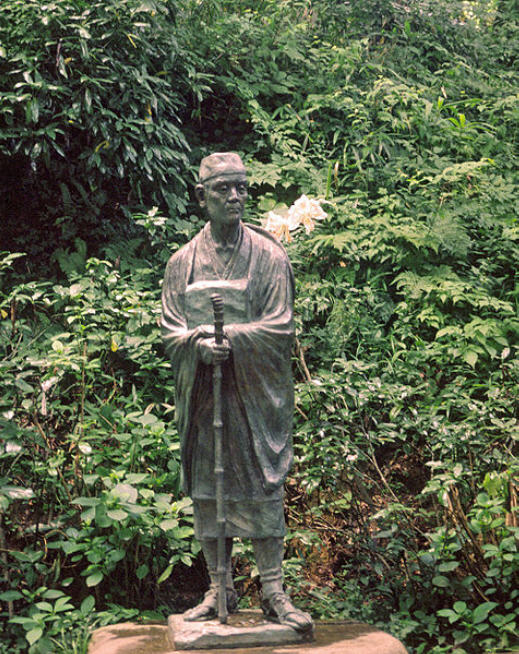 The second annual Haiku Sustainability Slam is being organized by World Streets and its friends as an ecumenical pagan celebration to the coming Rite of Spring, in part inspired by the exhilarating French annual speak-out program The Springtime of Poets (Le printemps des poètes) opens this year on the 23rd of March. A few words of background to set the stage for what we hope will be your own valiant poeticizing efforts.
lend me your arms
fast as thunderbolts
for a pillow on my journey
Friday, March 14, 2014
Will the real cost of car ownership kindly stand up
Carsharing changes our relationship with the cars we owned and loved and hated over much of the century just behind us. And one of the points we hear from proponents again and again is that carsharing offers substantial savings, because the cost of owning a car has become much higher than in the past. Surely the cost of car ownership in the 21st century -- and all that goes with it including direct and indirect costs, among them depreciation, insurance, petrol, maintenance, parking, etc., -- is no light burden. But how expensive is it really? In this article, carsharing expert Dave Brook digs into the numbers and reflects on the true cost of ownership for most car owners in the United States.


Thursday, March 13, 2014
Carsharing in Germany: 2014 Perspectives
Germany is among the world leaders when it comes to the development of  carsharing, as the following figures and graphics clearly illustrate. One of the primary reasons for this success has been the existence of strong networks and relationships between the cities and carshare operators over the last decade and more. And in this process the Bundesverband CarSharing e.V. (bcs) -- the industry association of the traditional car sharing organisations in Germany -- has played an important role. Let us have a look at their summary information on the situation in 2014, as well as in the preceding 17 years which have shown steady development and strong growth.
 carsharing, as the following figures and graphics clearly illustrate. One of the primary reasons for this success has been the existence of strong networks and relationships between the cities and carshare operators over the last decade and more. And in this process the Bundesverband CarSharing e.V. (bcs) -- the industry association of the traditional car sharing organisations in Germany -- has played an important role. Let us have a look at their summary information on the situation in 2014, as well as in the preceding 17 years which have shown steady development and strong growth.
Monday, March 10, 2014
This Week on World Streets: Weekly Digest, 10 March 2014
World Streets: The Politics of Transport in Cities
Each week subscribers to World Streets - presently numbering 5,407 from 149 countries on all continents - received a single mailing in the form of a weekly digest which briefly resumes all of the activity of the preceding week. Below you will find a listing of the articles published over the period 3-10 March 2014, during which we were hard at work on a series of carsharing projects. In a world of information overload, this is a handy way to keep up on what is going on at the leading edge of the new Mobility Agenda..- - > * Click here for your free subscription.
Sunday, March 9, 2014
Van autobezit naar autogebruik (Going Dutch, in Dutch)
 If you are interested in carsharing, if you understand that public policy has an important role to play . . . and if you read Dutch, then Van autobezit naar autogebruik (“From car ownership to car use”) on LinkedIn at http://goo.gl/VEPRMG is for you.
The project is being carried out under the leadership of the KpVV: (Kennisplatform Verkeer en Vervoer –Knowledge Platform for Mobility and Transport). The KpVV supports local and regional authorities in their efforts to develop and implement mobility and transport policy by providing practical know-how, developing reports and guidelines, arranging meetings, and setting up networks. For more: http://www.kpvv.nl
XCars and Carsharing on World Streets: 2009 - 2014
xCARS: NEW WAYS OF OWNING AND USING CARS IN 21ST CENTURY.
The 2014 work program focuses on carsharing, but not limited to this one new form of car use. Coverage of different main forms: Traditional, One-way, P2P and private. Carsharing by its various names and different forms is one of the fastest-growing new ways of getting around in cities and outlying areas for day-to-day travel. Over the last decade it has increasingly proven itself to be an effective mobility option, serving thousands of cities on all continents.

The 2014 work program focuses on carsharing, but not limited to this one new form of car use. Coverage of different main forms: Traditional, One-way, P2P and private. Carsharing by its various names and different forms is one of the fastest-growing new ways of getting around in cities and outlying areas for day-to-day travel. Over the last decade it has increasingly proven itself to be an effective mobility option, serving thousands of cities on all continents.

* Click here to go to archives covering period 2009 - 2014 *
Saturday, March 8, 2014
World Carshare 2014: Policy/Strategies Program for Local Government
Carsharing has a brilliant, in many ways surprising and certainly very different future -- a future which is already well in process. Carsharing is one of the fastest growing new mobility modes, with until now almost all services occurring in the high income countries. But it is by and large new, unfamiliar and does not fit well with the more traditional planning and policy structures at the level of the city. This is a problem. And addressing this problem is the goal of this cycle of reports and events in the year ahead.


To fix Sustainable Transport: Ensure Full Gender Parity in all Decision and Investment Fora (QED)
Today is International Women's Day. And not only that, 2011 marked the one hundredth anniversary of  this great and necessary idea. So what better occasion for World Streets to announce publicly, loudly and yet once again our firm belief that the most important single thing that our society, our nations and our cities could do to increase the fairness and the effectiveness of our transportation arrangements would be to make it a matter of the law that all decisions determining how taxpayer money is invested in the sector should be decided by councils that respect full gender parity. We invite you to join us in this challenge and make it one of the major themes of sustainable transport policy worldwide in the year immediately ahead.
 this great and necessary idea. So what better occasion for World Streets to announce publicly, loudly and yet once again our firm belief that the most important single thing that our society, our nations and our cities could do to increase the fairness and the effectiveness of our transportation arrangements would be to make it a matter of the law that all decisions determining how taxpayer money is invested in the sector should be decided by councils that respect full gender parity. We invite you to join us in this challenge and make it one of the major themes of sustainable transport policy worldwide in the year immediately ahead.
Friday, March 7, 2014
Dutch Carshare Operators in 2014
More than three quarters of the municipalities in the Netherlands are currently  served by carshare operators (as opposed to 11% in 2002). The following listing has been compiled with the help of several friends and colleagues in the Netherlands, helping us to identify all of the carshare operators currently offering "traditional", P2P or one-way services. This listing is part of the in-process "Going Dutch" project which got underway in December 2013 and has been introduced here on World Streets.
served by carshare operators (as opposed to 11% in 2002). The following listing has been compiled with the help of several friends and colleagues in the Netherlands, helping us to identify all of the carshare operators currently offering "traditional", P2P or one-way services. This listing is part of the in-process "Going Dutch" project which got underway in December 2013 and has been introduced here on World Streets.Wednesday, March 5, 2014
Free-for-all: Organizations around the world suppprting free public transport
The following listing of organizations around the world that are "fighting for free public transport" has been compiled by the Swedish activist group Free Public Transport, whose aim is to provide a global forum for the free public transport movement. Their website among other things provides information about local organizations around the world fighting for free public transport, as well as cities which have already implemented it. For their latest listing, click to http://freepublictransports.com/organization/.


Monday, March 3, 2014
Does carsharing promote balanced, sustainable economic growth?

Before digging into the details, the important mechanics of carsharing[1], it is important for policy makers to ask these deeper questions if we are ever to be able to shift gears into sustainable transport, sustainable cities and sustainable lives.
This is an extremely important foundation question to which the short answer is: yes definitely. But let us dig deeper.